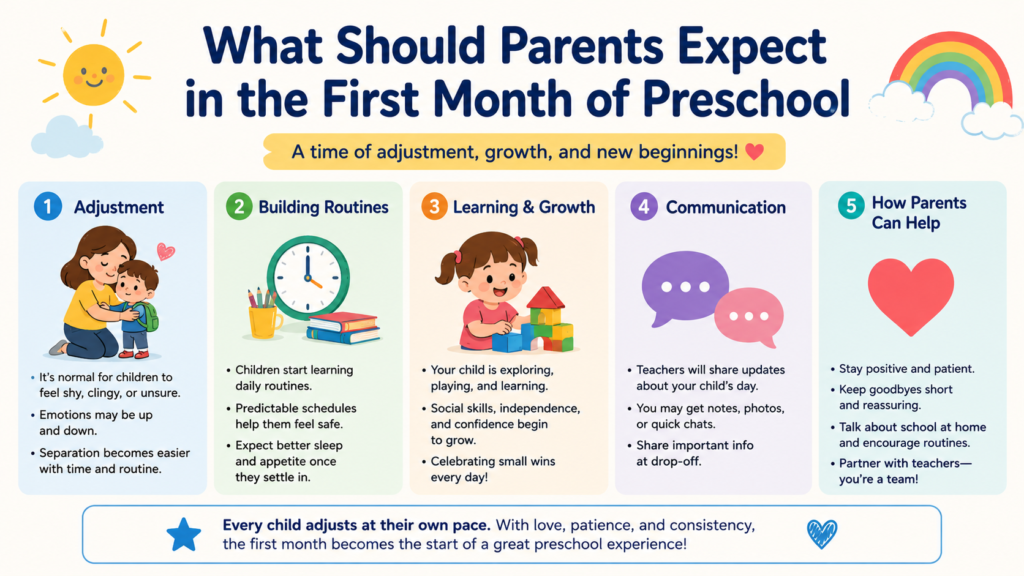
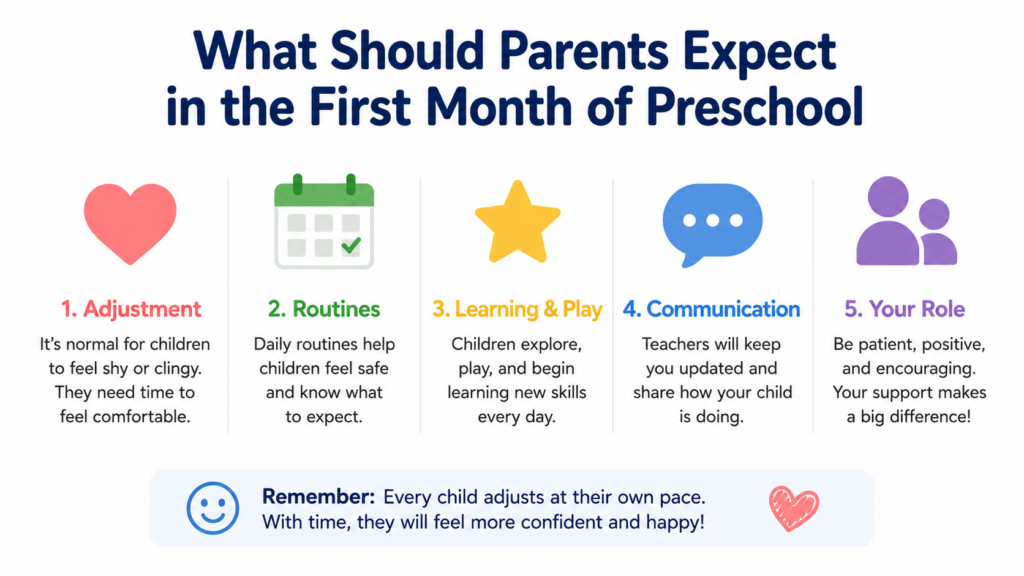
What Should Parents Expect in the First Month of Preschool
The first month of preschool is a big milestone—not just for children, but for parents too. It marks the beginning of a new routine, new friendships, and exciting learning experiences. At the same time, it can bring questions, worries, and plenty of emotions.
Many parents wonder:
“Will my child adjust well?”
“Is it normal if they cry?”
“How long does it take for children to settle into preschool?”
The truth is that every child adapts differently. Some children run into the classroom excitedly from the very first day, while others need a few weeks to feel comfortable. Both reactions are completely normal.
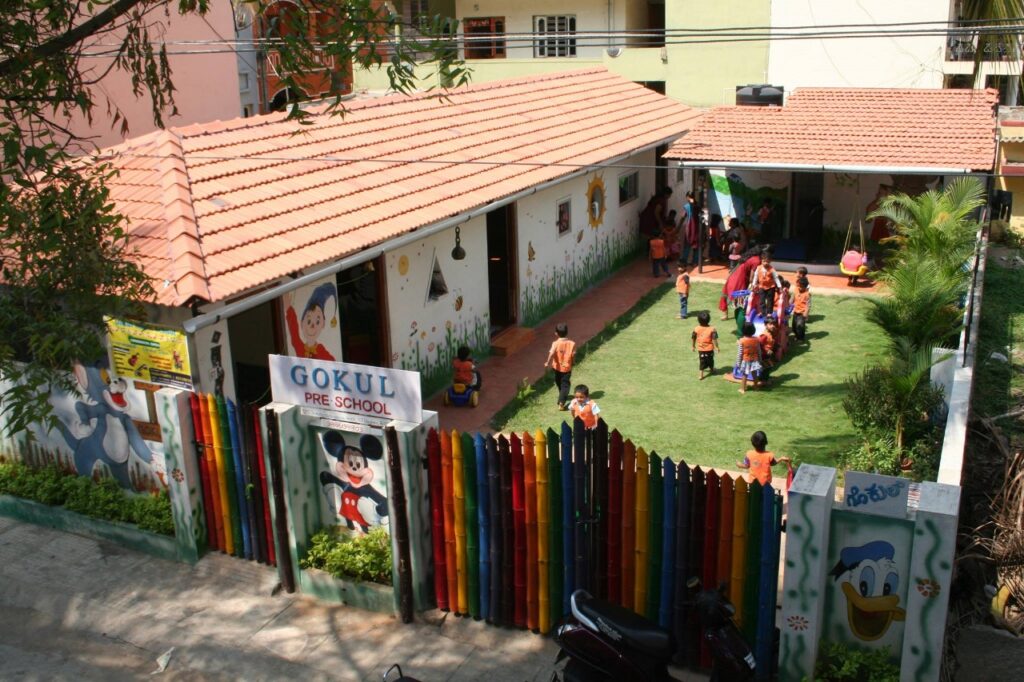
At Gokul Preschool in RT Nagar, we support families through this transition with patience, understanding, and a child-friendly approach that helps children build confidence at their own pace.
In this blog, we’ll explore what parents can realistically expect during the first month of preschool and how they can support their child’s adjustment.
- Why the First Month of Preschool Is So Important
- Expect a Mix of Emotions
- Some Tears at Drop-Off Are Normal
- Adjustment Takes Time
- New Routines Will Develop
- Your Child May Be More Tired Than Usual
- You Might Notice Changes in Behavior
- New Friendships Will Begin to Form
- Your Child Will Start Showing More Independence
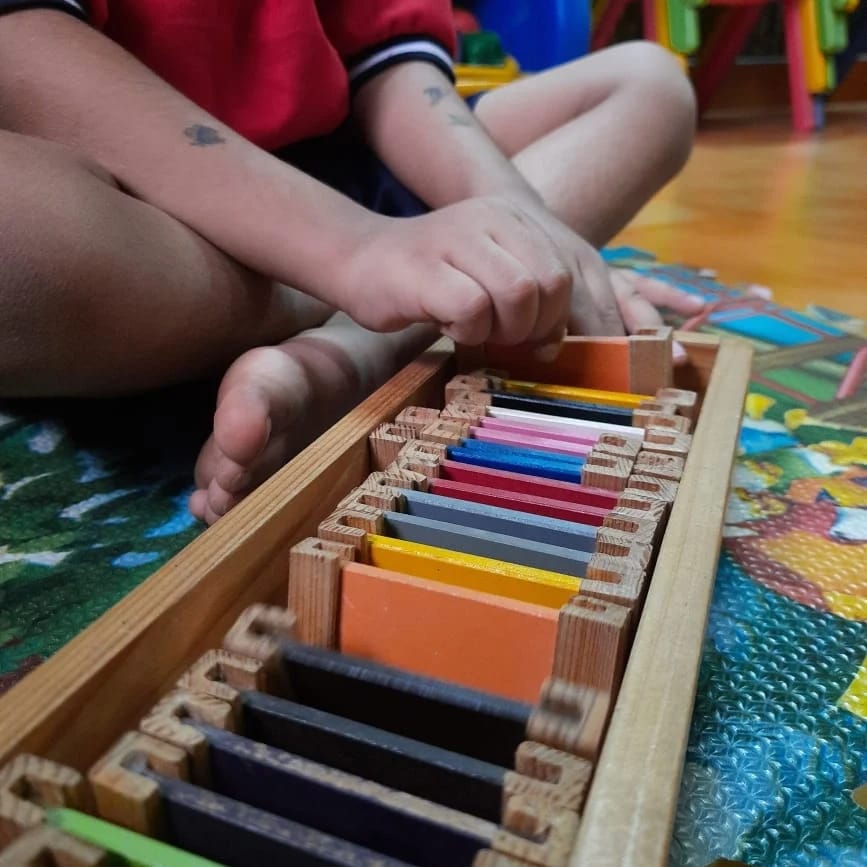
- Learning Happens Through Play
- Communication With Teachers Becomes Important
- Celebrate Small Wins
- How Parents Can Support Their Child During the First Month
- Signs Your Child Is Adjusting Well
- When Should Parents Be Concerned?
- How Gokul Preschool in RT Nagar Supports Children During the First Month
- What Should Parents Expect in the First Month of Preschool FAQs
- Conclusion
Why the First Month of Preschool Is So Important
The first few weeks help children become familiar with an entirely new environment.
During this period, children learn to:
- Separate from parents for short periods
- Follow classroom routines
- Build trust with teachers
- Interact with classmates
- Explore new activities
- Develop independence
The experiences children have during this adjustment phase can shape their attitude toward school and learning.
That is why patience and consistency are so important.
Expect a Mix of Emotions
Preschool brings many new experiences.
Children may feel:
- Excited
- Curious
- Nervous
- Shy
- Confused
- Happy
- Overwhelmed
Parents may experience similar emotions too.
It is normal to feel both proud and emotional as your child takes this important step toward independence.
Some Tears at Drop-Off Are Normal
One of the biggest concerns parents have is seeing their child cry at school drop-off.
The good news is that this is very common.
Children may cry because they are:
- Adjusting to being away from home
- Entering an unfamiliar environment
- Missing their parents
- Unsure about new routines
In most cases, children settle down shortly after parents leave and become engaged in classroom activities.
The key is to remain calm, reassuring, and consistent.
Adjustment Takes Time
Every child adapts differently.
Some children settle within a few days.
Others may take several weeks to become comfortable.
Factors that influence adjustment include:
- Personality
- Previous social experiences
- Temperament
- Family routines
- Comfort with new environments
Avoid comparing your child to others.
There is no “right timeline” for adjustment.
New Routines Will Develop
Preschool introduces children to predictable daily schedules.
Children gradually become familiar with:
- Arrival routines
- Circle time
- Story sessions
- Snack breaks
- Playtime
- Activity transitions
- Goodbye routines
These routines help children feel secure because they know what to expect each day.
Your Child May Be More Tired Than Usual
The first month of preschool can be exhausting.
Children are using a lot of energy to:
- Process new experiences
- Follow instructions
- Interact socially
- Manage emotions
- Participate in activities
You may notice that your child:
- Falls asleep earlier
- Takes longer naps
- Becomes cranky after school
This fatigue is usually temporary and improves as children adjust.
You Might Notice Changes in Behavior
Preschool is a major life change.
Some children may show temporary behavioral changes such as:
- Increased clinginess
- Mood swings
- Irritability
- Wanting extra comfort
- Testing boundaries at home
These reactions often reflect the effort children are making to adapt to their new environment.
Providing reassurance and maintaining routines can help.
New Friendships Will Begin to Form
Preschool gives children opportunities to build social skills.
During the first month, your child may begin to:
- Mention classmates by name
- Talk about friends
- Share stories about group activities
- Show interest in playdates
Some children make friends quickly, while others take more time.
Both experiences are perfectly normal.
Your Child Will Start Showing More Independence
One of the most rewarding parts of preschool is watching children become more independent.
You may notice your child:
- Carrying their own bag
- Washing hands without reminders
- Putting away toys
- Following simple instructions
- Attempting tasks independently
These small achievements build confidence and self-esteem.
Learning Happens Through Play
Many parents expect worksheets and formal lessons.
However, preschool learning often looks different.
Children learn through activities such as:
- Storytelling
- Music and movement
- Building blocks
- Art and craft
- Pretend play
- Outdoor games
- Group discussions
Through play, children develop important academic, social, and emotional skills.
Communication With Teachers Becomes Important
The first month is the ideal time to build a relationship with your child’s teachers.
Regular communication helps parents understand:
- How their child is adjusting
- Classroom participation
- Social interactions
- Areas where additional support may be needed
Working together creates consistency between home and school.
Celebrate Small Wins
Adjustment doesn’t happen overnight.
Celebrate progress such as:
- Walking into school without tears
- Saying goodbye confidently
- Participating in activities
- Making a new friend
- Talking positively about school
These small victories represent significant developmental milestones.
How Parents Can Support Their Child During the First Month
The way parents respond can make a big difference during the adjustment period.
Maintain Consistent Routines
Regular schedules for sleep, meals, and school preparation help children feel secure.
Keep Goodbyes Short and Positive
A quick hug and reassuring words often work better than long emotional farewells.
Talk Positively About Preschool
Focus on enjoyable aspects such as stories, songs, and making friends.
Listen Without Pressure
Allow children to share experiences in their own way and at their own pace.
Be Patient
Adjustment takes time.
Offer encouragement and avoid comparisons.
Signs Your Child Is Adjusting Well
During the first month, positive signs include:
- Reduced separation anxiety
- Interest in preschool activities
- Talking about teachers and classmates
- Improved participation
- Greater independence
- Positive mood after school
Remember that progress may happen gradually.
When Should Parents Be Concerned?
While adjustment challenges are normal, parents should speak with teachers if they notice:
- Extreme distress that continues for several weeks
- Persistent refusal to attend preschool
- Significant changes in eating or sleeping habits
- Ongoing withdrawal from activities
- Intense anxiety that does not improve over time
Teachers and parents can work together to identify strategies that support the child.
How Gokul Preschool in RT Nagar Supports Children During the First Month
At Gokul Preschool in RT Nagar, we understand that starting preschool is a major transition.
Our approach focuses on helping children feel safe, happy, and supported from day one.
We provide:
- Gentle settling-in practices
- Play-based learning experiences
- Caring and experienced teachers
- Strong parent communication
- Social and emotional support
- Child-friendly classrooms
Our goal is to help every child build confidence and develop a positive relationship with learning.
Families looking for a trusted preschool in RT Nagar choose Gokul Preschool because we prioritize both children’s well-being and their overall development.
What Should Parents Expect in the First Month of Preschool FAQs
Is it normal for children to cry during the first month of preschool?
Yes. Many children experience separation anxiety during the adjustment period, and it usually improves over time.
How long does it take for a child to adjust to preschool?
Some children adjust within a few days, while others may take several weeks. Every child is different.
Why is my child more tired after starting preschool?
Children use a lot of physical and emotional energy adapting to new routines, activities, and social interactions.
How can parents help children settle into preschool?
Maintain routines, keep goodbyes positive, communicate with teachers, and provide reassurance and patience.
Which preschool in RT Nagar supports children during the adjustment period?
Gokul Preschool in RT Nagar provides a nurturing, play-based environment with caring teachers who help children transition smoothly into preschool life.
Conclusion
The first month of preschool is a time of adjustment, growth, and discovery.
Parents can expect a mix of emotions, evolving routines, and gradual progress as children adapt to their new environment. While tears and temporary challenges are common, most children settle in with patience, consistency, and support.
Remember that every child adjusts at their own pace.
Celebrate small achievements, maintain open communication with teachers, and trust the process.
At Gokul Preschool in RT Nagar, we are committed to making the transition into preschool a positive and joyful experience that helps children build confidence, independence, and a lifelong love for learning.