How to Choose Between Two Preschools
Choosing a preschool is one of the biggest decisions parents make during their child’s early years. After researching schools, visiting campuses, and speaking with teachers, many parents find themselves facing a common challenge:
“We like both preschools. How do we choose the right one?”
It can be difficult when both schools seem like great options. One preschool may be closer to home, while the other may offer a different learning approach. One may have larger classrooms, while the other may provide a more personal experience.
The truth is, there is no “perfect” preschool for every child. The best preschool is the one that matches your child’s needs, your family’s values, and provides a safe and nurturing environment where your child can thrive.
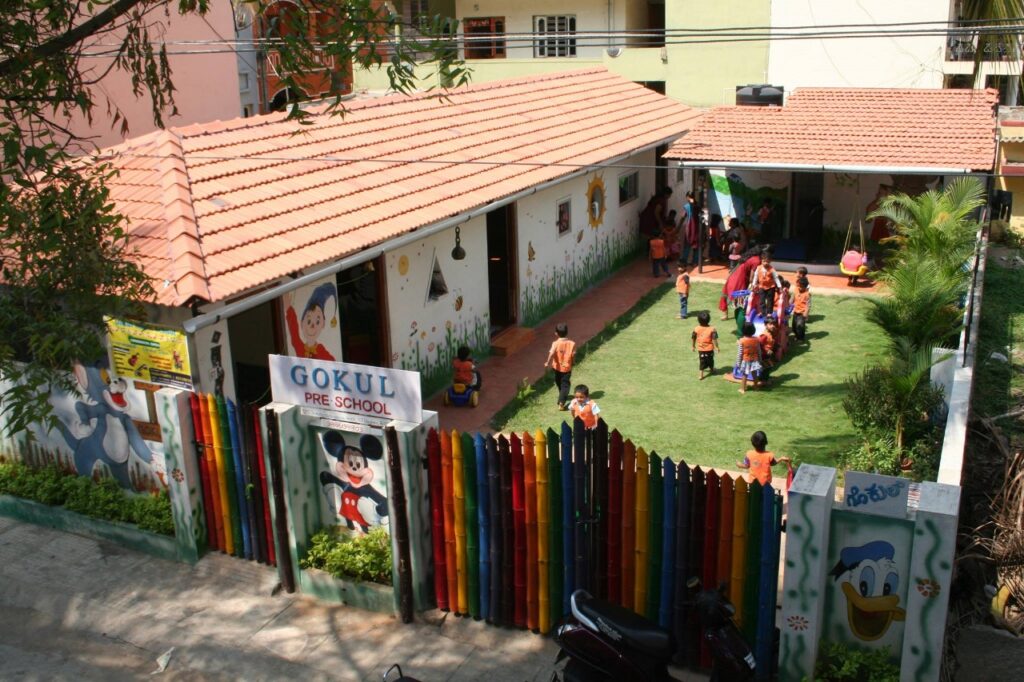
At Gokul Preschool in RT Nagar, we understand how overwhelming this decision can feel. That’s why we’ve created this guide to help parents confidently choose between two preschools.
- Why Choosing the Right Preschool Matters
- Start by Thinking About Your Child's Needs
- Compare the Safety and Security Measures
- Evaluate the Teachers and Staff
- Understand the Teaching Approach
- Observe How Children Behave
- Compare the Teacher-to-Child Ratio
- Consider the Preschool Environment
- Think About Location and Convenience
- Assess Parent Communication
- Look Beyond Academics
- Ask About Daily Routines
- Trust Your Child's Response
- Create a Simple Comparison List
- Common Mistakes Parents Make When Comparing Preschools
- Why Many Families Choose Gokul Preschool in RT Nagar
- How to Choose Between Two Preschools FAQs
- Conclusion
Why Choosing the Right Preschool Matters
Preschool is much more than preparing children to recognize letters and numbers.
During these early years, children learn how to:
- Build friendships
- Communicate with others
- Express emotions
- Follow routines
- Develop independence
- Build confidence
A positive preschool experience creates a strong foundation for future learning and development.
Choosing the right environment can help your child develop a lifelong love for learning.
Start by Thinking About Your Child’s Needs
Before comparing preschools, think about your child as an individual.
Ask yourself:
- Is my child outgoing or shy?
- Does my child adapt quickly to new environments?
- Does my child prefer smaller groups?
- Does my child need extra emotional support?
- What type of learning environment suits my child best?
Every child is different. A preschool that works well for one child may not necessarily be the best fit for another.
Compare the Safety and Security Measures
Safety should always be your top priority.
When comparing two preschools, check whether they have:
- Secure entry and exit systems
- CCTV surveillance
- Child-safe furniture and play areas
- Emergency procedures
- Trained staff members
If one preschool makes you feel more confident about your child’s safety, that should carry significant weight in your decision.
Evaluate the Teachers and Staff
Teachers play one of the most important roles in your child’s preschool experience.
Observe whether the teachers are:
- Warm and welcoming
- Patient and attentive
- Qualified in early childhood education
- Supportive of children’s emotional needs
Ask yourself:
Which preschool had teachers I would trust to care for my child every day?
The quality of teacher-child interactions often matters more than impressive facilities.
Understand the Teaching Approach
Different preschools use different learning philosophies.
Some may focus on:
- Play-based learning
- Activity-based learning
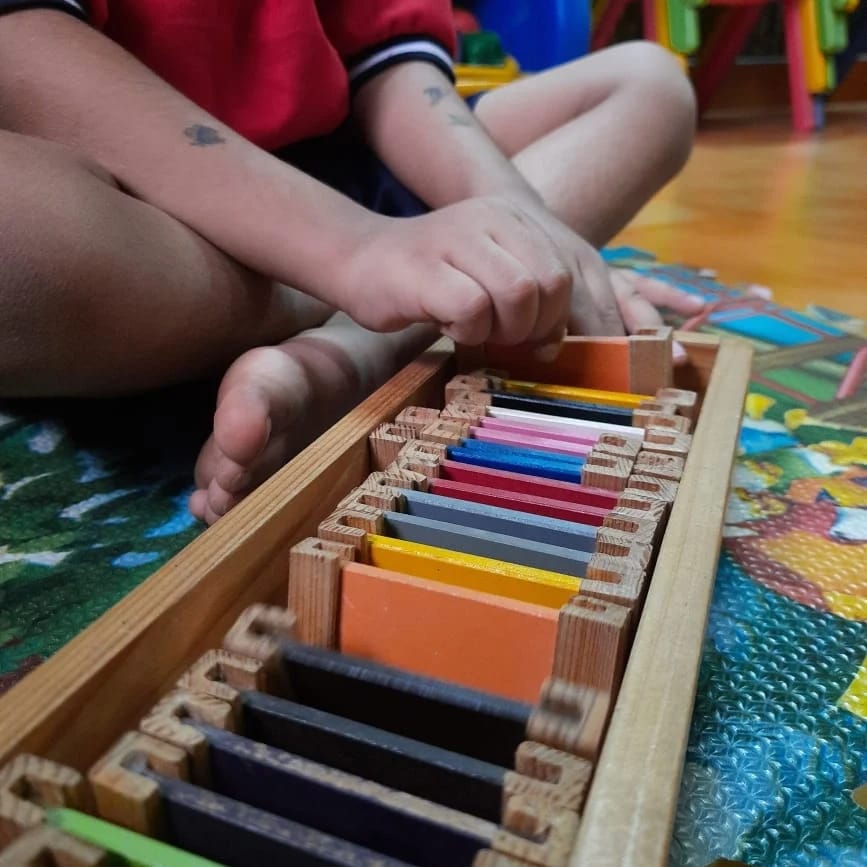
- Montessori methods
- Structured academic approaches
Young children generally learn best through hands-on experiences, creativity, and exploration.
Choose the preschool whose learning philosophy aligns with your parenting values and your child’s developmental needs.
Observe How Children Behave
During your preschool visits, pay attention to the children already attending.
Do they appear:
- Happy?
- Comfortable?
- Engaged?
- Confident?
- Curious?
Children’s behavior often reflects the overall environment of the preschool.
A classroom filled with smiling, active children is usually a positive sign.
Compare the Teacher-to-Child Ratio
The number of children assigned to each teacher affects the amount of individual attention children receive.
A lower teacher-to-child ratio allows for:
- Better supervision
- Stronger relationships
- More personalized support
- Improved classroom management
Ask both schools about their classroom sizes before making your decision.
Consider the Preschool Environment
The classroom should feel inviting and child-friendly.
Look for:
- Clean and organized spaces
- Bright and cheerful classrooms
- Age-appropriate learning materials
- Safe play equipment
- Comfortable surroundings
Trust your instincts.
Ask yourself:
Which environment felt more welcoming to my child?
Think About Location and Convenience
Location matters more than many parents realize.
A preschool closer to home can offer benefits such as:
- Reduced travel time
- Easier drop-offs and pick-ups
- More family time
- Less stress for children
However, convenience should not outweigh important factors such as safety and quality of care.
If both schools meet your expectations, location can become a deciding factor.
Assess Parent Communication
Strong communication between teachers and parents is essential.
Ask whether the preschool provides:
- Parent-teacher meetings
- Progress updates
- Daily communication
- Activity reports
Good communication helps parents stay involved in their child’s development.
Choose a preschool that values parent partnerships.
Look Beyond Academics
Many parents focus heavily on early academics.
However, preschool should also support:
- Social development
- Emotional growth
- Creativity
- Independence
- Confidence
The best preschool prepares children for life, not just primary school.
Ask About Daily Routines
Understanding the daily schedule can help you determine whether it suits your child.
A balanced preschool routine should include:
- Learning activities
- Storytelling
- Music and movement
- Outdoor play
- Creative experiences
- Snack and rest breaks
Children thrive when routines are structured yet flexible.
Trust Your Child’s Response
If your child attended trial classes or school visits, observe their reactions.
Did your child:
- Explore confidently?
- Smile and participate?
- Show curiosity?
- Feel comfortable around teachers?
While young children may not always express preferences clearly, their behavior often provides important clues.
Create a Simple Comparison List
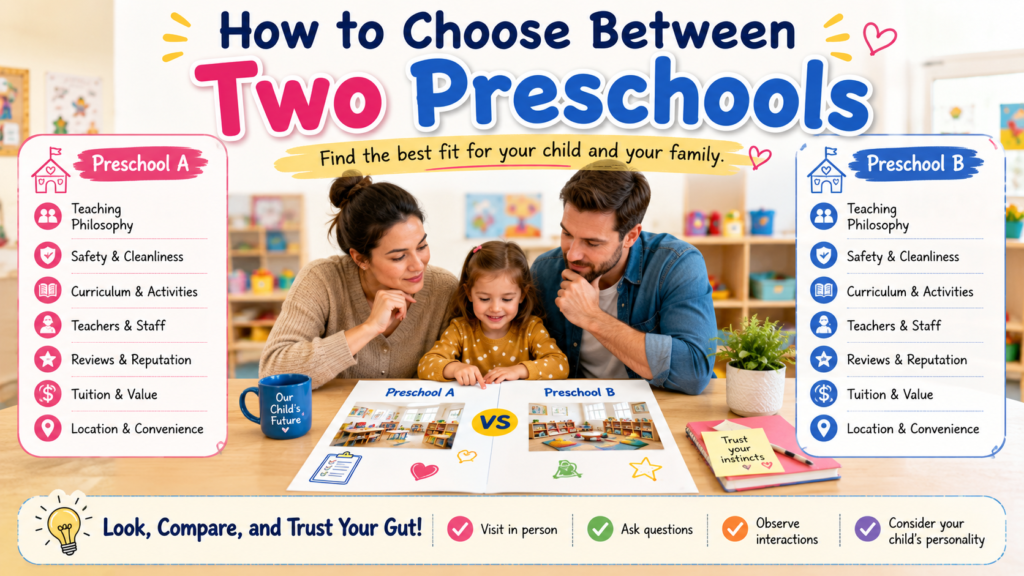
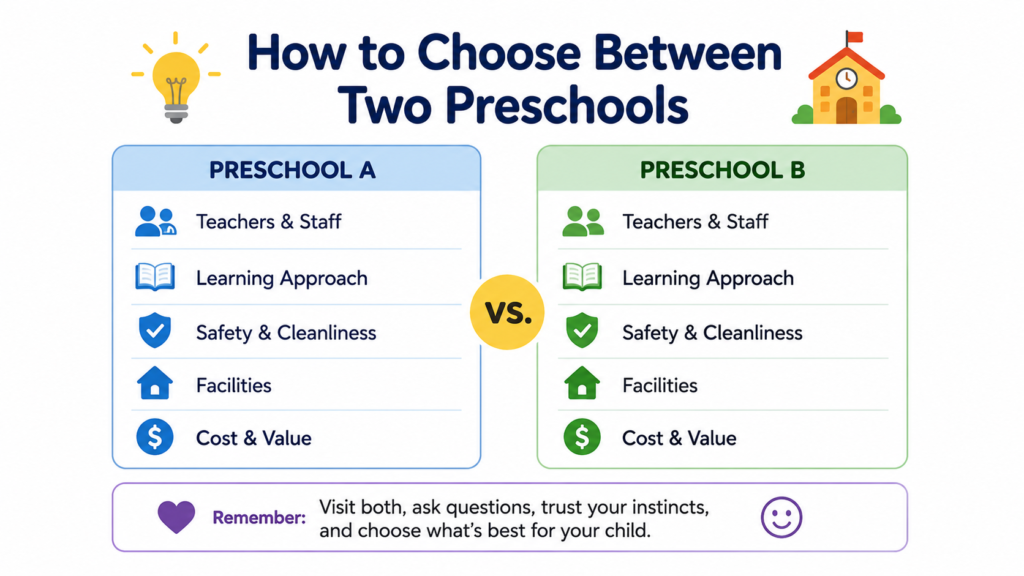
If you’re still unsure, make a list comparing both schools.
Consider factors such as:
| Factor | Preschool A | Preschool B |
|---|---|---|
| Safety and security | ||
| Teacher interaction | ||
| Learning approach | ||
| Cleanliness | ||
| Child comfort | ||
| Parent communication | ||
| Location | ||
| Fees |
Sometimes seeing everything side by side makes the decision clearer.
Common Mistakes Parents Make When Comparing Preschools
Choosing Based Only on Fees
Lower fees do not always mean better value.
Focus on the quality of care and education.
Selecting the School With the Most Academic Pressure
Preschool should encourage curiosity and joyful learning.
Excessive academic pressure is not ideal for young children.
Ignoring Their Instincts
Parents often notice subtle details during school visits.
If something doesn’t feel right, explore those concerns further.
Following Other People’s Opinions Blindly
Recommendations can be helpful, but every child has different needs.
Choose what feels right for your family.
Why Many Families Choose Gokul Preschool in RT Nagar
At Gokul Preschool in RT Nagar, we understand that parents want more than just a preschool—they want a place where their child feels safe, happy, and inspired to learn.
Our preschool offers:
- Play-based and activity-based learning
- Experienced and caring teachers
- Safe and hygienic classrooms
- Strong parent communication
- Social and emotional development programs
- Age-appropriate learning experiences
We focus on creating an environment where children build confidence, curiosity, and meaningful relationships while enjoying every step of their early learning journey.
Parents looking for a trusted preschool in RT Nagar choose Gokul Preschool because we prioritize children’s happiness, safety, and overall development.
How to Choose Between Two Preschools FAQs
How do I choose between two good preschools?
Compare factors such as safety, teachers, learning approach, child comfort, communication, and location to determine which preschool best suits your child’s needs.
Is location more important than quality?
No. Safety, teacher quality, and the learning environment should always come first. Location can be a deciding factor when both schools offer similar quality.
Should I involve my child in the decision?
Yes. Observing your child’s comfort level during school visits or trial classes can provide valuable insights.
What is the most important factor when choosing a preschool?
Safety, caring teachers, and a nurturing environment are among the most important factors.
Which preschool in RT Nagar offers a balanced learning environment?
Gokul Preschool in RT Nagar provides a safe, play-based, and child-friendly environment focused on children’s social, emotional, and academic development.
Conclusion
Choosing between two preschools can feel overwhelming, but the decision becomes easier when you focus on what truly matters.
Consider factors such as:
- Safety and security
- Teacher quality
- Learning philosophy
- Child comfort
- Parent communication
- Classroom environment
- Convenience
The best preschool is not necessarily the most expensive or the most popular. It is the one where your child feels safe, supported, and excited to learn.
At Gokul Preschool in RT Nagar, we are committed to providing a nurturing environment where children can explore, grow, and develop a lifelong love for learning.
Trust your observations, trust your instincts, and choose the preschool that feels like the right fit for your child and family.