How to Choose a UKG School in RT Nagar for Your Child
Choosing a school for your child is an important decision, especially when your little one is getting ready for UKG. At this age, children are becoming more independent, more curious, and more ready to understand the world around them, Gokul Preschool.
Parents often ask questions like:
Is the school safe?
Will my child enjoy learning there?
Are the teachers caring?
Will the school prepare my child for the next stage?
These are all good questions.
If you are looking for a UKG school in RT Nagar, you will find several options. But choosing the right one should not be based only on the school building, fees, advertisements, or what another parent recommends.
The right school should match your child’s learning needs, personality, comfort, and stage of development.
This guide will help you understand what to look for when choosing a UKG school in RT Nagar and how to make the decision with confidence.
What Is UKG and Why Is It Important?
UKG stands for Upper Kindergarten. It is generally one of the final stages of kindergarten before a child moves into primary school.
UKG is not simply about teaching children more difficult lessons.
It is a time when children can gradually develop:
- Early reading skills
- Writing skills
- Number understanding
- Communication
- Problem-solving
- Social skills
- Independence
- Confidence
- Listening skills
- Classroom habits
A good UKG programme should balance academic learning with play, creativity, movement, conversations, and hands-on activities.
Children at this age still learn best when they can explore and participate rather than simply memorise information.
What Should Parents Look for in a UKG School?
There is no single school that is perfect for every child.
However, there are some important things parents should consider before making a decision.
1. Look at the Learning Approach
Start by asking how the school teaches children.
Does your child spend most of the day completing worksheets?
Or are they encouraged to learn through:
- Stories
- Games
- Activities
- Art
- Music
- Experiments
- Conversations
- Puzzles
- Hands-on learning
At the UKG stage, children need opportunities to understand ideas rather than simply remember answers.
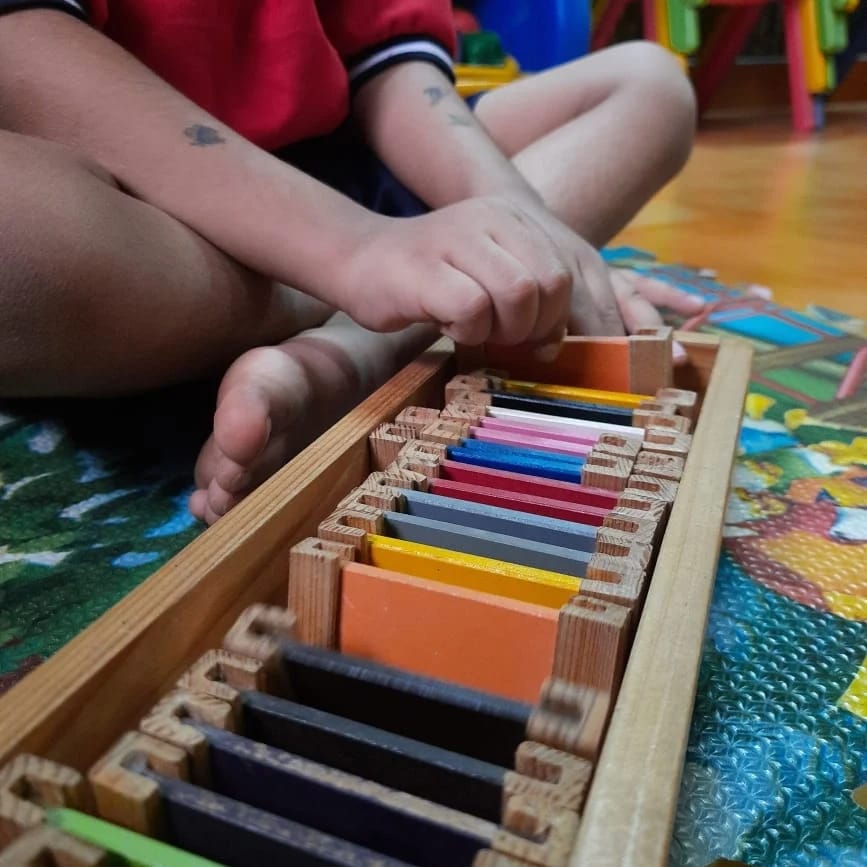
For example, instead of only teaching numbers on a worksheet, teachers can use blocks, objects, counting games, and everyday examples to make numbers easier to understand.
A balanced approach can make learning more meaningful.
2. Check the Teacher-Child Interaction
Teachers have a major influence on a child’s school experience.
During your school visit, observe how teachers communicate with children.
Do they listen patiently?
Do children feel comfortable asking questions?
Are teachers encouraging children to try things independently?
Do teachers correct mistakes gently?
A caring teacher can help a child feel safe enough to ask questions and make mistakes while learning.
3. Visit the Classroom
Don’t choose a UKG school only by looking at photographs online.
If possible, visit the school and see the classroom yourself.
Look for a space that is:
- Clean
- Well organised
- Child-friendly
- Comfortable
- Bright and engaging
- Suitable for movement
- Filled with age-appropriate learning materials
Also observe whether children’s work is displayed around the classroom.
A classroom doesn’t need to look expensive.
It needs to feel welcoming and useful for children.
4. Ask About Class Size
Class size can affect how much individual attention a child receives.
Ask the school:
“How many children are there in a UKG class?”
Also ask how many teachers or staff members are present.
A smaller or well-supported classroom can make it easier for teachers to understand individual children’s strengths and areas where they need support.
5. Check Safety and Security
Safety should be one of the first things parents consider.
When visiting a UKG school in RT Nagar, ask about:
- Entry and exit procedures
- Visitor management
- Pick-up and drop-off procedures
- CCTV, where applicable
- Emergency procedures
- Fire safety
- First-aid arrangements
- Staff supervision
- Safe play areas
Don’t feel uncomfortable asking detailed safety questions.
You are choosing a place where your child may spend several hours every day.
A good school should be comfortable discussing its safety practices with parents.
Look at the School’s Daily Routine
Ask what a typical UKG day looks like.
A balanced routine may include different types of activities rather than several hours of sitting and writing.
For example, the day may include:
Circle time → language activity → numeracy → play → snack → creative activity → outdoor movement → story time
The exact routine will vary from school to school.
What matters is that children have opportunities to learn, move, play, interact, and rest when appropriate.
Check How the School Supports Early Literacy
UKG is an important stage for building early literacy skills.
Ask how the school helps children develop:
- Letter recognition
- Phonics or sound awareness
- Vocabulary
- Listening
- Speaking
- Story comprehension
- Early reading
- Writing
Children should have opportunities to listen to stories, talk about pictures, recognise sounds, and express their own ideas.
Reading readiness is more than memorising letters.
A child should gradually understand that letters represent sounds and that words carry meaning.
Look at the Approach to Writing
Writing is another important part of UKG.
But children should not be expected to spend the entire day writing.
Ask how the school develops writing skills through:
- Fine motor activities
- Drawing
- Tracing
- Colouring
- Letter formation
- Pre-writing patterns
- Creative writing
- Age-appropriate worksheets
The school should consider the child’s developmental stage rather than simply expecting perfect handwriting.
Ask About Early Maths Learning
UKG children can begin developing a stronger understanding of numbers and basic mathematical concepts.
A good learning environment may introduce:
- Counting
- Number recognition
- Number sequencing
- Shapes
- Patterns
- Sorting
- Comparing
- Simple addition
- Simple subtraction
- Measurement concepts
The best part is when children can learn these ideas through real objects and activities.
For example, counting five blocks is more meaningful when a child can actually touch and move the five blocks.
Don’t Ignore Communication Skills
A child may know letters and numbers but still need help expressing themselves.
UKG should also support:
- Speaking
- Listening
- Asking questions
- Describing experiences
- Telling stories
- Participating in group conversations
Ask whether children are encouraged to speak during class.
A classroom where children can ask questions and share ideas can help develop confidence.
Check Social and Emotional Development
School is not only about academics.
UKG children are also learning how to:
- Make friends
- Share
- Take turns
- Follow group rules
- Handle disagreements
- Express feelings
- Work in groups
- Ask for help
Ask how teachers handle conflicts between children.
A good response should focus on guiding children rather than simply punishing them.
Look at Play and Physical Activities
Young children need movement.
Sitting for long periods can make learning tiring.
Ask whether the school provides opportunities for:
- Outdoor play
- Indoor movement
- Dance
- Games
- Free play
- Sports or physical activities
Play supports physical development while also giving children opportunities to practise cooperation and problem-solving.
Ask About Art, Music and Creativity
Creativity should not disappear as academic expectations increase.
UKG children can benefit from:
- Drawing
- Painting
- Craft
- Singing
- Dancing
- Storytelling
- Pretend play
- Music activities
These activities give children different ways to express themselves.
A child who finds writing difficult may express an idea beautifully through drawing or storytelling.
Understand How the School Handles Homework
Homework is something parents should ask about before admission.
Ask:
“How much homework does a UKG child receive?”
“Is homework compulsory every day?”
“What type of activities are given?”
Young children need time to play, talk with their families, rest, and explore outside school.
Homework should be age-appropriate and should not become a daily source of stress.
Ask How Teachers Track Progress
A good school should have a way to understand each child’s development.
Ask how teachers communicate progress with parents.
They may use:
- Parent-teacher meetings
- Classroom observations
- Activity-based assessments
- Progress reports
- Individual conversations
Assessment at this age should not be only about test marks.
Teachers can also observe how children communicate, participate, solve problems, interact with others, and complete age-appropriate tasks.
Consider the Distance From Your Home
Location matters more than many parents realise.
If you live in RT Nagar, choosing a UKG school near your home can make daily travel easier.
A shorter commute can mean:
- Less travel time
- Easier mornings
- Less tiredness
- More family time
- A simpler daily routine
However, don’t choose a school based on distance alone.
A nearby school still needs to meet your child’s learning, safety, and emotional needs.
Compare Fees With What the School Provides
Fees are naturally an important part of the decision.
But don’t compare schools only by asking:
“Which one is cheaper?”
Instead, consider what is included.
Ask about:
- Tuition fees
- Admission fees
- Books
- Uniform
- Activities
- Transportation
- Meals or snacks
- Additional charges
Understanding the complete fee structure can help you avoid surprises later.
Talk to Other Parents
Parents who already have children at the school can provide useful practical information.
Ask them:
- Does the school communicate well?
- Are teachers approachable?
- Does the school respond to concerns?
- How do children feel about going to school?
- Are school timings convenient?
- Are activities conducted regularly?
Remember that every family has a different experience, so don’t base your entire decision on one person’s opinion.
Use their feedback along with your own school visit.
Don’t Choose a UKG School Only Because of Its Reputation
A school may have a strong reputation, but that doesn’t automatically mean it is the right fit for your child.
Think about your child’s personality.
Is your child:
- Very active?
- Quiet?
- Curious?
- Social?
- Shy?
- Creative?
- Independent?
- In need of extra encouragement?
The best school is one where your child can feel comfortable while being encouraged to grow.
Questions to Ask During a UKG School Visit
Before you leave the school, consider asking:
About Learning
- What does a typical UKG day look like?
- What curriculum or learning approach do you follow?
- How do you teach reading and writing?
- How do you introduce mathematics?
- How much homework is given?
About Teachers
- What is the teacher-to-child ratio?
- How do teachers support children who learn at different speeds?
- How are behavioural concerns handled?
About Safety
- How are children handed over during pick-up?
- What are your emergency procedures?
- How are visitors managed?
- How is the school playground supervised?
About Parents
- How often do parents receive updates?
- Are parent-teacher meetings conducted?
- How can parents contact teachers when they have concerns?
These questions can help you understand what everyday life at the school may actually be like.
Red Flags Parents Should Watch For
While visiting schools, pay attention to things that make you uncomfortable.
Some possible warning signs include:
- Teachers regularly shouting at children
- Children appearing consistently fearful
- Poor cleanliness
- Unsafe play equipment
- Unclear pick-up procedures
- Lack of supervision
- Very little opportunity for play
- Excessive focus on worksheets
- School staff avoiding basic questions from parents
One observation doesn’t tell you everything, but several concerns together deserve attention.
Why Gokul Preschool in RT Nagar Can Be a Choice for UKG
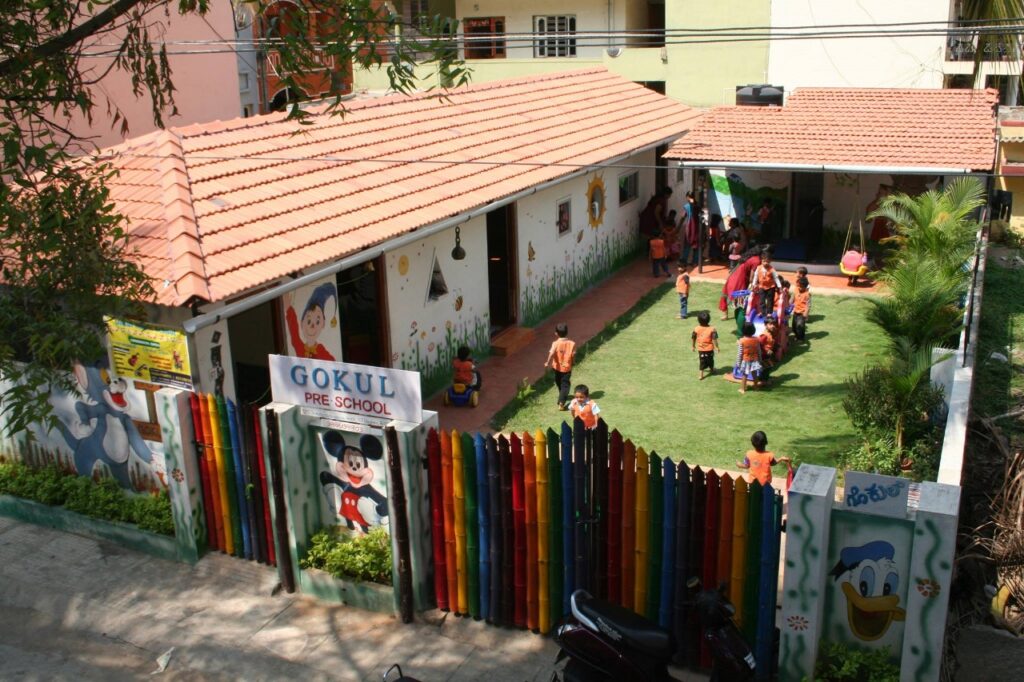
For families looking for a UKG school in RT Nagar, Gokul Preschool focuses on creating an environment where children can continue learning with curiosity and confidence.
At Gokul Preschool in RT Nagar, children can be encouraged to learn through a combination of:
- Classroom activities
- Play-based learning
- Stories
- Art and craft
- Music
- Movement
- Group activities
- Hands-on experiences
- Language development
- Early mathematics
We understand that UKG is an important transition period. Children are preparing for the next stage of their education while still needing the freedom to learn through play and exploration.
Our aim is to help children develop not only academic readiness but also confidence, communication, independence, creativity, and positive social habits.
For parents in RT Nagar, visiting the school and speaking directly with the teachers is the best way to understand whether the environment is suitable for your child.
A Simple Checklist for Choosing a UKG School in RT Nagar
Before making your final decision, check whether the school offers:
☐ A safe and child-friendly environment
☐ Caring and approachable teachers
☐ Age-appropriate learning
☐ A balanced daily routine
☐ Opportunities for play and movement
☐ Early reading and writing support
☐ Early maths learning
☐ Art, music and creative activities
☐ Social and emotional development
☐ Good communication with parents
☐ Clear safety and pick-up procedures
☐ A transparent fee structure
☐ A location that works for your family
Most importantly:
☐ A place where your child feels comfortable and happy
How to Choose a UKG School in RT Nagar for Your Child FAQs
What should I look for when choosing a UKG school in RT Nagar?
Look at the school’s safety, teachers, learning approach, classroom environment, class size, activities, communication with parents, daily routine, and overall fit for your child’s personality and needs.
What should a UKG child learn before entering primary school?
A UKG child can gradually develop early reading, writing, number understanding, communication, problem-solving, social skills, independence, and classroom habits. Exact expectations vary by school and curriculum.
Is play-based learning suitable for UKG children?
Yes. Play and hands-on activities can help children understand concepts while also supporting creativity, communication, problem-solving, physical development, and social skills.
How important is the teacher in a UKG classroom?
Teachers play a very important role. A supportive teacher can encourage children to ask questions, participate, become independent, and feel confident about learning.
How many hours should a UKG child spend at school?
The appropriate school schedule varies by school, programme, and child. Parents should look for a routine that provides a healthy balance of learning, play, movement, meals or snacks, and age-appropriate rest.
Should I choose a UKG school close to my home?
A school close to home can make daily travel easier and reduce commute time. However, distance should be considered alongside safety, learning quality, teachers, activities, and your child’s comfort.
How can I know if a UKG school is safe?
Visit the school and ask about entry and exit procedures, visitor management, child pick-up, emergency plans, staff supervision, first aid, fire safety, and playground safety.
How much homework should a UKG child get?
Homework should be age-appropriate and should not overwhelm a young child. Ask the school about its daily or weekly expectations before admission.
What questions should I ask during a UKG school visit?
Ask about the curriculum, daily routine, teacher-child ratio, safety, homework, assessment, parent communication, activities, fees, and how teachers support children who learn at different speeds.
Is Gokul Preschool a UKG school in RT Nagar?
Gokul Preschool in RT Nagar provides early childhood education with activities designed to support children’s academic, social, emotional, physical, and creative development. Parents can visit the school and speak with the team to understand the UKG programme and decide whether it is suitable for their child.
Conclusion
Choosing a UKG school in RT Nagar is about much more than finding a place that teaches letters and numbers.
Your child is at an important stage of development. They are becoming more independent, learning how to interact with others, asking more questions, and preparing for primary school.
Look beyond advertisements and school buildings.
Visit the classroom. Talk to teachers. Ask about safety. Understand the daily routine. Observe how children are treated. Find out how learning happens and how parents are involved.
Most importantly, think about your own child.
The school that looks perfect on paper may not necessarily be the best match for your little one.
At Gokul Preschool in RT Nagar, we believe children deserve an environment where they can learn, play, ask questions, make mistakes, build friendships, and grow at their own pace.
A good UKG experience can give children more than school readiness. It can help them develop the confidence and curiosity they will carry into the next stage of their education.