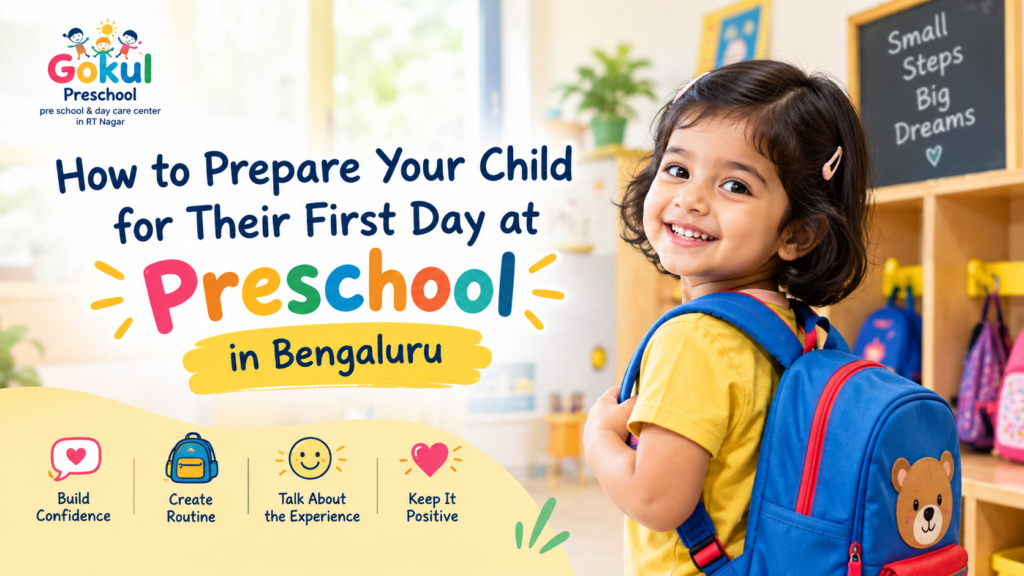
How to Prepare Your Child for Their First Day at Preschool in Bengaluru
The first day of preschool is a big moment for both children and parents. Your little one may feel excited about meeting new friends and playing with new toys, but they may also feel nervous about being away from home.
For parents, the first day can bring its own mix of emotions. You may wonder, “Will my child cry?”, “Will they eat properly?”, “Will they talk to the teacher?”, or “Will they be comfortable without me?”
These worries are completely understandable.
The good news is that you can make the transition easier with a little preparation. You don’t need to teach your child advanced reading or writing before preschool. Instead, focus on helping them become familiar with the idea of school, practise simple routines, and feel confident about spending some time away from you.
If you’re preparing your child to start preschool in Bengaluru, this guide will help you understand what you can do before the first day, what to expect during drop-off, and how to support your child during the first few weeks, Gokul Preschool.
Why Is the First Day of Preschool So Important?
Preschool is often one of a child’s first experiences in a structured learning environment.
It introduces them to:
- New teachers
- New friends
- A new classroom
- Group activities
- New routines
- Sharing and taking turns
- Spending time away from parents
- Learning through play
For some children, this change feels exciting. For others, it can feel overwhelming.
That is why preparation matters.
A familiar routine and a positive introduction to school can help children feel more comfortable. UNICEF also recommends visiting the school beforehand, practising routines, playing “school” at home, and creating a simple goodbye plan.
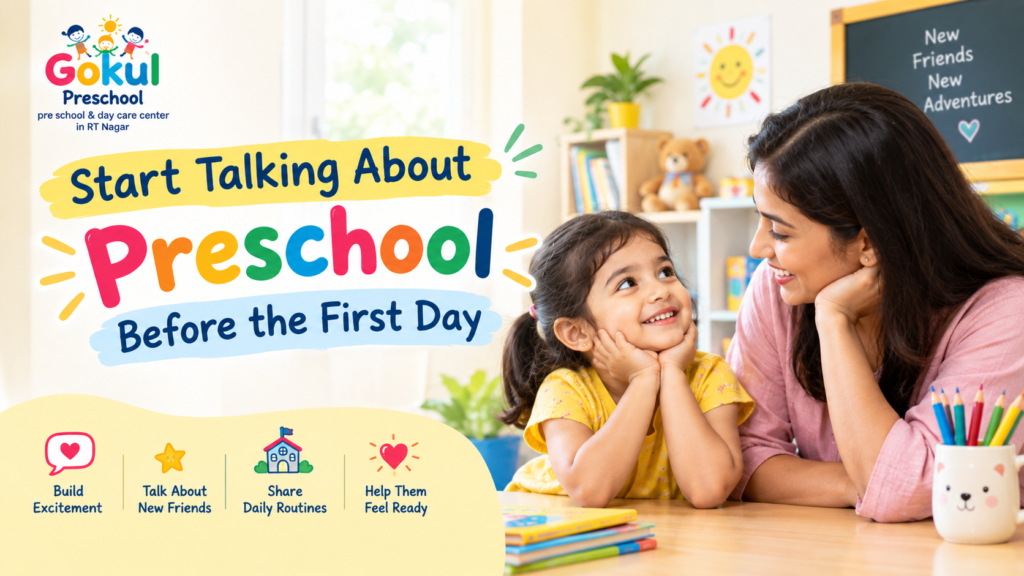
Start Talking About Preschool Before the First Day
Don’t wait until the morning of school to explain everything.
Start talking about preschool several days or weeks before the first day.
Keep the conversation simple and positive.
You can say:
“You are going to a new school where you can play and learn.”
“You will meet your teacher and some new friends.”
“I will come back to pick you up after school.”
Try not to make school sound frightening or overly serious.
Avoid statements such as:
- “Don’t cry at school.”
- “You have to behave.”
- “If you don’t listen, your teacher will be angry.”
- “You must finish everything.”
These statements can make children associate school with pressure.
Instead, help them see preschool as a safe place where they can explore, play, learn, and meet people.
Visit the Preschool Before the First Day
If the preschool allows visits before admission or the first day, take advantage of the opportunity.
A child may feel nervous when everything is unfamiliar.
Visiting beforehand can make the environment feel less new.
During the visit, show your child:
- The classroom
- The play area
- The entrance
- The washroom
- Where they may keep their bag
- Their teacher
- Other children, if possible
Let your child ask questions.
You can also say:
“This is where you will play.”
“This is where your teacher will be.”
“This is where I will bring you in the morning.”
The more familiar the environment feels, the easier it may be for your child to understand what will happen.
Create a Preschool Routine at Home
Children often feel more comfortable when they know what comes next.
A few weeks before preschool begins, gradually move your child’s daily routine closer to the school schedule.
Focus on:
Sleeping and Waking Up
Try to maintain a consistent bedtime and wake-up time.
This gives your child enough time to wake up, get dressed, eat breakfast, and leave home without everyone rushing.
Morning Routine
Practise the same basic sequence that you will use on school days:
Wake up → Brush teeth → Get dressed → Eat breakfast → Pack the bag → Leave for school
Making this routine familiar can make school mornings much calmer.
Night-Time Preparation
You can also prepare the school bag and clothes the night before.
Let your child help choose between two suitable outfits or place their water bottle in the bag.
Small responsibilities can make children feel involved.
Practise Short Separations
If your child has rarely spent time away from you, preschool may feel like a big change.
You can gently practise short separations before school starts.
For example, your child could spend some time with:
- A grandparent
- Another trusted family member
- A familiar caregiver
- A trusted family friend
Start with a short period and gradually increase it if your child is comfortable.
Always say goodbye before leaving and return when you said you would.
This helps your child learn an important lesson:
“My parent leaves, but my parent comes back.”
Short, predictable separations are commonly recommended when helping children prepare for preschool.
Play “Preschool” at Home
One of the easiest ways to help a young child understand preschool is through pretend play.
Take turns pretending to be:
- The teacher
- The student
- The parent
You can create a small classroom using toys.
For example:
“Good morning, children!”
Then pretend to:
- Sing a song
- Read a story
- Have snack time
- Clean up toys
- Sit in a circle
- Say goodbye
Then let your child become the teacher.
This can make preschool feel like something familiar and fun rather than something mysterious.
Teach Simple Independence Skills
Your child doesn’t need to do everything independently before starting preschool.
But learning a few basic skills can make the school day easier.
Encourage your child to practise:
Eating
Let them practise eating with a spoon or fork where appropriate.
Drinking Water
Teach them how to use their water bottle.
Washing Hands
Show them when and how to wash their hands.
Using the Washroom
Encourage age-appropriate independence while making sure they know how to tell an adult when they need help.
Carrying Their Bag
A small school bag can be something your child learns to carry themselves.
Cleaning Up
Teach them to put toys back after playing.
These aren’t just school skills. They also help children develop independence and confidence.
Read Books About Starting Preschool
Children often understand new experiences better through stories.
Choose simple picture books about:
- Going to school
- Making friends
- Meeting teachers
- Saying goodbye
- Trying new things
- Learning through play
While reading, ask questions such as:
“How do you think the child feels?”
“What do you think happens next?”
“What would you do if you were there?”
Don’t worry if your child gives unexpected answers.
The goal is simply to start a conversation about their feelings.
Help Your Child Talk About Feelings
Some children may not say, “I’m feeling anxious.”
Instead, they may say:
“I don’t want to go.”
“I want you to stay.”
“I don’t like school.”
Try to listen rather than immediately convincing them that there is nothing to worry about.
You can say:
“It’s okay to feel nervous. You are trying something new.”
This teaches your child that feelings are normal and that they can talk about them.
Children can feel excited, nervous, curious, shy, happy, or even scared about starting preschool.
All of these feelings can be part of the transition.
Prepare the School Bag Together
Let your child participate in preparing their bag.
Depending on the school’s requirements, it may include:
- Water bottle
- Snack or lunch
- Extra clothes
- Handkerchief or tissues
- Required school materials
- Any school-approved comfort item
Label your child’s belongings if the school recommends it.
Try not to overload the bag with unnecessary items.
A simple bag is easier for a young child to manage.
Choose Comfortable Clothes
The first day isn’t the time to experiment with uncomfortable clothing or shoes.
Choose clothes that:
- Fit comfortably
- Allow easy movement
- Are suitable for the weather
- Are easy for your child to manage
If your preschool has a uniform, let your child wear it during a practice morning before school begins if appropriate.
This can make the uniform feel familiar.
Keep the First Morning Calm
The morning of the first day can become stressful if everyone wakes up late and starts rushing.
Try to prepare as much as possible the night before.
Wake your child with enough time to:
- Get ready
- Eat breakfast
- Use the washroom
- Pack their bag
- Leave without rushing
Keep your voice calm.
Children often notice when parents are nervous.
Your confidence can help reassure them.
Keep the Goodbye Short and Positive
This is often the hardest part for parents.
Your child may cry, hold your hand tightly, or ask you not to leave.
It can be tempting to stay for a long time.
However, a short and predictable goodbye routine can be easier for children.
For example:
Hug → Kiss → Say goodbye → Reassure → Leave
You can say:
“Have fun. I will come back to pick you up after school.”
Then leave calmly.
Avoid repeatedly coming back after saying goodbye.
A consistent goodbye ritual can help children understand that leaving is temporary and that you will return.
Never Sneak Away
Some parents try to leave quietly when their child is distracted because they don’t want to see them cry.
It may seem easier in the moment, but it can make the child more uncertain about when a parent might disappear.
Instead, say goodbye clearly.
Your child may cry, but they also learn:
“Mummy or Daddy said goodbye and will come back.”
Trust between the child, parent, and school develops through predictable experiences.
What If Your Child Cries on the First Day?
Don’t panic.
Crying doesn’t automatically mean that your child dislikes the preschool.
For some children, crying is simply their way of expressing:
“I don’t want to be away from you.”
They may settle shortly after you leave.
Try to stay calm and communicate with the teacher about how your child is doing.
If your child takes longer to settle, that’s okay too.
Every child is different.
Some children walk into the classroom happily on day one.
Others need more time.
The important thing is to look for gradual progress rather than expecting an instant change.
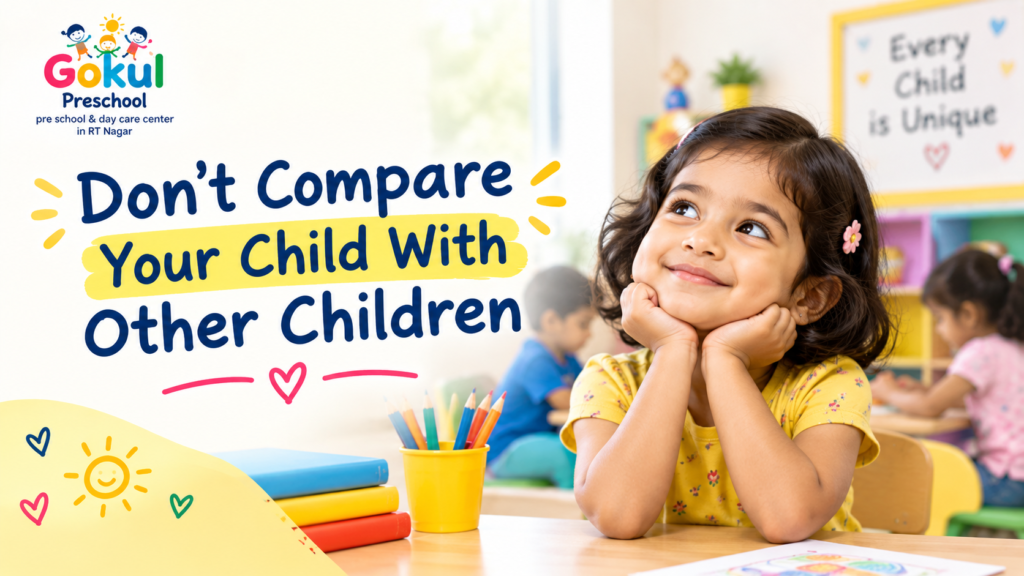
Don’t Compare Your Child With Other Children
You may see another child walk into the classroom without crying while your child refuses to let go of your hand.
Try not to compare them.
Children have different:
- Personalities
- Experiences
- Temperaments
- Routines
- Comfort levels
One child may adjust quickly.
Another may need more time.
Your job is not to make your child adjust at the same speed as someone else.
Your job is to support your child’s individual journey.
What Should You Say After School?
Instead of immediately asking:
“Did you cry?”
or
“Did you behave?”
try asking simple, positive questions.
For example:
“What did you play with?”
“What was your favourite thing today?”
“Did you hear a song?”
“Who did you meet?”
If your child doesn’t want to talk, don’t force them.
They may need some quiet time after a busy new experience.
Give Your Child Time to Adjust
The first day is only the beginning.
Your child may need several days or weeks to become comfortable with the new routine.
During this period, you may notice:
- More tiredness
- Clinginess
- Mood changes
- Less talking after school
- Increased need for rest
Stay patient and communicate with the preschool if you have concerns.
A consistent routine at home and a supportive classroom can make the transition easier.
What Parents Should Avoid Before Preschool Starts
Don’t Scare Your Child With School
Avoid using school as a threat.
Don’t Force Academic Preparation
Your child doesn’t need to know everything before joining preschool.
Early learning includes play, communication, movement, creativity, social interaction, and independence.
Don’t Make Huge Promises
Avoid saying:
“You will have the best day ever!”
If the day turns out to be difficult, your child may feel confused.
Instead say:
“You may feel a little nervous at first, but your teacher will help you.”
Don’t Make Goodbyes Too Long
A long emotional goodbye can sometimes make separation harder.
Don’t Expect Immediate Independence
Your child is still learning.
Give them time.
A Simple First-Day Checklist for Parents
Before leaving home, check that your child has:
☐ Comfortable clothes
☐ School bag
☐ Water bottle
☐ Snack or lunch, if required
☐ Extra clothes, if required
☐ Necessary school supplies
☐ Any approved comfort item
☐ Enough time to reach school without rushing
Most importantly:
☐ A calm and confident parent
How Gokul Preschool in RT Nagar Helps Children Begin Their Journey
Choosing the right preschool is an important part of preparing your child for their first school experience.
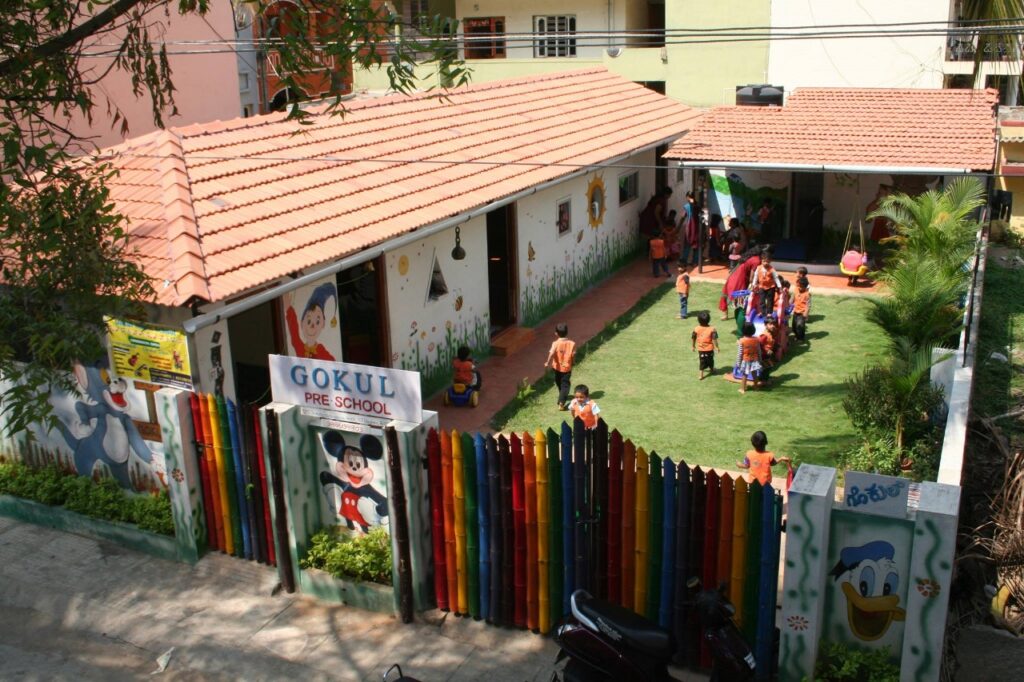
At Gokul Preschool in RT Nagar, we believe that young children need a warm, caring, and engaging environment where they can gradually become comfortable with school.
Our approach focuses on learning through age-appropriate experiences such as:
- Play
- Stories
- Music
- Art
- Movement
- Hands-on activities
- Group interaction
- Creative exploration
We understand that every child is different.
Some children may confidently enter the classroom from day one. Others may need reassurance and time.
A child-friendly preschool should give children the space to adjust while helping them build confidence and independence.
For families searching for a preschool in RT Nagar, Bengaluru, Gokul Preschool aims to provide an environment where children can enjoy their early learning years while developing important social, emotional, physical, and communication skills.
How to Prepare Your Child for Their First Day at Preschool FAQs
How can I prepare my child for their first day at preschool in Bengaluru?
Start by talking positively about preschool, visiting the school beforehand, practising the school routine, encouraging simple independence, and trying short separations from your child before the first day.
How early should I start preparing my child for preschool?
There is no single perfect timeline, but starting several weeks before preschool can give your child enough time to become familiar with new routines, sleeping times, morning preparation, and short separations.
What if my child cries on the first day of preschool?
Crying can be a normal response to being separated from a parent and entering a new environment. Stay calm, keep the goodbye short, and allow the teacher to help your child settle.
Should I stay with my child on the first day?
This depends on the preschool’s settling-in process. If the school recommends a normal drop-off, a brief and confident goodbye is often easier than staying for a long time.
Should I sneak away when my child is not looking?
It is generally better to say goodbye clearly rather than disappear without telling your child. A predictable goodbye routine can help build trust and make separation easier.
What should my child know before starting preschool?
Your child doesn’t need advanced academic skills. Basic abilities such as communicating needs, following simple instructions, washing hands, eating with some independence, and participating in simple routines can be helpful.
How can I reduce separation anxiety before preschool?
Practise short separations, establish a consistent routine, visit the school, talk positively about preschool, and create a simple goodbye ritual. If concerns persist or become severe, discuss them with your child’s pediatrician or another qualified professional.
What should I pack for my child’s first day?
Follow your preschool’s instructions. Common items may include a labelled water bottle, snack or lunch, extra clothes, and required school materials.
How long does it take for a child to adjust to preschool?
There is no fixed time. Some children become comfortable quickly, while others need several weeks. Look for gradual progress and communicate with the teacher about your child’s adjustment.
How can Gokul Preschool in RT Nagar help my child adjust?
Gokul Preschool in RT Nagar provides a child-friendly environment where children can learn through play, activities, stories, music, movement, and interaction. Teachers can work with parents to help children gradually become comfortable with their new routine.
Final Thoughts
Preparing your child for their first day at preschool doesn’t mean teaching them everything before they arrive.
It means helping them feel safe, familiar, confident, and ready to explore.
Start with small steps.
Talk positively about preschool. Visit the school. Practise short separations. Create a predictable routine. Encourage simple independence. Play school at home. Prepare the school bag together.
And when the first morning arrives, remember that a little nervousness is normal.
If your child cries, don’t immediately assume something is wrong. Give them time, stay calm, and work together with the teachers.
That first goodbye may feel difficult, Gokul Preschool.
But over time, that same little hand that once held yours tightly at the school gate may one day let go and run happily into the classroom.
That’s the beautiful beginning of the preschool journey.