What Activities Should a Good Preschool Offer Children?
When parents visit a preschool, they often look at the classroom, teachers, safety arrangements, fees and facilities. But there is another important question that is easy to forget:
What will my child actually do during the school day?
Preschool children learn best when they are given opportunities to play, explore, move, create, talk and discover things for themselves. A good preschool should therefore offer more than worksheets and memorising letters or numbers.
Activities should be suitable for the child’s age and should support different areas of development. Indian early-childhood education guidance highlights play-based, activity-based and inquiry-based learning, including language, early numeracy, physical development, social skills, art, craft, music, movement, problem-solving and indoor and outdoor play.
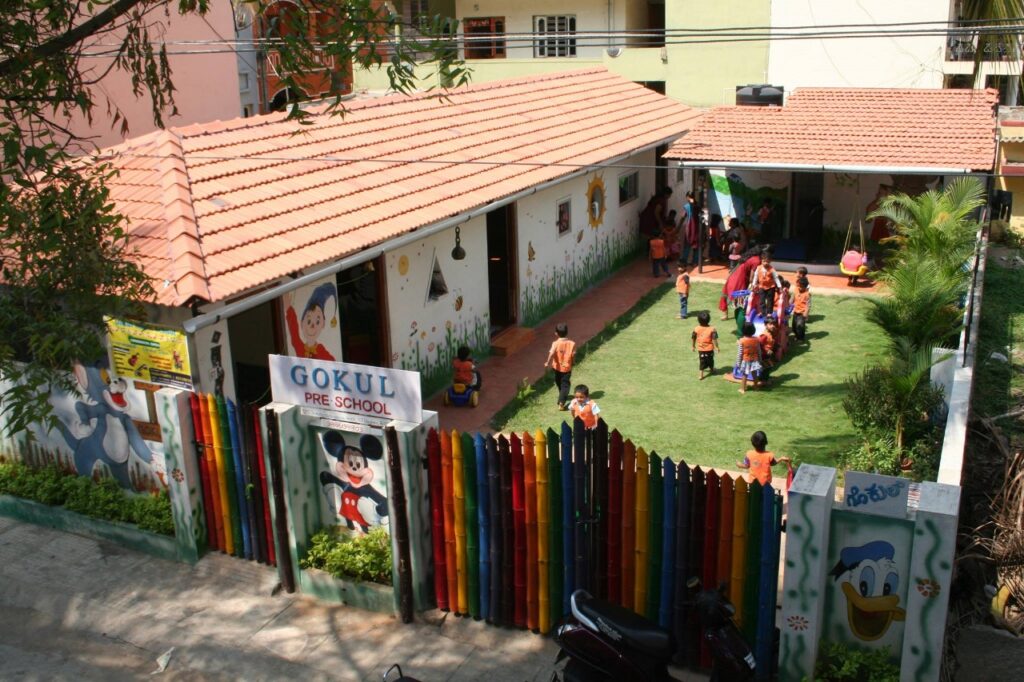
For parents looking for a preschool in Bengaluru, especially around RT Nagar, understanding the activities offered by a school can help you decide whether its learning environment is suitable for your child, Gokul Preschool.
Why Are Activities Important in Preschool?
Young children learn by doing.
A child may understand the idea of a big and small object much better when they can hold two objects and compare them instead of only looking at a worksheet.
Similarly, children can learn communication through storytelling, social skills through group games, coordination through movement and creativity through painting.
Play and hands-on activities allow children to actively participate in learning. Government early-childhood education material also notes that play supports observation, experimentation, problem-solving, creativity, physical development and confidence.
This is why a good preschool should provide a balanced mix of activities rather than focusing on only one type.
1. Storytelling Activities
Storytelling is one of the simplest and most useful preschool activities.
Teachers can use:
- Picture books
- Short stories
- Puppet stories
- Character conversations
- Picture cards
- Story sequencing
- Storytelling with actions
After a story, children can be encouraged to answer simple questions.
For example:
“Who was in the story?”
“What happened next?”
“Which animal did you like?”
These simple conversations encourage children to listen, remember information and express their thoughts.
Storytelling can also introduce new vocabulary and help children understand emotions, friendship and everyday situations.
2. Rhymes, Music and Singing
Music can make learning enjoyable.
A preschool can include:
- Nursery rhymes
- Action songs
- Clapping games
- Simple musical instruments
- Rhythm activities
- Singing in groups
- Music and movement
Children can clap to a beat, move their bodies to music or follow simple actions.
These activities give children opportunities to listen, remember patterns, participate with others and express themselves.
The important thing is that music should be an enjoyable experience rather than a competition.
3. Art and Craft Activities
Every good preschool should provide opportunities for creative expression.
Children can try:
- Drawing
- Colouring
- Painting
- Finger painting
- Paper tearing and pasting
- Collage
- Clay modelling
- Simple craft projects
- Printing activities
The purpose is not to make every child’s work look perfect.
If ten children paint the same tree and every tree looks different, that is perfectly fine.
The activity gives children an opportunity to make choices, experiment with materials and express their imagination.
4. Building and Block Activities
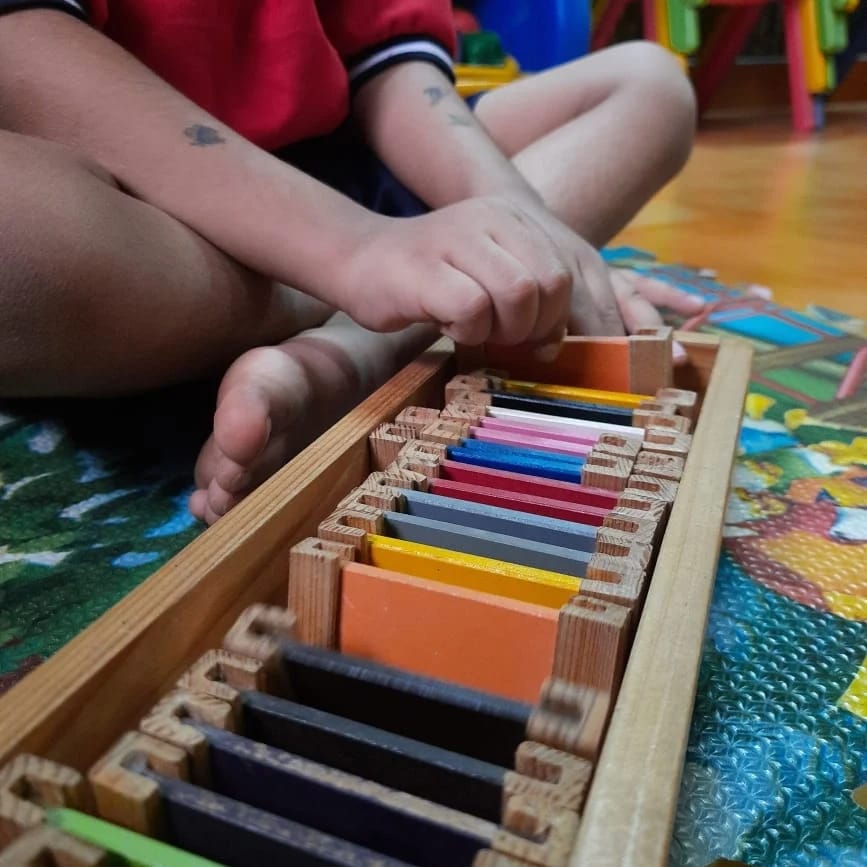
Blocks and construction toys are excellent for hands-on learning.
Children can build:
- Houses
- Towers
- Bridges
- Roads
- Simple structures
They can also sort blocks by:
- Colour
- Shape
- Size
While playing, children may naturally practise counting, comparison, balance, planning and problem-solving.
If a tower falls down, children can try again and change the design.
That simple process teaches an important lesson:
Try, observe, change and try again.
5. Pretend Play and Role Play
Pretend play gives children opportunities to use their imagination.
A classroom can become:
- A grocery shop
- A doctor’s clinic
- A restaurant
- A school
- A bus station
- A home
- A post office
Children can take different roles and interact with one another.
For example, one child can pretend to be the doctor while another becomes the patient.
Role play can encourage communication, imagination, cooperation and confidence.
It also gives children a safe way to understand everyday experiences.
6. Sensory Activities
Preschool children enjoy exploring different textures, sounds, colours and materials.
Age-appropriate sensory activities can include:
- Sand play
- Water play
- Clay
- Rice or grain exploration
- Texture boards
- Colour mixing
- Safe natural materials
- Simple sensory trays
These activities allow children to explore using their senses.
Teachers should always choose materials carefully and supervise children, especially when activities involve small objects.
7. Outdoor Play
A preschool should not keep children indoors throughout the day.
Outdoor play gives children opportunities to move their bodies and explore their surroundings.
Activities may include:
- Running
- Jumping
- Ball games
- Balancing
- Climbing
- Catching
- Throwing
- Obstacle courses
- Nature walks
- Gardening
Outdoor activities can also become learning experiences.
For example, teachers can ask children to look for:
“Can you find a green leaf?”
“How many flowers can you see?”
“Which object is bigger?”
This combines movement with observation and early learning.
8. Fine-Motor Activities
Fine-motor skills involve the smaller muscles of the hands and fingers.
Preschools can support these skills through:
- Bead threading
- Peg activities
- Play dough
- Puzzles
- Drawing
- Colouring
- Tearing paper
- Pasting
- Using child-safe tweezers
- Simple tracing
- Building activities
These activities can gradually prepare children for tasks such as using pencils, turning pages and managing everyday objects.
9. Early Literacy Activities
A good preschool should introduce language and early literacy in an enjoyable way.
Activities can include:
- Alphabet recognition
- Letter matching
- Picture-word matching
- Storybooks
- Sound games
- Name recognition
- Rhyming games
- Letter tracing
- Picture sequencing
Children do not need to spend the whole day writing letters.
At the preschool stage, language learning can happen naturally through conversation, stories, songs and games.
10. Early Maths Activities
Early mathematics should also be hands-on.
Teachers can introduce concepts through:
- Counting objects
- Sorting
- Matching
- Shapes
- Colours
- Patterns
- Comparing sizes
- Number games
- Simple puzzles
For example, instead of asking children to complete ten counting questions on paper, a teacher might give them ten blocks and ask them to count them together.
This makes the concept easier to understand.
11. Science and Simple Discovery Activities
Preschool science does not need complicated experiments.
Children can explore simple questions such as:
- What floats and what sinks?
- What happens when ice melts?
- Which objects are rough or smooth?
- What happens when colours are mixed?
- Which objects are magnetic?
- How do plants grow?
The goal is not to make children memorise scientific definitions.
It is to encourage them to observe, ask questions and make simple predictions.
12. Nature Activities
Nature can become a wonderful classroom.
Teachers can take children outside to observe:
- Leaves
- Flowers
- Trees
- Birds
- Insects
- Clouds
- Weather
- Different textures
Children can collect safe natural objects, draw what they see or talk about changes in the environment.
Nature activities can encourage curiosity and observation.
13. Group Games
Children also need opportunities to learn with other children.
Group games can include:
- Passing the ball
- Simon Says
- Follow the Leader
- Musical games
- Matching games
- Simple team activities
- Circle games
These activities can help children practise:
- Listening
- Waiting
- Taking turns
- Following instructions
- Cooperation
- Communication
The teacher should make sure that group games remain age-appropriate and enjoyable.
14. Movement and Physical Activities
Young children need plenty of opportunities to move.
Preschools can include:
- Dancing
- Stretching
- Simple yoga
- Balancing
- Jumping
- Hopping
- Marching
- Action games
Movement activities can help children develop body awareness and coordination.
They also provide a healthy break between quieter classroom activities.
15. Life-Skill Activities
Preschool is also a good place for children to practise independence.
Simple activities can include:
- Washing hands
- Packing away toys
- Carrying their own water bottle
- Organising classroom materials
- Cleaning up after activities
- Opening simple containers
- Following snack routines
These may look like ordinary tasks, but they help children become more confident and independent.
16. Social and Emotional Activities
A good preschool should also create opportunities for children to understand their feelings and interact positively with others.
Teachers can use:
- Emotion cards
- Group conversations
- Puppet stories
- Role play
- Sharing activities
- Friendship games
- Problem-solving situations
Children can learn simple ideas such as:
“How do you feel?”
“How can we help our friend?”
“What can we do if two children want the same toy?”
These conversations can help children gradually understand emotions and social behaviour.
17. Puzzle and Problem-Solving Activities
Puzzles encourage children to think.
Preschools can offer:
- Jigsaw puzzles
- Matching puzzles
- Shape puzzles
- Pattern activities
- Sorting games
- Memory games
- Simple mazes
- Building challenges
The teacher does not always need to give the answer.
Sometimes asking “What could you try next?” gives the child an opportunity to think independently.
18. Free Play
One activity that parents sometimes overlook is free play.
Not every minute of the preschool day needs to be directed by an adult.
During free play, children can choose:
- Blocks
- Books
- Pretend play
- Drawing
- Puzzles
- Toys
- Construction materials
Free play gives children opportunities to make choices, interact with friends and follow their own interests.
A balanced preschool day can include both teacher-guided activities and child-led play. Contemporary Bengaluru preschool programmes also commonly describe this balance between structured activities, guided exploration and free play.
19. Festival and Cultural Activities
Preschools can introduce children to Indian culture through age-appropriate activities.
For example:
- Diwali craft
- Onam flower activities
- Ganesh Chaturthi art
- Independence Day activities
- Republic Day activities
- Traditional music
- Cultural dress-up
- Festival storytelling
These activities can make the school year more colourful while helping children learn about different traditions.
The focus should be on participation and understanding rather than complicated performances.
20. A Good Preschool Should Not Have Activities Just for Show
This is an important point for parents.
A long activity list does not automatically mean a preschool offers better learning.
Instead, ask:
Why is this activity being done?
For example:
Painting may support creativity and fine-motor development.
A sorting game may introduce early mathematics.
A story may support language and listening.
Outdoor play may support physical development.
Role play may support communication and social skills.
Good activities have a purpose, even when children simply feel like they are having fun.
How Parents Can Check a Preschool’s Activities
When visiting a preschool, don’t only ask:
“What activities do you offer?”
Ask more specific questions:
- What does a normal day look like?
- How much time is spent playing?
- Do children get outdoor time?
- Are activities age-appropriate?
- Are children given opportunities for free play?
- How often are art and craft activities conducted?
- Do teachers use stories and music?
- Are hands-on learning activities included?
- How do teachers support children who are shy?
- Are activities different for different age groups?
If possible, ask to see examples of children’s work or observe an ongoing classroom activity.
Why Gokul Preschool in RT Nagar Focuses on Activity-Based Learning
For parents looking for a preschool in RT Nagar, Bengaluru, Gokul Preschool provides age-appropriate learning experiences that combine early academics with activities, creativity, play and interaction.
Its preschool programmes include opportunities such as storytelling, art and craft, indoor and outdoor play, classroom discussions, activity-based learning and routines that encourage independence.
The aim is to give children a comfortable environment where they can learn concepts while also developing communication, confidence, creativity and social skills.
Parents considering Gokul Preschool can visit the centre and understand the learning environment before making an admission decision.
A Simple Preschool Activity Checklist for Parents
When comparing preschools, use this quick checklist:
☐ Storytelling
☐ Rhymes and music
☐ Art and craft
☐ Drawing and colouring
☐ Building blocks
☐ Pretend play
☐ Sensory activities
☐ Outdoor play
☐ Fine-motor activities
☐ Early literacy activities
☐ Early maths activities
☐ Nature exploration
☐ Science and discovery
☐ Group games
☐ Movement activities
☐ Life-skill activities
☐ Social-emotional activities
☐ Puzzles and problem-solving
☐ Free play
☐ Cultural activities
You do not need every activity to happen every day.
What matters is whether the preschool provides a healthy variety over time.
What Activities Should a Good Preschool Offer Children FAQs
What are the most important activities in preschool?
Important preschool activities include storytelling, art, music, movement, outdoor play, building, pretend play, sensory activities, early literacy, early maths, puzzles, social games and free play.
Should preschool children have outdoor activities?
Yes. Outdoor activities give children opportunities for movement, exploration and physical play. A preschool should provide safe, age-appropriate opportunities for outdoor activity when possible.
Are worksheets enough for preschool children?
No. Worksheets can be one small part of learning, but young children also benefit from play, conversations, hands-on activities, movement, creativity and exploration.
Why is free play important in preschool?
Free play allows children to make choices, use their imagination, interact with other children and explore their own interests. It can complement teacher-guided learning.
What activities help preschool children develop communication skills?
Storytelling, picture discussions, rhymes, songs, role play, show-and-tell and group conversations can provide opportunities for children to listen and express themselves.
What activities help with fine-motor development?
Drawing, colouring, clay, puzzles, threading, tearing and pasting paper, peg activities and building blocks can help children practise hand and finger movements.
What activities help children learn early maths?
Counting objects, sorting, matching, pattern activities, shape games, size comparisons and simple puzzles can introduce early mathematical concepts in an engaging way.
How can parents know if a preschool offers good activities?
Visit the preschool and ask to see a typical daily routine. Look for a balance of guided activities, free play, indoor learning, outdoor movement, creativity, social interaction and age-appropriate academic experiences.
Final Thoughts
So, what activities should a good preschool offer children?
A good preschool should offer much more than worksheets.
Children should have opportunities to listen, speak, move, create, build, explore, imagine, solve problems, play with friends and become more independent.
The best activities do not always look like traditional classroom learning.
A child building a tower is learning.
A child painting is learning.
A child pretending to run a shop is learning.
A child playing a group game is learning.
A child asking why a leaf is green is learning.
Preschool should make children curious about the world around them while giving them the confidence to explore it.
For parents in Gokul Preschool RT Nagar and across Bengaluru, the best way to understand a preschool’s activities is to visit the school, observe a classroom and ask how activities fit into the child’s everyday learning.