Questions to Ask Before Choosing a Preschool in RT Nagar
Choosing a preschool is an important decision for every parent. For many children, preschool is their first experience of being away from home for a few hours. It is where they begin making friends, talking to teachers, following routines, exploring new ideas and becoming more independent.
For parents in RT Nagar, Bengaluru, there are many preschool options to consider. This can make the decision exciting, but it can also make it confusing. A colourful classroom or a long list of activities may look impressive, but parents need to look deeper.
The right preschool should provide a safe, caring and enjoyable environment where children can learn at their own pace.
One of the best ways to understand a preschool is to ask the right questions before admission.
This guide shares the most important questions parents should ask when visiting a Gokul Preschool in RT Nagar.
Why Should Parents Ask Questions Before Choosing a Preschool?
A preschool may look great online, but parents see only a small part of the picture through photographs and advertisements.
A school visit gives you the chance to understand:
- How teachers interact with children
- What children do during a normal day
- How learning takes place
- How the school handles safety
- How teachers support emotional needs
- How parents receive updates
- What is included in the fees
- Whether the environment feels comfortable for your child
Recent preschool guidance also recommends treating a school visit as a chance to understand the school’s culture and daily practices rather than simply looking at infrastructure.
So, before visiting a preschool, prepare a list of questions.
Questions About the Preschool’s Learning Approach
1. How do children learn here?
This should be one of your first questions.
Ask the preschool to explain how learning happens during a normal day.
For young children, learning can happen through:
- Stories
- Games
- Songs and rhymes
- Art and craft
- Building activities
- Conversations
- Outdoor play
- Hands-on activities
- Simple classroom tasks
Ask whether children get opportunities to explore and participate instead of simply following instructions.
2. Is the curriculum play-based?
Play is an important part of early childhood learning.
Ask:
“How much time do children get for play and hands-on activities?”
A good preschool should balance early academic learning with play, creativity, movement and social interaction.
3. What will my child learn during the year?
Ask for a simple explanation of the learning goals.
You may want to know how the school supports:
- Early reading
- Vocabulary
- Number recognition
- Counting
- Shapes and colours
- Fine motor skills
- Communication
- Creativity
- Social skills
- Independence
The goal is not to make preschool feel like primary school. It is to build a strong foundation in an age-appropriate way.
Questions About Teachers
4. What qualifications and experience do the teachers have?
Teachers spend a large part of the day with your child, so their experience and approach matter.
Ask:
- What training do teachers receive?
- How much experience do they have with young children?
- Do teachers receive regular training?
- How does the school support teachers?
Do not be afraid to ask these questions. You are choosing someone who will play an important role in your child’s early years.
5. How do teachers handle a child who is shy?
Children have different personalities.
Some children start talking immediately. Others need several days or weeks before they become comfortable.
Ask:
“How do you help children who are shy or take longer to participate?”
A caring teacher should give the child time instead of forcing them to perform.
6. What happens if my child cries?
This is especially important for children starting preschool for the first time.
Ask how teachers respond when a child:
- Cries during drop-off
- Misses their parents
- Refuses to enter the classroom
- Does not want to participate
- Becomes upset during the day
The answer can tell you a lot about the school’s understanding of children’s emotions.
Questions About Safety
7. How do you keep children safe?
Safety should always be one of the biggest priorities when choosing a preschool.
Ask about:
- Entry and exit control
- Visitor access
- Child supervision
- Pick-up procedures
- Emergency procedures
- First aid
- Fire safety
- Outdoor play safety
- Staff responsibilities
Do not settle for a simple answer such as “children are safe here.”
Ask for details.
8. Who is allowed to pick up my child?
Ask how the preschool verifies the person collecting a child.
Find out:
- Whether parents need to provide authorised pickup details
- What happens if someone else comes to collect the child
- How the school handles unexpected pickup changes
Clear procedures can give parents greater peace of mind.
9. What happens during an emergency?
Ask:
“What is your procedure if a child gets injured or becomes seriously unwell?”
Also ask whether staff are trained in first aid and what happens when parents cannot immediately reach the school.
Questions About Classroom Size
10. How many children are there in one classroom?
The number of children in a classroom can affect how much individual attention teachers can provide.
Ask:
- How many children are in each class?
- How many teachers are present?
- Are assistants available?
- Does the number change during different activities?
Rather than focusing only on a particular ratio, consider whether the staff can comfortably supervise and support the children.
Questions About the Daily Routine
11. What does a typical school day look like?
Ask the school to walk you through a normal day.
For example:
Arrival → Free Play → Circle Time → Learning Activities → Snack → Creative Activity → Indoor/Outdoor Play → Storytelling → Closing Routine
A balanced routine gives children opportunities to learn, play, move and rest.
12. How much time do children spend outdoors?
Outdoor play supports movement and gives children a break from sitting activities.
Ask:
- Is outdoor play available every day?
- Is the outdoor area safe?
- What activities do children do outside?
- What happens during rainy or extremely hot weather?
If outdoor play is limited, ask how the school provides physical activity indoors.
Questions About Social and Emotional Development
13. How do you teach children to share and take turns?
Preschool is not only about ABCs and numbers.
Children also learn how to:
- Share toys
- Wait for their turn
- Listen to others
- Work together
- Express feelings
- Make friends
- Solve small disagreements
Ask how teachers encourage these skills naturally during the school day.
14. How do you handle challenging behaviour?
Children are still learning how to manage their emotions.
Ask:
“What do teachers do when a child hits, pushes, refuses to participate or becomes very upset?”
Look for an approach based on patience, guidance and age-appropriate boundaries rather than fear or humiliation.
Questions About Hygiene and Health
15. How often are classrooms and toys cleaned?
Ask about cleaning routines for:
- Classrooms
- Toys
- Washrooms
- Tables
- Play areas
- Frequently touched surfaces
You should also check the condition of these areas during your visit.
16. What happens if my child becomes sick?
Ask:
- How are parents informed?
- Is there a separate area where an unwell child can wait safely?
- What happens during a minor injury?
- Does the school have first-aid facilities?
- What are the school’s policies regarding sick children?
Clear answers are important.
Questions About Parent Communication
17. How will I know how my child is doing?
Parents should not have to wait until the end of the year to understand their child’s progress.
Ask about:
- Parent-teacher meetings
- Progress updates
- Teacher communication
- Activity updates
- School apps or communication platforms
- How concerns are discussed
Good communication helps parents and teachers work as a team.
18. Can I speak to the teacher if I have a concern?
Ask how parents can raise questions or concerns.
For example:
“If I notice a change in my child’s behaviour at home, whom should I speak to?”
A preschool should have a clear and respectful communication process.
Questions About Fees
19. What is included in the preschool fee?
Do not ask only:
“How much is the fee?”
Instead ask:
“Can you explain the complete fee structure and what is included?”
Check whether the fee covers:
- Tuition
- Activities
- Learning materials
- Events
- Books
- Uniform
- Meals or snacks
- Daycare
- Transportation
20. Are there any additional charges?
This is an important question that many parents forget.
Ask whether there are extra charges for:
- Annual activities
- Field trips
- Special events
- Materials
- Daycare
- Transportation
- Extended hours
Getting this information early helps you plan your budget properly.
Questions About Location and Timings
21. What are the school timings?
Ask about:
- Regular school hours
- Arrival time
- Pickup time
- Late pickup policy
- Daycare timings
- Holiday schedule
22. Is the preschool convenient from my home?
RT Nagar has many preschool options, so location can be an important factor when comparing schools. Current local directories show a wide range of preschool and daycare choices across the area.
Think about your daily travel.
Ask yourself:
“Can my child comfortably travel to and from this preschool every day?”
A convenient location can make morning routines much easier for both parents and children.
Questions About Daycare
If you are a working parent and need extended care, ask:
23. Does the preschool provide daycare?
If yes, ask:
- What are the daycare timings?
- What activities are included?
- Is there a rest period?
- Are meals or snacks provided?
- Who supervises children?
- Is daycare available throughout the week?
Do not assume preschool and daycare operate in exactly the same way.
Questions About Your Child’s Progress
24. How do you track children’s progress?
Ask how teachers understand a child’s development.
A preschool may use:
- Classroom observation
- Activity participation
- Portfolios
- Teacher notes
- Parent discussions
- Age-appropriate assessments
The purpose should be to understand the child’s progress and provide support, not to put unnecessary pressure on young children.
25. How will you tell me if my child needs extra support?
Ask:
“What happens if my child is struggling with a particular skill?”
For example, your child may need more support with:
- Speaking
- Fine motor skills
- Following instructions
- Social interaction
- Early writing
- Number concepts
Knowing how the school communicates such concerns can help parents support the child at home.
Questions to Ask During the Campus Visit
Apart from asking questions, spend some time observing.
Look at:
- Are teachers patient?
- Are children comfortable?
- Do children get opportunities to talk?
- Are classrooms clean?
- Are toys and materials accessible?
- Is the environment noisy or overwhelming?
- Do teachers encourage children?
- Are children given enough opportunities to move?
- Does the school feel welcoming?
Sometimes what you see can be just as useful as what you are told.
Questions Parents Should Ask Themselves
After visiting a preschool, sit down and think about your child’s needs.
Ask yourself:
Will my child feel comfortable here?
Your child does not need to love the school immediately, but the environment should feel welcoming.
Do I trust the teachers?
Parents should feel comfortable leaving their child with the teaching team.
Does the learning approach match my expectations?
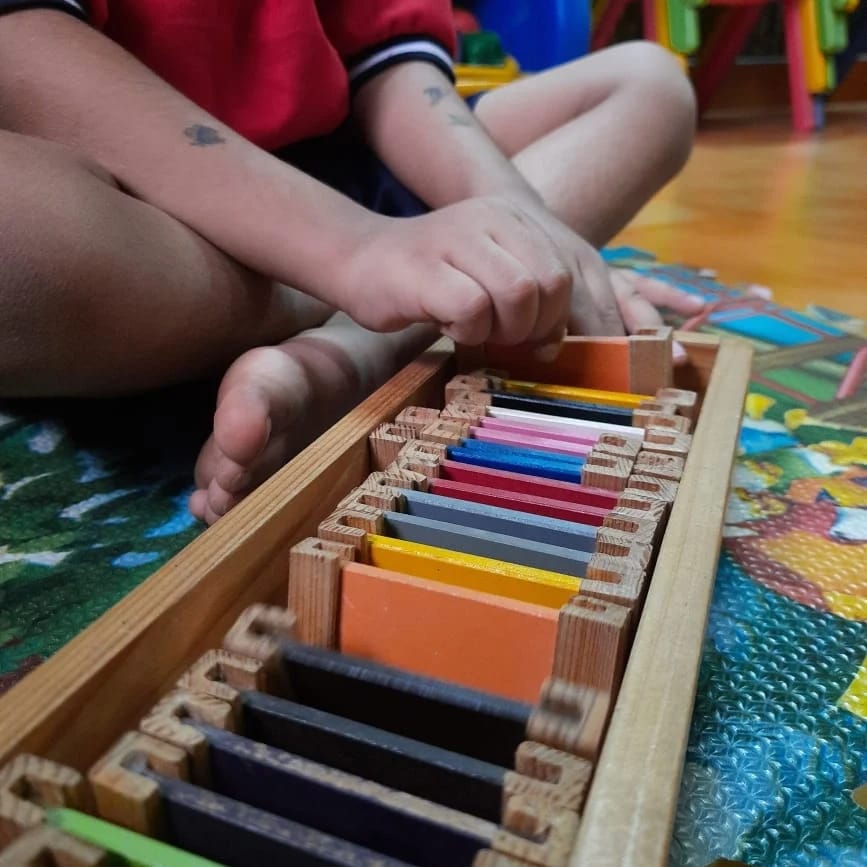
Think about whether you want a school that gives greater emphasis to play, Montessori-style activities, structured academics, creative learning or a combination of approaches.
Is the location practical?
Consider traffic, travel time and your family’s daily routine.
Does the preschool communicate clearly?
If the school answers your questions openly, that is a positive sign.
Red Flags Parents Should Not Ignore
While visiting preschools, watch for warning signs such as:
- Teachers shouting at children
- Unclean classrooms or washrooms
- Children being left without proper supervision
- Vague answers about safety
- Hidden or unclear fees
- Too much pressure on very young children
- No clear parent communication system
- Staff unwilling to answer reasonable questions
- Children appearing consistently uncomfortable or fearful
One small issue does not always mean a preschool is unsuitable, but repeated concerns deserve attention.
Why Parents Can Consider Gokul Preschool in RT Nagar
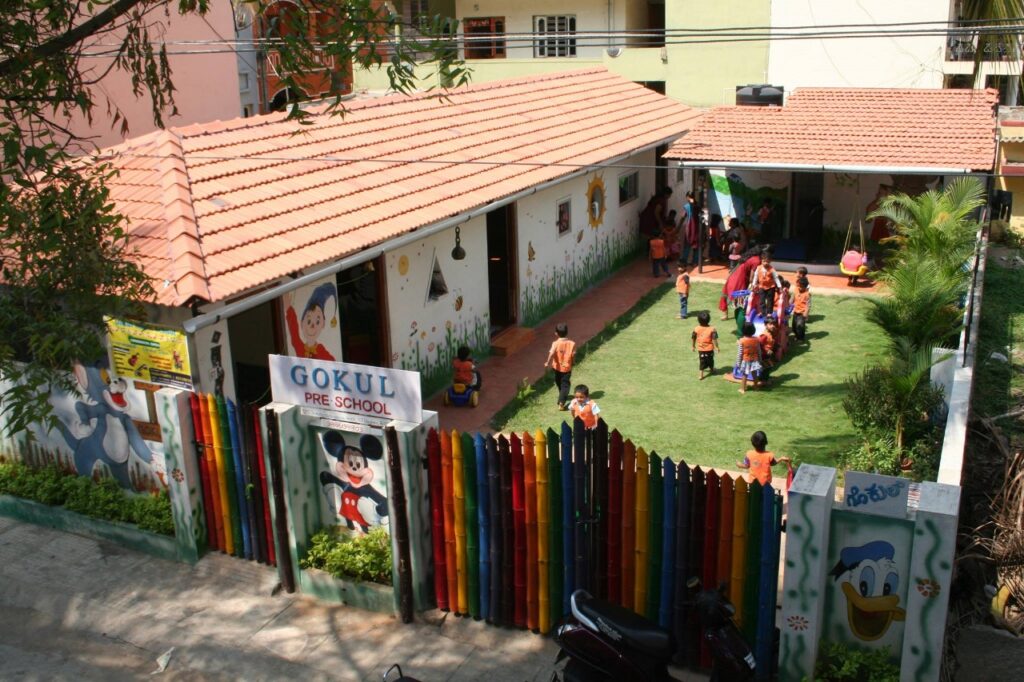
For families looking for a preschool in RT Nagar, Gokul Preschool provides an environment focused on early learning, creativity, communication, confidence and overall development.
The preschool offers programs including Playgroup, Nursery, LKG and UKG, along with daycare services. Its learning approach includes activities such as storytelling, creative work, classroom discussions, play and age-appropriate academic learning.
Parents can visit the preschool, understand the learning environment and speak with educators before making an admission decision.
Gokul Preschool – pre school & day care center in RT nagar is located at 25, 1st Cross Rd, Chowdiah Block, Mannarayanapalya, Chamundi Nagar, RT Nagar, Bengaluru, Karnataka 560032.
Parents can contact the preschool at +91 98861 98803 for current admission information.
A Simple Preschool Visit Checklist
Before leaving the preschool, make sure you have answers to these questions:
☐ What is the learning approach?
☐ What will my child learn?
☐ Who are the teachers?
☐ What is the classroom size?
☐ How are children supervised?
☐ How is the campus secured?
☐ What happens during emergencies?
☐ How are crying and separation anxiety handled?
☐ What does a normal day look like?
☐ How much outdoor play is provided?
☐ How is hygiene maintained?
☐ How are parents updated?
☐ How is progress tracked?
☐ What is the complete fee structure?
☐ Are there additional charges?
☐ What are the school timings?
☐ Is daycare available?
☐ What documents are needed?
☐ When does admission begin?
☐ Most importantly, will my child feel happy and comfortable here?
Questions to Ask Before Choosing a Preschool in RT Nagar FAQs
What should I ask a preschool before admission?
Parents should ask about the curriculum, teachers, safety, classroom size, daily routine, hygiene, fees, parent communication, progress tracking, school timings and how teachers handle children’s emotional needs.
How many preschools should I visit before choosing one?
There is no fixed number. Visiting two or three carefully shortlisted preschools can give parents useful points of comparison. The important thing is to visit during school hours and observe the actual environment.
What should I look for during a preschool visit?
Look at teacher-child interaction, classroom cleanliness, safety arrangements, children’s comfort, learning materials, play opportunities and how teachers communicate with children.
Is safety more important than academics in preschool?
Both matter, but safety and emotional well-being should come first. Children learn best when they feel secure, comfortable and supported.
What questions should I ask about preschool fees?
Ask for the complete fee structure and check whether books, activities, materials, uniforms, events, daycare and transportation involve additional charges.
Should I choose a preschool close to home?
For many Bengaluru families, a convenient location can make daily drop-offs and pickups easier. Consider travel time, traffic and your family’s routine before making a decision.
How do I know if my child will be happy at a preschool?
Observe how teachers interact with children and how your child responds during the visit. A welcoming environment, patient teachers and opportunities for play and exploration are good signs.
Why is parent-teacher communication important?
Regular communication allows parents and teachers to share information about the child’s progress, behaviour, interests and areas where additional support may be useful.
Final Thoughts
Choosing a preschool in RT Nagar does not have to be stressful.
You do not need to choose a school simply because it has a beautiful building, attractive classrooms or a long list of activities.
Instead, ask questions.
Ask about teachers, safety, learning, play, communication, routines, fees and your child’s emotional well-being.
Visit the preschool and observe how adults interact with children. Listen carefully to the answers you receive. Most importantly, think about whether the school feels like a place where your child can feel safe, confident and excited to learn.
The right preschool is not necessarily the one that looks perfect on paper. It is the one that fits your child’s needs and your family’s expectations, Gokul Preschool.