How Many Hours Should a Preschool Child Spend in School
One of the most common questions parents ask before enrolling their child in preschool is, “How many hours should my child spend in school each day?”
As parents, it is natural to want the best balance between learning, play, rest, and family time. While preschool is important for a child’s development, spending too many hours in a classroom may not always be beneficial for young children.
The ideal preschool schedule should support a child’s learning, social development, emotional well-being, and physical needs without causing stress or exhaustion.
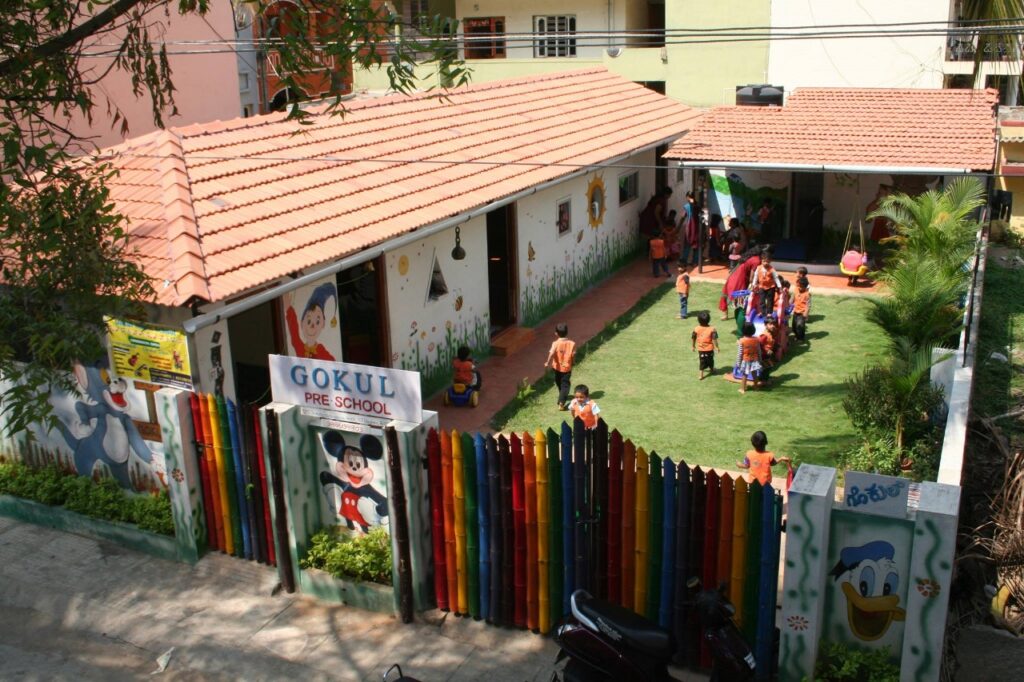
At Gokul Preschool in RT Nagar, we understand that every child develops at their own pace. That’s why our programs are designed to provide meaningful learning experiences while maintaining a healthy balance between education, play, and rest.
In this blog, we’ll discuss how many hours preschool children should spend in school, factors that affect preschool timing, and how parents can choose the right schedule for their child.
- Why Preschool Timing Matters
- What Is the Ideal Preschool Duration?
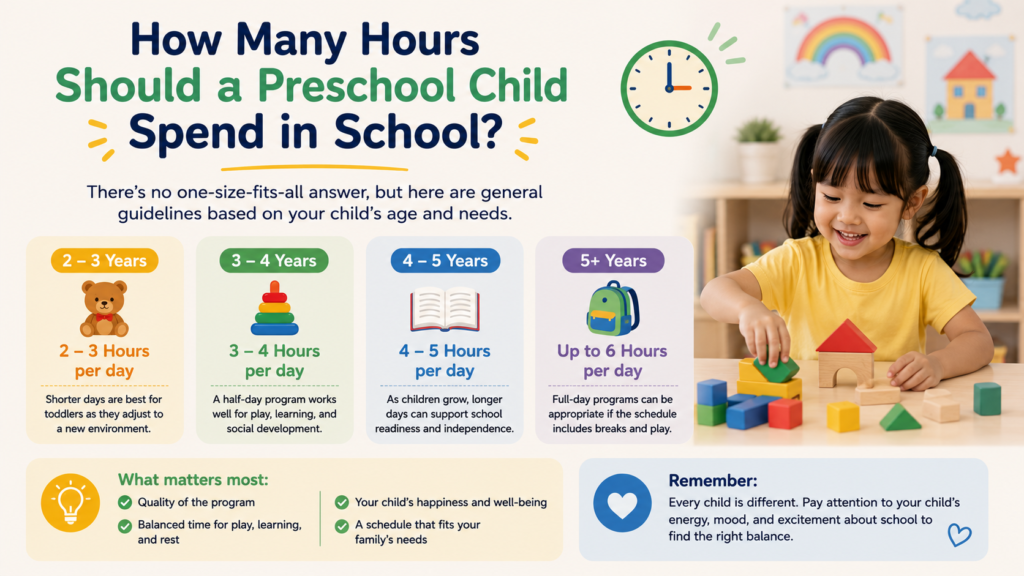
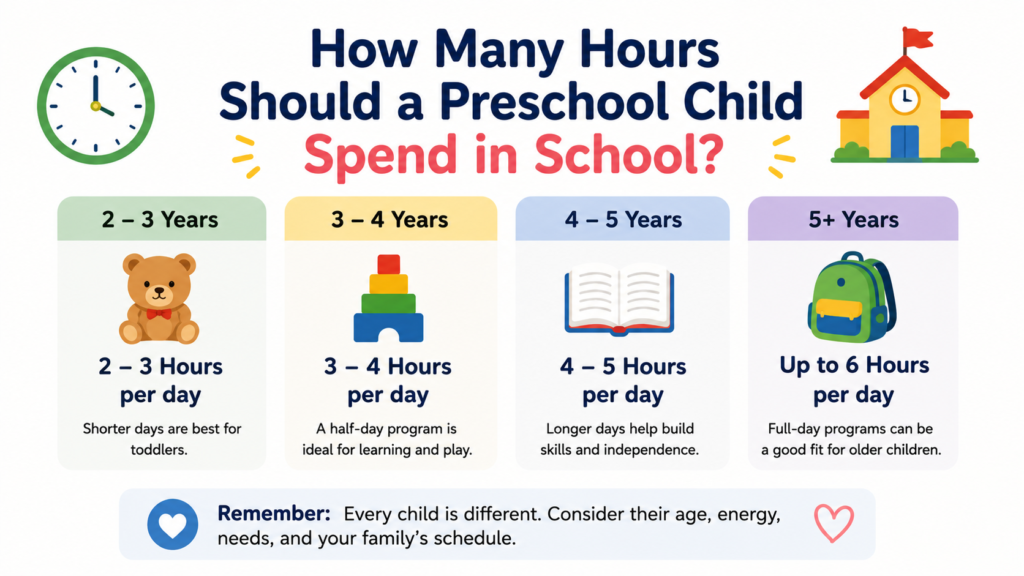
- Preschool Hours Based on Age
- Factors That Affect Preschool Hours
- Signs Your Child Is Spending the Right Amount of Time in Preschool
- Signs Preschool Hours May Be Too Long
- Importance of Balance Between School and Home
- Quality Matters More Than Quantity
- Preschool Programs at Gokul Preschool in RT Nagar
- Tips for Parents When Choosing Preschool Hours
- How Many Hours Should a Preschool Child Spend in School FAQs
- Conclusion
Why Preschool Timing Matters
Young children have different learning and attention abilities compared to older students.
Preschool children learn best through:
- Play-based activities
- Social interaction
- Exploration
- Creative experiences
- Hands-on learning
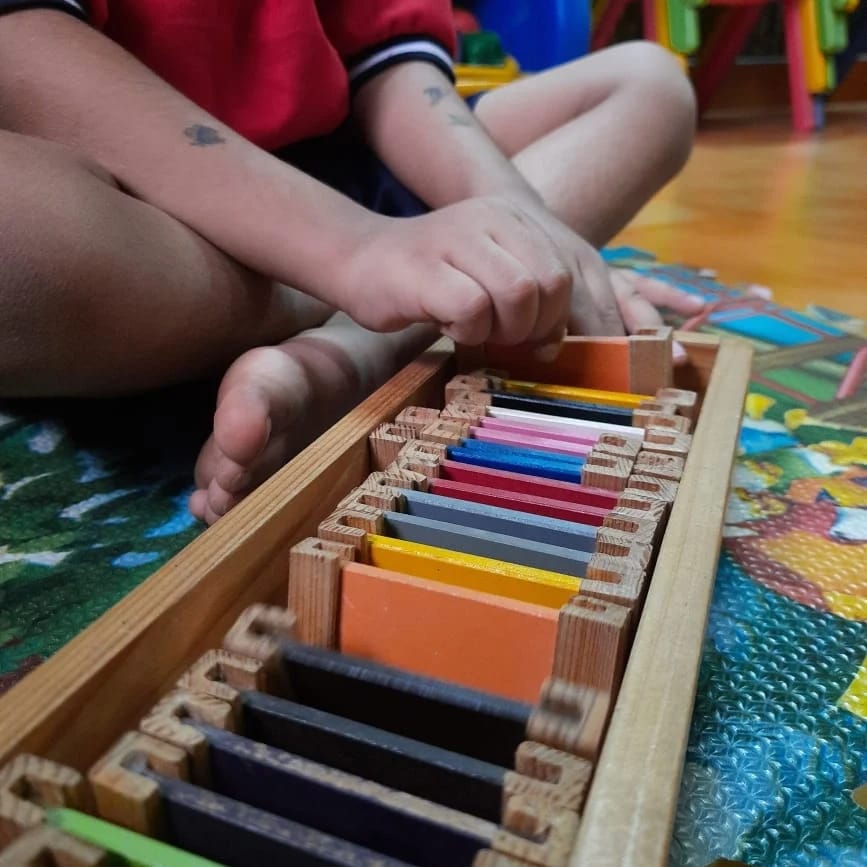
Unlike older children, preschoolers do not need long academic hours. Their brains learn more effectively through short, engaging, and enjoyable experiences.
The goal of preschool is not to keep children busy for long periods but to provide quality learning opportunities that support overall development.
What Is the Ideal Preschool Duration?
There is no single schedule that works for every child.
However, most preschool programs typically run between:
2 to 3 Hours Per Day
This is common for younger children in:
- Playgroup
- Pre-Nursery
- Early Preschool Programs
Shorter sessions help children:
- Adjust to being away from home
- Develop social skills
- Build confidence gradually
- Stay engaged without becoming tired
3 to 4 Hours Per Day
This is often considered an ideal duration for many preschool children.
Children have enough time to participate in:
- Learning activities
- Storytelling
- Art and craft
- Music and movement
- Free play
- Group interaction
This schedule provides a good balance between learning and relaxation.
4 to 5 Hours Per Day
Older preschoolers, such as LKG and UKG students, may benefit from slightly longer sessions.
Longer preschool hours can include:
- Structured learning activities
- Outdoor play
- Creative projects
- Snack breaks
- Social interaction
The focus should still remain on activity-based learning rather than long academic sessions.
Preschool Hours Based on Age
Children’s needs vary depending on their age and developmental stage.
Playgroup (1.5 to 2.5 Years)
Recommended duration:
- 2 to 3 hours per day
At this age, children are adjusting to a classroom environment and learning basic social skills.
The focus should be on:
- Play
- Communication
- Exploration
- Emotional comfort
Nursery (2.5 to 3.5 Years)
Recommended duration:
- 2.5 to 3.5 hours per day
Children begin participating in more structured activities while still learning primarily through play.
LKG (3.5 to 4.5 Years)
Recommended duration:
- 3 to 4 hours per day
Children can focus for longer periods and participate in a wider range of learning activities.
UKG (4.5 to 5.5 Years)
Recommended duration:
- 3.5 to 5 hours per day
At this stage, children are preparing for primary school and can comfortably engage in structured learning alongside play-based activities.
Factors That Affect Preschool Hours
The ideal preschool duration depends on several factors.
Child’s Age
Younger children generally need shorter school hours because their attention spans are shorter.
Older preschoolers can comfortably participate in longer sessions.
Child’s Personality
Some children adapt quickly to school environments, while others may need more time.
Parents should consider:
- Comfort level
- Energy levels
- Emotional readiness
- Social confidence
Every child is unique.
Learning Environment
A play-based preschool can often keep children engaged longer because activities are enjoyable and interactive.
An environment focused only on academics may lead to boredom and fatigue.
Family Schedule
Working parents may prefer extended daycare or longer preschool programs.
The important thing is ensuring children have enough opportunities for:
- Rest
- Play
- Family interaction
- Sleep
Signs Your Child Is Spending the Right Amount of Time in Preschool
Children who are comfortable with their schedule often:
- Look forward to school
- Participate actively
- Return home happy
- Sleep well
- Show interest in learning
A balanced preschool routine supports both learning and emotional well-being.
Signs Preschool Hours May Be Too Long
Parents should watch for signs of stress or exhaustion.
These may include:
Frequent Irritability
Children may become unusually cranky after school.
Loss of Interest
A child may stop enjoying activities they previously liked.
Excessive Tiredness
Children may appear exhausted daily.
Increased Anxiety
Some children may resist going to school if they feel overwhelmed.
If these signs appear, parents can discuss schedule adjustments with teachers.
Importance of Balance Between School and Home
Preschool is important, but children also need time outside school.
At home, children benefit from:
- Family interaction
- Free play
- Outdoor activities
- Reading time
- Adequate sleep
Balanced routines support healthy emotional and cognitive development.
Quality Matters More Than Quantity
Many parents assume that longer school hours automatically mean better learning.
However, early childhood experts agree that quality learning experiences are more important than the number of hours spent in school.
A well-planned preschool program should include:
- Interactive activities
- Social interaction
- Creative learning
- Physical movement
- Emotional support
Children learn best when they are actively engaged and enjoying the experience.
Preschool Programs at Gokul Preschool in RT Nagar
At Gokul Preschool in RT Nagar, we design our programs according to the developmental needs of each age group.
Our curriculum includes:
- Play-based learning
- Storytelling sessions
- Art and craft activities
- Music and movement
- Social interaction
- School readiness programs
We focus on providing meaningful learning experiences while ensuring children enjoy a healthy balance of education, play, and relaxation.
Parents looking for a trusted preschool in RT Nagar choose Gokul Preschool because we prioritize every child’s emotional, social, and academic development.
Tips for Parents When Choosing Preschool Hours
Consider Your Child’s Age
Younger children usually benefit from shorter schedules.
Observe Your Child’s Energy Levels
Choose a schedule that keeps your child engaged without causing fatigue.
Focus on Quality Learning
Look for activity-based and play-based programs rather than longer academic hours.
Communicate with Teachers
Regular discussions with teachers can help determine if the current schedule is working well.
How Many Hours Should a Preschool Child Spend in School FAQs
How many hours should a preschool child stay in school?
Most preschool children spend between 2 to 5 hours per day in school, depending on their age and developmental needs.
Is a full-day preschool necessary?
Not always. Many children benefit from shorter preschool sessions combined with playtime and family interaction at home.
What is the ideal preschool duration for a 3-year-old?
A 3-year-old typically benefits from 2.5 to 4 hours of preschool per day.
Can long preschool hours affect children?
Excessively long hours may lead to fatigue, irritability, or reduced interest in learning if the schedule is not balanced.
Which preschool in RT Nagar offers age-appropriate learning programs?
Gokul Preschool in RT Nagar provides play-based and age-appropriate preschool programs designed to support children’s overall growth and development.
Conclusion
There is no one-size-fits-all answer to how many hours a preschool child should spend in school.
The ideal duration depends on factors such as:
- Age
- Personality
- Developmental readiness
- Learning environment
For most preschool children, 2 to 5 hours per day is generally appropriate, depending on their stage of development.
What matters most is that children enjoy learning, feel emotionally secure, and have a healthy balance between school, play, rest, and family time.
At Gokul Preschool in RT Nagar, we create age-appropriate learning experiences that help children develop confidence, creativity, communication skills, and a lifelong love for learning.