Common Preschool Mistakes Parents Make
(And How to Avoid Them)
Starting preschool is an exciting milestone for both children and parents. It marks the beginning of a child’s educational journey and introduces new experiences, friendships, and learning opportunities.
However, many parents unintentionally make mistakes during the preschool years that can affect their child’s adjustment, confidence, and overall learning experience.
The good news is that most of these mistakes are common and can easily be avoided with the right understanding and approach.
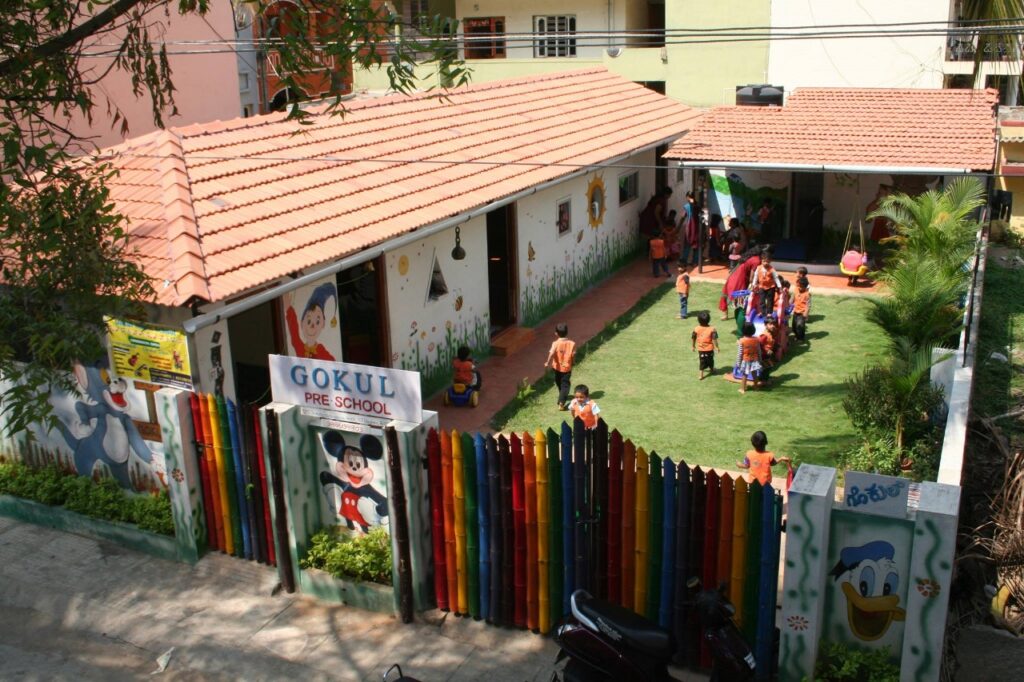
At Gokul Preschool in RT Nagar, we work closely with parents to create a positive learning experience for every child. We believe that when schools and families work together, children thrive both inside and outside the classroom.
In this blog, we will discuss some of the most common preschool mistakes parents make and how you can avoid them to support your child’s healthy development.
- Why the Preschool Years Matter
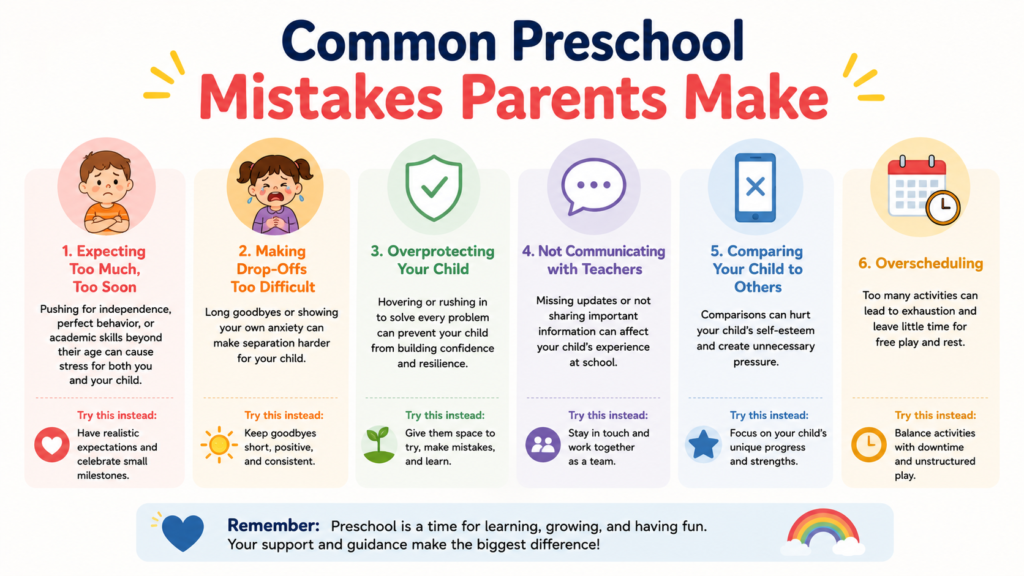
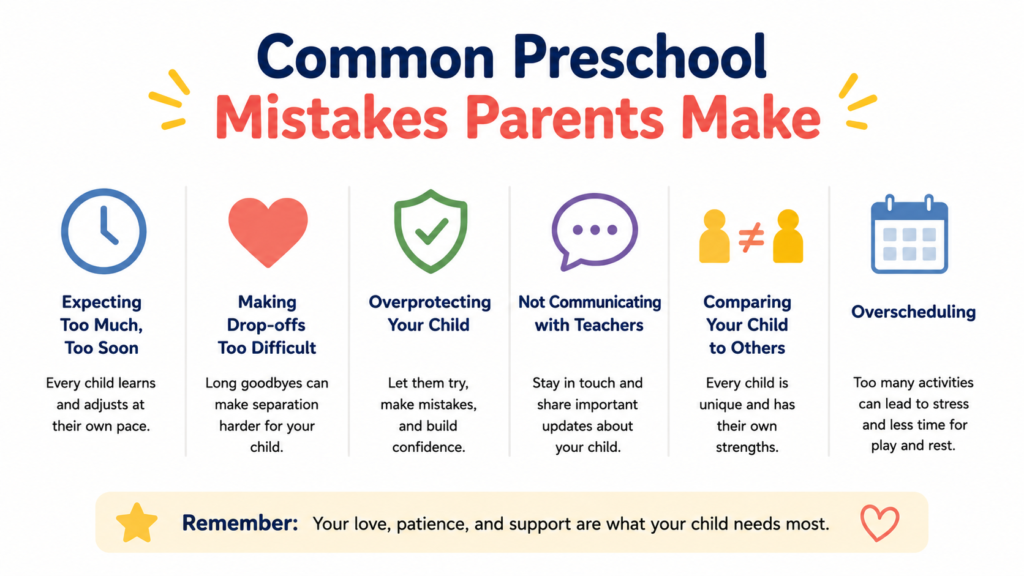
- Expecting Too Much Too Soon
- Comparing Your Child to Other Children
- Focusing Only on Academics
- Not Establishing a Consistent Routine
- Making Long and Emotional Goodbyes
- Doing Everything for the Child
- Ignoring Social Development
- Not Communicating with Teachers
- Overloading Children with Activities
- Using Negative Language About School
- Ignoring Emotional Needs
- Choosing a Preschool Based Only on Fees
- Expecting Immediate Adjustment
- Not Encouraging Reading at Home
- Forgetting That Play Is Learning
- How Parents Can Support Preschool Success
- How Gokul Preschool in RT Nagar Supports Parents and Children
- Common Preschool Mistakes Parents Make FAQs
- Conclusion of Common Preschool Mistakes Parents Make
Why the Preschool Years Matter
The preschool years are about much more than learning letters and numbers.
During this stage, children develop:
- Social skills
- Communication abilities
- Emotional confidence
- Creativity
- Independence
- Problem-solving skills
A positive preschool experience helps build a strong foundation for future learning and success.
Understanding what children truly need during these early years can help parents make better decisions and avoid unnecessary pressure.
Expecting Too Much Too Soon
One of the most common mistakes parents make is expecting preschool children to learn advanced academic skills too early.
Many parents worry if their child is not:
- Reading quickly
- Writing perfectly
- Solving complex problems
However, preschool is primarily about developing foundational skills rather than academic achievement.
Young children learn best through:
- Play
- Exploration
- Social interaction
- Hands-on activities
Pushing academics too early can sometimes create stress and reduce a child’s natural curiosity.
Comparing Your Child to Other Children
Every child develops at their own pace.
Some children speak earlier, while others develop social skills more quickly.
Comparing your child to classmates or relatives can:
- Reduce confidence
- Create unnecessary pressure
- Affect emotional well-being
Instead of focusing on comparisons, celebrate your child’s individual progress and achievements.
Focusing Only on Academics
Many parents believe preschool success is measured only by academic performance.
In reality, social and emotional development are equally important.
Preschool helps children learn:
- Sharing
- Cooperation
- Communication
- Friendship
- Emotional regulation
These skills often have a greater long-term impact than early academic achievements.
Not Establishing a Consistent Routine
Young children thrive on routine and predictability.
Irregular schedules can make preschool adjustment more difficult.
Children benefit from:
- Consistent wake-up times
- Regular meal schedules
- Fixed bedtime routines
- Structured daily activities
A stable routine helps children feel secure and better prepared for school.
Making Long and Emotional Goodbyes
Many parents struggle during preschool drop-offs.
While it is natural to feel emotional, lengthy goodbyes can actually increase a child’s anxiety.
A better approach is to:
- Stay calm and positive
- Give a quick hug
- Reassure your child
- Leave confidently
Children often settle down much faster when parents maintain a positive attitude.
Doing Everything for the Child
Parents naturally want to help their children, but doing everything for them can limit independence.
Preschool children should be encouraged to try simple tasks such as:
- Putting away toys
- Carrying their bag
- Washing hands
- Wearing shoes
- Eating independently
Small responsibilities help build confidence and self-reliance.
Ignoring Social Development
Some parents focus heavily on academics while overlooking social skills.
Preschool is one of the first places where children learn to:
- Make friends
- Share
- Cooperate
- Resolve simple conflicts
- Work in groups
Strong social skills help children adjust more easily to future school environments.
Not Communicating with Teachers
Teachers spend several hours each day with your child and can provide valuable insights into their development.
Parents should regularly communicate with teachers about:
- Learning progress
- Behavior
- Social interactions
- Areas for improvement
A strong parent-teacher partnership supports a child’s overall growth.
Overloading Children with Activities
Many parents enroll children in multiple classes and activities after preschool.
While enrichment activities can be beneficial, overscheduling can lead to:
- Fatigue
- Stress
- Reduced free play time
Children need opportunities to relax, play freely, and simply enjoy being children.
Using Negative Language About School
Children often mirror their parents’ attitudes.
Statements like:
- “You have to go to school.”
- “If you misbehave, I’ll tell your teacher.”
can create negative associations with preschool.
Instead, speak positively about school and highlight the fun and exciting aspects of learning.
Ignoring Emotional Needs
Young children experience many emotions as they adapt to preschool.
Some may feel:
- Nervous
- Excited
- Shy
- Frustrated
Parents should encourage open conversations about feelings and provide reassurance when needed.
Emotional support is essential during the preschool years.
Choosing a Preschool Based Only on Fees
Cost is an important consideration, but it should not be the only factor when selecting a preschool.
Parents should also evaluate:
- Safety measures
- Teacher qualifications
- Learning approach
- Classroom environment
- Hygiene standards
A quality preschool provides value far beyond the monthly fee.
Expecting Immediate Adjustment
Some children settle into preschool within a few days, while others take several weeks.
Parents should avoid expecting instant adaptation.
Give your child time to:
- Build trust with teachers
- Make friends
- Learn routines
- Feel comfortable in the new environment
Patience and consistency are key.
Not Encouraging Reading at Home
Reading plays an important role in early childhood development.
Simple storybooks help children:
- Improve vocabulary
- Develop listening skills
- Build imagination
- Strengthen communication abilities
Even 10–15 minutes of reading daily can make a significant difference.
Forgetting That Play Is Learning
Many parents underestimate the value of play.
In preschool, play helps children develop:
Social Skills
Children learn cooperation and teamwork.
Communication Skills
Play encourages conversation and expression.
Creativity
Children explore ideas and imagination.
Problem-Solving Abilities
Games and activities encourage critical thinking.
Play is one of the most effective ways young children learn.
How Parents Can Support Preschool Success
Parents can help children thrive by:
- Maintaining routines
- Encouraging independence
- Reading regularly
- Supporting social interactions
- Communicating with teachers
- Celebrating effort rather than perfection
Small daily actions often have a big impact on a child’s development.
How Gokul Preschool in RT Nagar Supports Parents and Children
At Gokul Preschool in RT Nagar, we believe successful early education is built on a strong partnership between parents and teachers.
Our preschool provides:
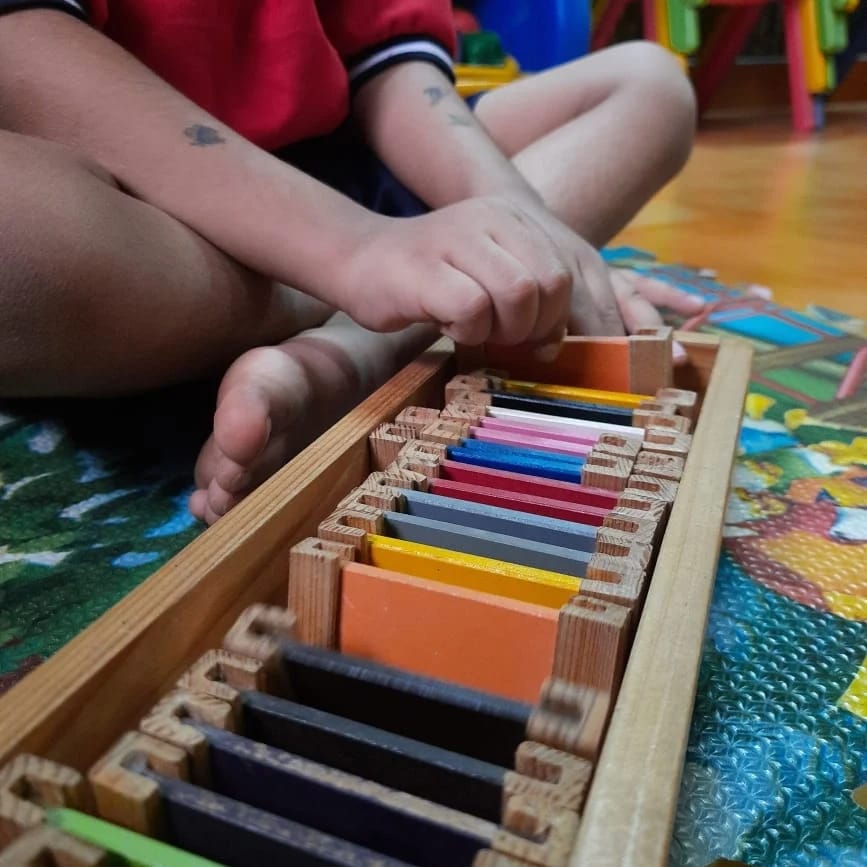
- Play-based learning programs
- Safe and nurturing classrooms
- Experienced and caring teachers
- Regular parent communication
- Social and emotional development activities
- Age-appropriate learning experiences
We focus on helping children build confidence, curiosity, independence, and a lifelong love for learning.
Parents looking for a trusted preschool in RT Nagar choose Gokul Preschool because we support both children and families throughout the early learning journey.
Common Preschool Mistakes Parents Make FAQs
What is the biggest mistake parents make during preschool years?
One of the most common mistakes is focusing only on academics and overlooking social and emotional development.
Should parents compare their child with others?
No. Every child develops at their own pace, and comparisons can negatively affect confidence and self-esteem.
How can parents help children adjust to preschool?
Parents can maintain routines, encourage independence, communicate positively about school, and provide emotional support.
Why is play important in preschool?
Play helps children develop communication, creativity, problem-solving, social skills, and emotional confidence.
Which preschool in RT Nagar supports holistic child development?
Gokul Preschool in RT Nagar provides a nurturing, play-based learning environment that focuses on children’s social, emotional, physical, and academic growth.
Conclusion of Common Preschool Mistakes Parents Make
The preschool years are an important time for growth, learning, and development.
While every parent wants the best for their child, common mistakes such as comparing children, focusing only on academics, or overlooking emotional development can sometimes create unnecessary challenges.
By understanding your child’s needs and supporting their social, emotional, and academic growth, you can help create a positive preschool experience.
At Gokul Preschool in RT Nagar, we are committed to helping children learn, explore, and grow in a caring environment where every child feels valued, supported, and encouraged to succeed.