Social Skills in Early Childhood Education
When children start preschool, they begin learning much more than numbers and letters. They start learning how to interact with other people.
These abilities are called social skills.
Social skills help children communicate, make friends, share, and understand other people’s feelings. They are essential for a child’s emotional growth and overall development.
During early childhood, children learn social skills through play, conversation, and group activities. Preschool environments provide the perfect place for children to practice these skills every day.
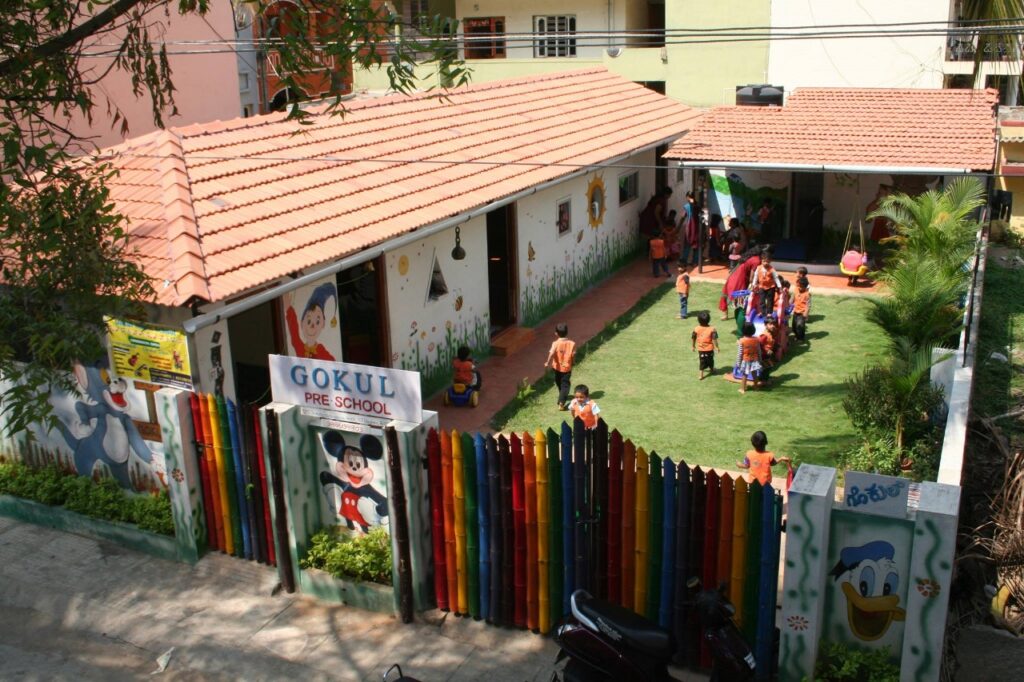
At Gokul Preschool in RT Nagar, we believe social development is just as important as academic learning. Through group activities, storytelling, and play-based learning, children learn how to build friendships, cooperate with others, and express themselves confidently.
- What Are Social Skills?
- Why Social Skills Are Important in Early Childhood
- Key Social Skills Children Learn in Preschool
- How Preschools Help Develop Social Skills
- The Role of Teachers in Social Development
- How Parents Can Help Develop Social Skills at Home
- Activities That Improve Social Skills in Preschool
- Social Skills Development at Gokul Preschool in RT Nagar
- Conclusion
- Social Skills in Early Childhood Education FAQs
- Conclusion
What Are Social Skills?
Social skills are the abilities that help children interact and communicate with others.
These skills include:
- Sharing and taking turns
- Listening to others
- Expressing feelings and ideas
- Working together in groups
- Showing empathy and kindness
Children begin developing these skills from a very young age through interactions with parents, siblings, teachers, and friends.
Preschool environments help children practice these skills regularly through structured activities and group play.
Why Social Skills Are Important in Early Childhood
Developing strong social skills during early childhood helps children succeed in school and in life.
Children who develop good social skills often experience:
- Better communication abilities
- Strong friendships
- Higher confidence
- Better emotional control
- Improved learning abilities
Research shows that social development also improves a child’s engagement in learning and academic success.
When children feel comfortable interacting with others, they participate more in classroom activities and enjoy learning experiences.
Key Social Skills Children Learn in Preschool
Preschool provides many opportunities for children to learn and practice social behaviors.
1. Sharing and Taking Turns
Sharing is one of the first social lessons children learn.
In a preschool classroom, children share toys, books, and materials. They also learn to wait for their turn during games or activities.
This helps children understand patience and fairness.
2. Communication Skills
Communication is an important part of social development.
Children learn how to:
- Express their thoughts
- Ask questions
- Listen to others
Regular conversations and group discussions help children develop strong language and communication skills.
3. Cooperation and Teamwork
Working together is an important life skill.
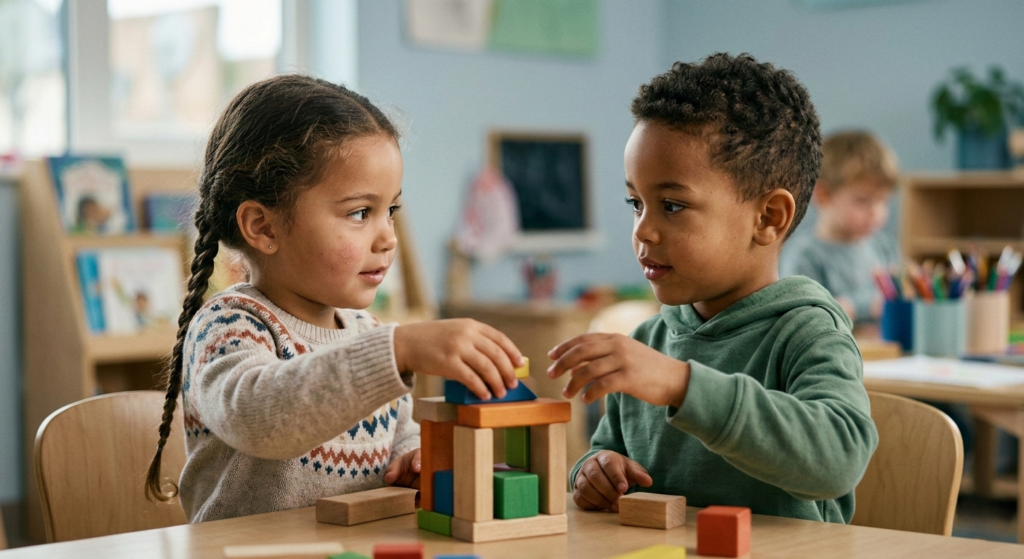
Group activities such as puzzles, games, and art projects teach children how to cooperate with others and achieve goals together.
These activities help children understand teamwork and respect others’ ideas.
4. Empathy and Understanding
Empathy means understanding how other people feel.
When children develop empathy, they become more caring and supportive friends.
Preschool teachers often use storytelling and role-play to help children understand emotions and practice kindness.
5. Conflict Resolution
Disagreements between children are normal.
Preschool teachers guide children to solve conflicts peacefully by:
- Talking about their feelings
- Listening to each other
- Finding solutions together
Learning conflict resolution helps children build healthy relationships.
How Preschools Help Develop Social Skills
Preschools create environments where children interact with others daily.
Teachers support social development through activities such as:
Group Play
Children learn to communicate and cooperate while playing together.
Role-Playing Activities
Pretend play helps children understand different emotions and perspectives.
Storytelling
Stories about friendship and kindness help children understand social situations.
Music and Movement
Group singing and dancing encourage cooperation and teamwork.
These activities make social learning fun and natural for children.
The Role of Teachers in Social Development
Teachers play a very important role in guiding children’s social growth.
They help by:
- Encouraging positive behavior
- Teaching children how to express emotions
- Helping resolve conflicts
- Creating inclusive classroom environments
Teachers also act as role models. Children observe how teachers communicate and treat others, and they often copy these behaviors.
A supportive classroom environment helps children feel safe and confident when interacting with others.
How Parents Can Help Develop Social Skills at Home
Social learning does not happen only at school. Parents also play a big role in helping children develop social skills.
Here are some simple ways parents can help:
Encourage Playdates
Playing with other children helps kids practice sharing and communication.
Teach Kindness
Teach children to say “please,” “thank you,” and “sorry.”
Read Stories About Friendship
Books that talk about emotions and friendships help children understand social behavior.
Practice Turn-Taking
Board games and simple family games teach patience and cooperation.
Model Positive Behavior
Children learn by watching adults. When parents show kindness and respect, children learn to do the same.
Activities That Improve Social Skills in Preschool
Many fun activities help children build social abilities.
Some examples include:
Group Art Projects
Children work together to create drawings or crafts.
Puzzle Games
Solving puzzles together encourages teamwork.
Circle Time
Children sit together and talk about their experiences.
Show and Tell
Children learn confidence by speaking in front of others.
Outdoor Play
Playgrounds provide opportunities for teamwork and social interaction.
These activities help children develop communication, cooperation, and emotional awareness.
Social Skills Development at Gokul Preschool in RT Nagar
At Gokul Preschool in RT Nagar, we focus on developing both academic and social skills in children.
Our learning approach includes:
- Play-based learning
- Group storytelling sessions
- Team games and collaborative activities
- Creative art and music programs
- Interactive classroom discussions
These activities help children learn how to:
- Communicate confidently
- Build friendships
- Work together with others
- Respect different ideas and perspectives
Our goal is to create a nurturing environment where children feel safe, happy, and confident while learning important life skills.
Many parents choose Gokul Preschool in RT Nagar because we focus on holistic child development, ensuring children grow emotionally, socially, and academically.
Conclusion
Social skills are one of the most important abilities children develop during early childhood.
Skills like communication, empathy, cooperation, and problem-solving help children build strong relationships and succeed in school.
Preschool environments provide the perfect setting for children to learn these skills through play, group activities, and guided interactions.
By encouraging positive social experiences early, parents and teachers can help children grow into confident, kind, and emotionally intelligent individuals.
At Gokul Preschool in RT Nagar, we support children’s social growth through fun learning activities, caring teachers, and a supportive classroom environment that encourages curiosity, friendship, and teamwork.
Social Skills in Early Childhood Education FAQs
Why are social skills important for preschool children?
Social skills help children communicate, make friends, and understand other people’s feelings. These abilities support emotional development and academic success.
What social skills do children learn in preschool?
Children learn skills such as sharing, taking turns, listening, expressing emotions, cooperating with others, and resolving conflicts.
How do preschools teach social skills?
Preschools use group activities, storytelling, role-playing, music, and collaborative play to help children practice social interactions.
How can parents help improve their child’s social skills?
Parents can encourage playdates, read stories about friendship, model positive behavior, and involve children in group activities.
Which preschool in RT Nagar focuses on social development?
Gokul Preschool in RT Nagar focuses on play-based learning, group activities, and interactive teaching methods that help children develop strong social and communication skills.
Conclusion
Social skills are one of the most important abilities children develop during early childhood.
Skills like communication, empathy, cooperation, and problem-solving help children build strong relationships and succeed in school.
Preschool environments provide the perfect setting for children to learn these skills through play, group activities, and guided interactions.
By encouraging positive social experiences early, parents and teachers can help children grow into confident, kind, and emotionally intelligent individuals.
At Gokul Preschool in RT Nagar, we support children’s social growth through fun learning activities, caring teachers, and a supportive classroom environment that encourages curiosity, friendship, and teamwork.