How to Improve Pencil Grip in Children
Easy Activities for Better Writing
Learning to hold a pencil may look like a small step, but it is an important part of a child’s early learning journey. Before children can write letters, numbers, and words comfortably, they need to develop hand strength, finger control, coordination, and confidence.
If your child holds a pencil differently from other children, don’t worry immediately. Pencil grip develops gradually, and every child reaches writing milestones at a different pace.
The best way to help is not to force the “perfect” grip. Instead, give children plenty of opportunities to draw, colour, build, squeeze, pinch, and play with their hands.
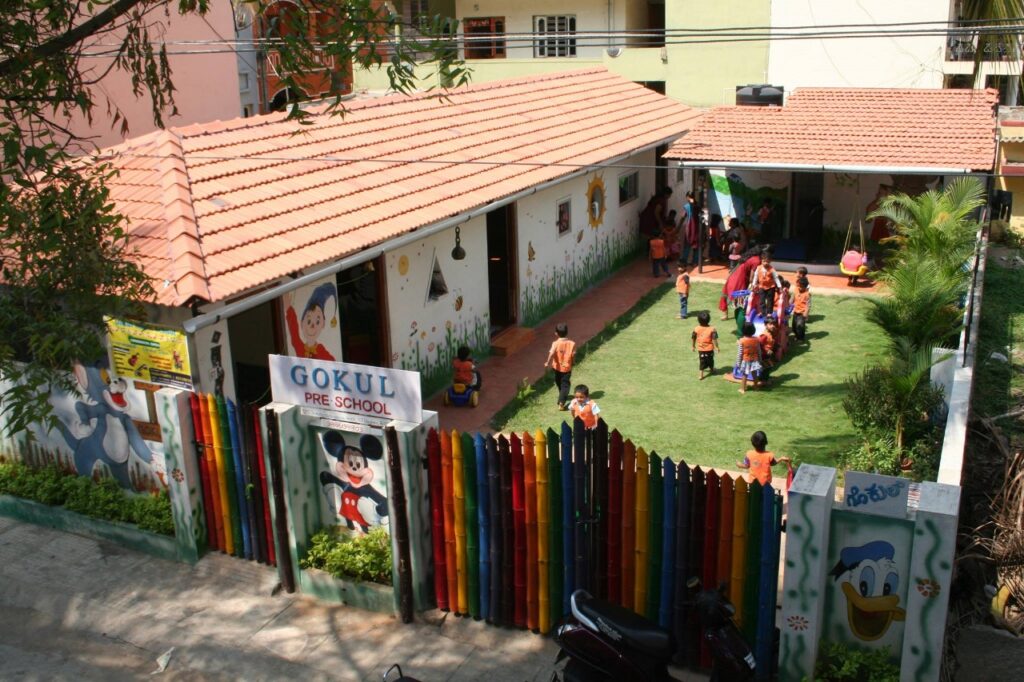
At Gokul Preschool in RT Nagar, we believe children learn best when important skills are introduced through fun and age-appropriate activities. Fine motor activities, drawing, colouring, clay play, and other hands-on experiences can help prepare little hands for writing.
Let’s look at how pencil grip develops, signs that your child may need extra support, and simple activities you can try at home.
- Easy Activities for Better Writing
- What Is Pencil Grip?
- Why Is a Good Pencil Grip Important?
- When Do Children Develop Pencil Grip?
- Signs Your Child May Need Help With Pencil Grip
- Why Do Some Children Struggle With Pencil Grip?
- How to Improve Pencil Grip in Children
- Hand Strengthening Activities for Children
- Pre-Writing Activities to Improve Pencil Control
- Choosing the Right Pencil for Your Child
- Make Writing Fun Instead of a Chore
- Common Mistakes Parents Should Avoid
- How Parents Can Support Pencil Grip at Home
- When Should Parents Seek Professional Advice?
- How Gokul Preschool in RT Nagar Supports Writing Readiness
- How to Improve Pencil Grip in Children FAQs
- Conclusion
What Is Pencil Grip?
Pencil grip refers to the way a child holds and controls a pencil, crayon, or other writing tool.
Young children usually don’t start with a mature pencil grip. They may hold crayons with their whole hand, use several fingers, or change their grip frequently.
As their hand and finger muscles become stronger, their movements become more controlled.
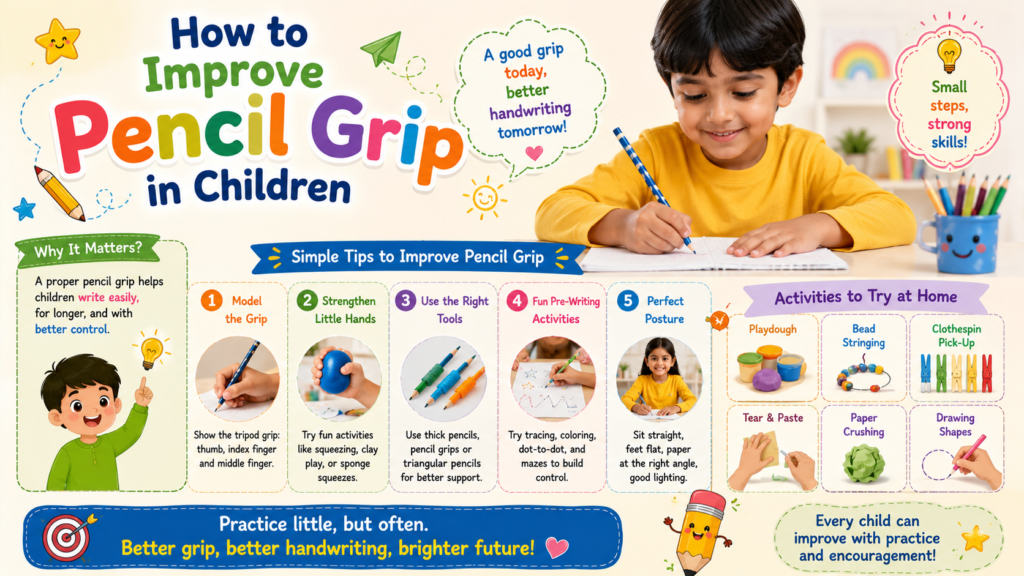
A commonly recognised mature grip is the dynamic tripod grip. In this grip, the pencil is supported by the middle finger while the thumb and index finger help control it.
However, the goal should not simply be to make every child use exactly the same grip.
Comfort, control, and efficient movement are more important than making a child copy a particular grip.
Why Is a Good Pencil Grip Important?
A comfortable pencil grip can make drawing and writing easier for children.
It can help with:
- Pencil control
- Drawing
- Colouring
- Letter formation
- Handwriting
- Fine motor development
- Writing confidence
- Hand comfort
When children struggle to control their pencil, they may become tired or frustrated during writing activities.
A comfortable grip can help them focus more on what they are creating instead of constantly thinking about how to hold the pencil.
When Do Children Develop Pencil Grip?
Pencil grip develops over several years rather than appearing suddenly.
Toddlers may begin by making marks with chunky crayons using their whole hand. As they grow, they gradually develop more precise finger movements.
During the preschool years, activities such as:
- Drawing
- Colouring
- Painting
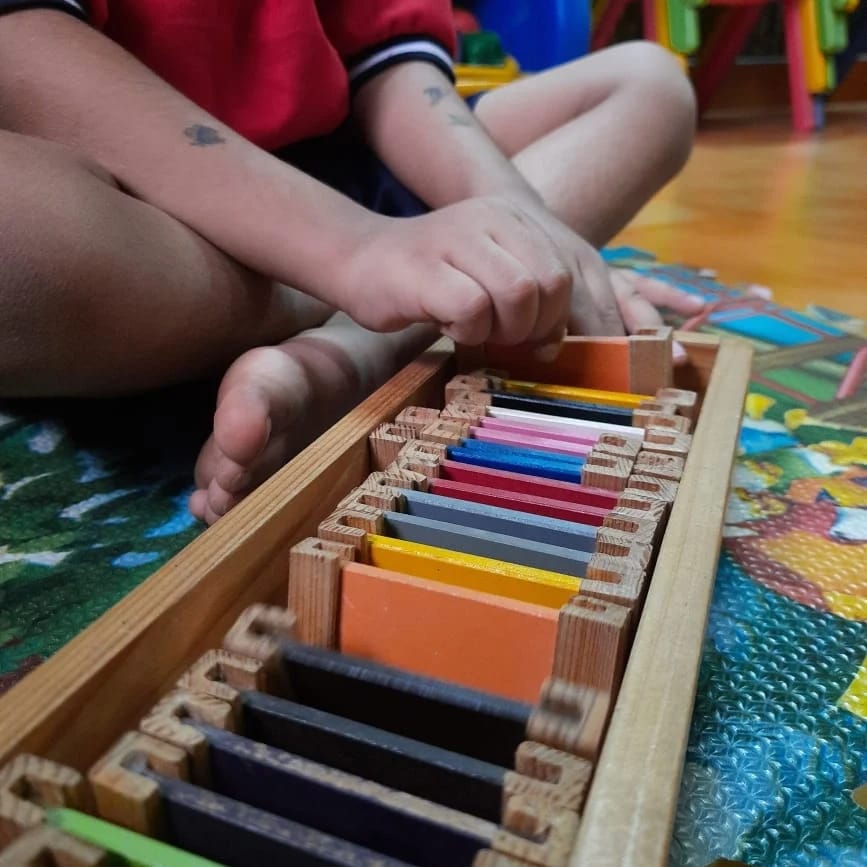
- Playing with clay
- Building with blocks
- Threading
- Using tongs
- Tearing and pasting paper
can help strengthen the skills needed for writing.
There is no need to rush children into formal handwriting before their hands are ready.
Signs Your Child May Need Help With Pencil Grip
Every unusual pencil grip is not a problem.
However, parents may want to pay closer attention if their child consistently experiences difficulty during drawing or writing activities.
Your Child Holds the Pencil Very Tightly
A very tight grip can make the fingers stiff and may cause discomfort or fatigue.
Encourage your child to relax their hand instead of repeatedly telling them they are holding the pencil incorrectly.
Your Child’s Hand Gets Tired Quickly
If your child frequently complains that their hand hurts or feels tired after a short activity, it may be worth observing how they hold and control the pencil.
Your Child Struggles With Pencil Control
Difficulty tracing simple lines, following shapes, or colouring within large boundaries may indicate that more practice with fine motor control could help.
Your Child Avoids Drawing or Writing
Some children avoid writing activities because they find them tiring or difficult.
Instead of forcing them to write more, try going back to enjoyable hand-strengthening and pre-writing activities.
Why Do Some Children Struggle With Pencil Grip?
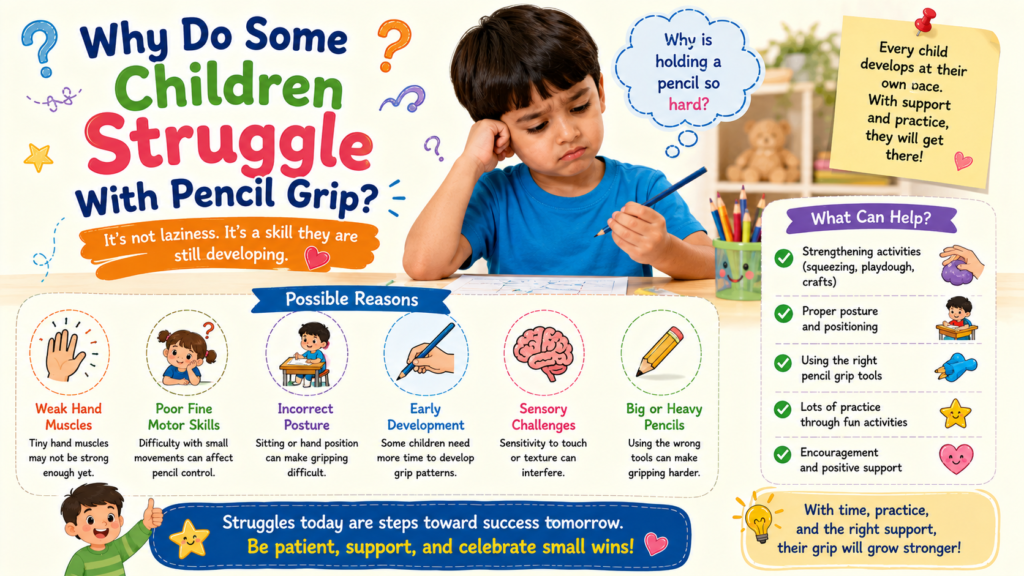
There isn’t always one reason.
Children develop at different rates, and their everyday experiences can influence their fine motor development.
Developing Fine Motor Skills
Small hand and finger movements take time to develop.
Children need to practise using their fingers for different tasks before they can comfortably control a pencil.
Limited Hand Strength
Writing requires the small muscles in the hand and fingers to work together.
If these muscles are still developing, holding a pencil for a long time may feel difficult.
Too Much Formal Writing Too Early
Young children need opportunities for play and movement before they are expected to spend long periods writing.
Pre-writing activities are an important part of becoming ready to write.
Habits
Children may become comfortable using a particular grip.
Some unusual grips are perfectly functional, while others may make writing uncomfortable or difficult.
The important thing is to look at how well the child can control the pencil and whether writing is comfortable.
How to Improve Pencil Grip in Children
The easiest way to improve pencil grip is to build the skills behind the grip.
Instead of making your child practise holding a pencil for long periods, give them fun activities that strengthen their hands and improve coordination.
Here are some activities parents can try.
Play-Dough and Clay
Play-dough is one of the simplest activities for developing hand strength.
Ask your child to:
- Squeeze the dough
- Roll it into a ball
- Make long snakes
- Pinch small pieces
- Flatten it
- Create simple shapes
Children usually see this as play, but their fingers are getting a useful workout.
Threading Beads
Threading large, age-appropriate beads onto a string can encourage precise finger movements and hand-eye coordination.
Always choose materials appropriate for your child’s age and supervise closely.
Use Tongs or Tweezers
Give your child child-safe tongs and ask them to move larger objects from one bowl to another.
For example, they can move:
- Pom-poms
- Large cotton balls
- Toy objects
This encourages children to use their thumb and fingers together.
Play With Clothespins
Opening and closing clothespins requires finger strength and coordination.
Children can use them during simple games or supervised household activities.
Tear and Paste Paper
Give your child coloured paper and let them tear it into pieces.
They can then paste the pieces onto a drawing to create:
- Flowers
- Trees
- Animals
- Houses
- Abstract pictures
This is an easy activity that works on finger control while encouraging creativity.
Hand Strengthening Activities for Children
Strong fingers can make pencil control easier.
Sponge Squeezing
Give your child a clean sponge and a bowl of water.
They can soak the sponge and squeeze the water into another container.
This can be especially fun during bath time or outdoor play.
Squeeze a Soft Ball
A soft ball can be squeezed and released several times.
Keep the activity playful rather than turning it into a formal exercise session.
Finger Games
Try simple games such as:
- Finger tapping
- Making finger shapes
- Counting fingers
- Opening and closing the hands
- Copying hand movements
These activities can help children become more aware of their fingers and hand movements.
Pre-Writing Activities to Improve Pencil Control
Once your child enjoys using crayons and pencils, you can introduce simple pre-writing activities.
Trace Straight Lines
Start with easy horizontal and vertical lines.
Later, introduce:
- Curves
- Zigzags
- Waves
- Circles
Colour Large Pictures
Give your child large pictures with simple boundaries.
Don’t worry if they colour outside the lines.
The goal is to practise controlled movement while having fun.
Try Dot-to-Dot Activities
Connecting dots encourages children to move the pencil from one point to another.
Start with very simple patterns.
Use Simple Mazes
Simple maze activities can help children practise guiding a pencil carefully.
Choose wide paths for beginners and gradually introduce more challenging ones.
Choosing the Right Pencil for Your Child
The writing tool can make a difference.
Try Chunky Crayons or Pencils
Thicker writing tools may be easier for younger children to hold.
They can provide a comfortable starting point while children develop finger control.
Consider Short Pencils
Shorter pencils naturally encourage children to use their fingers instead of gripping the entire pencil with their palm.
Use Pencil Grips When Appropriate
Pencil grips can sometimes help guide finger placement, but they aren’t necessary for every child.
Don’t use a grip simply because your child’s pencil hold looks different.
Focus on comfort and control first.
Make Writing Fun Instead of a Chore
One of the most important things parents can do is make writing enjoyable.
Instead of saying:
“Hold your pencil correctly.”
try saying:
“Let’s draw a funny animal!”
Instead of giving your child pages of handwriting practice, try:
- Drawing pictures
- Making shapes
- Creating a pretend shopping list
- Drawing a family picture
- Colouring
- Making cards
- Drawing roads for toy cars
When children enjoy using pencils, they naturally get more practice.
Common Mistakes Parents Should Avoid
Forcing a Perfect Grip
Children don’t all develop at the same speed.
Constantly correcting their fingers can make writing stressful.
Comparing Your Child With Other Children
One child may develop pencil control earlier than another.
Comparison can reduce confidence.
Focus on your child’s progress.
Making Children Write for Long Periods
Preschoolers don’t need lengthy handwriting sessions.
Short and enjoyable activities are often better.
Ignoring Fine Motor Play
Writing isn’t the only way to prepare children for writing.
Clay, blocks, puzzles, threading, drawing, painting, and other hands-on activities can all support fine motor development.
Correcting Every Little Mistake
If your child draws outside a line or holds a crayon differently, don’t immediately correct them.
First ask whether they are comfortable and able to control the tool.
How Parents Can Support Pencil Grip at Home
You don’t need expensive educational equipment.
Everyday activities can help.
Encourage your child to:
- Build with blocks
- Play with clay
- Draw
- Colour
- Paint
- Use child-safe tongs
- Thread large beads
- Tear paper
- Fold paper
- Complete simple puzzles
- Help with age-appropriate household tasks
The more children use their hands in different ways, the more opportunities they have to develop coordination and strength.
When Should Parents Seek Professional Advice?
Most children develop pencil control gradually.
However, if your child consistently struggles with writing or fine motor activities, consider discussing your concerns with a pediatrician, occupational therapist, or other qualified professional.
It may be useful to seek guidance if your child:
- Frequently complains of hand pain
- Has significant difficulty holding writing tools
- Avoids almost all fine motor activities
- Struggles with everyday hand movements
- Becomes extremely frustrated during drawing or writing
- Continues to have significant difficulties despite regular practice
Professional guidance can help identify what type of support may be appropriate.
How Gokul Preschool in RT Nagar Supports Writing Readiness
At Gokul Preschool in RT Nagar, we understand that writing doesn’t begin with a worksheet.
It begins with developing the skills that help children become ready to write.
Our preschool environment encourages children to explore through:
- Drawing
- Colouring
- Art activities
- Clay and play-based activities
- Fine motor exercises
- Building activities
- Storytelling
- Hands-on learning
These experiences give children opportunities to strengthen coordination, express themselves, and develop confidence before formal writing becomes a bigger part of their learning journey.
For parents looking for a preschool in RT Nagar, it is important to choose a school that understands that young children need both learning and play.
How to Improve Pencil Grip in Children FAQs
What is the correct pencil grip for children?
The dynamic tripod grip is a commonly recognised mature pencil grip, where the pencil is supported by the middle finger and controlled by the thumb and index finger. However, comfort and effective pencil control are more important than forcing every child into exactly the same grip.
At what age should a child hold a pencil correctly?
Pencil grip develops gradually throughout early childhood. Children usually begin with whole-hand grips and progressively develop more controlled finger movements as their fine motor skills mature.
How can I improve my child’s pencil grip at home?
Try play-dough, drawing, colouring, bead threading, paper tearing, using child-safe tongs, puzzles, and other activities that encourage hand strength and finger coordination.
What activities strengthen children’s fingers for writing?
Play-dough, sponge squeezing, clothespins, bead threading, building blocks, and age-appropriate fine motor games can help strengthen and coordinate the small muscles in children’s hands.
Should I correct my child’s pencil grip every time?
No. Constant correction can make children anxious about writing. Offer gentle guidance and focus on whether the child is comfortable and able to control the pencil.
Are pencil grips necessary for preschool children?
Not always. Some children may benefit from a pencil grip, while others do not need one. The best choice depends on the child’s comfort, control, and individual needs.
Can colouring improve pencil grip?
Colouring can help children practise pencil control, hand-eye coordination, and controlled movements. Large colouring pictures can be a good starting point for younger children.
What if my child still struggles with pencil grip?
Give them time and provide regular fine motor activities. If significant difficulties, pain, weakness, or frustration continue, consider discussing the situation with a pediatrician or qualified occupational therapist.
How does preschool help develop pencil skills?
A good preschool can provide children with age-appropriate fine motor and pre-writing activities such as drawing, colouring, clay play, puzzles, building, and hands-on learning. Gokul Preschool in RT Nagar uses play-based experiences to support children’s early development and writing readiness.
Conclusion
Helping a child improve their pencil grip doesn’t have to mean sitting at a table and correcting their fingers every few minutes.
In fact, some of the best preparation happens through play.
Let your child squeeze clay, build towers, colour pictures, thread beads, tear paper, use tongs, draw freely, and explore different materials.
These simple experiences can help develop the hand strength, coordination, and control needed for comfortable pencil use.
Most importantly, be patient.
Every child develops differently. The goal is not to create a perfect grip overnight. The goal is to help your child become comfortable, confident, and ready to enjoy drawing and writing.
At Gokul Preschool in RT Nagar, we believe that when children are given the right support and plenty of opportunities to learn through play, important skills can develop naturally.