Is Your Child Ready for Preschool? 15 Signs Parents Should Know
Starting preschool is a big milestone for every child and parent. It marks the beginning of a new journey filled with learning, friendships, creativity, and independence. But before admission, many parents ask the same important question:
“Is my child ready for preschool?”
The truth is, there isn’t one perfect age or checklist that applies to every child. Some children are ready earlier, while others need a little more time. Preschool readiness is about a child’s overall development—not whether they can already read, write, or count.
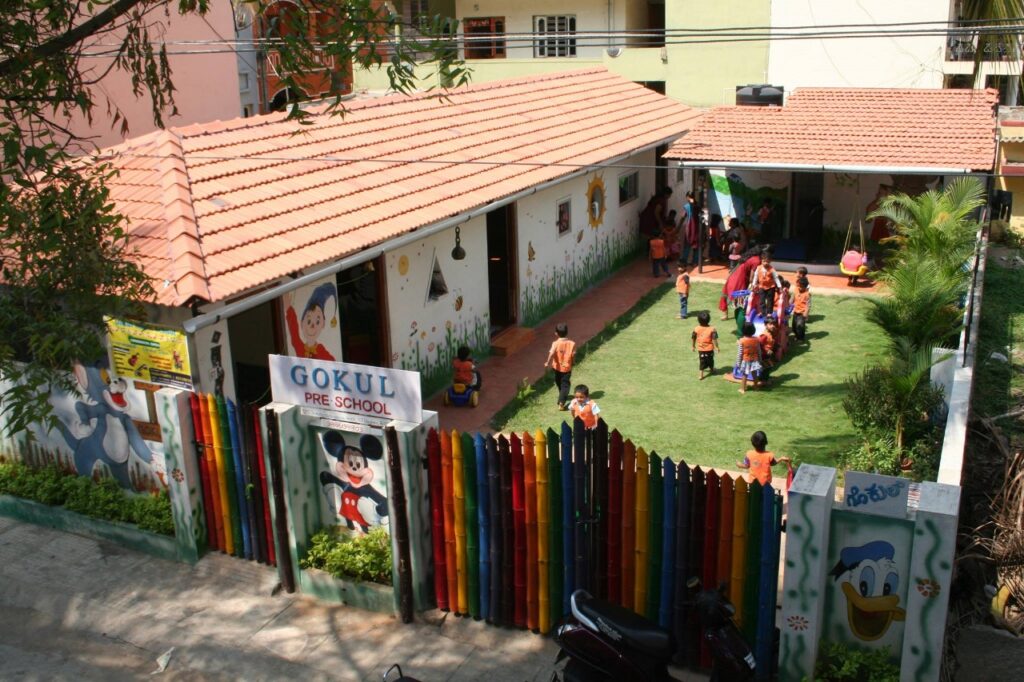
At Gokul Preschool in RT Nagar, we’ve seen that children thrive when they begin preschool at the right time for their individual needs. A supportive, play-based environment helps them build confidence while learning at their own pace.
In this blog, we’ll explore 15 signs that indicate your child may be ready for preschool, along with tips to help you prepare for this exciting new chapter.
What Does Preschool Readiness Mean?
Preschool readiness isn’t about academic skills alone.
Instead, it refers to a child’s ability to participate in a classroom environment where they can:
- Learn through play
- Follow simple routines
- Interact with teachers and classmates
- Express their needs
- Explore new experiences
Every child develops differently, so it’s completely normal if your child shows some of these signs but not all of them.
Why Preschool Readiness Is Important
When children start preschool at the right time, they often:
- Adjust more easily
- Feel more confident
- Build friendships faster
- Enjoy learning
- Develop independence
Understanding your child’s readiness helps create a positive preschool experience.
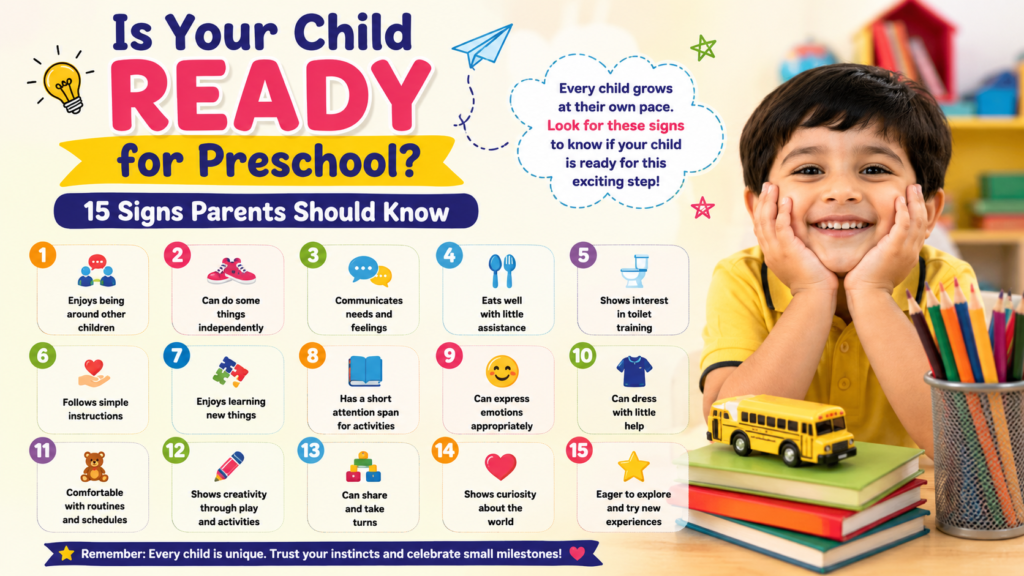
15 Signs Your Child Is Ready for Preschool
1. Your Child Can Spend Short Periods Away From You
Children don’t need to be completely independent, but they should gradually become comfortable spending a few hours with trusted adults.
Some separation anxiety is perfectly normal.
2. They Show Curiosity About the World
Children who enjoy asking questions, exploring new objects, and observing their surroundings are often ready for preschool learning.
Curiosity is one of the strongest indicators of learning readiness.
3. They Can Follow Simple Instructions
Your child doesn’t need to follow complicated directions.
Simple instructions such as:
- Put your toy away.
- Wash your hands.
- Sit down for story time.
are good signs of classroom readiness.
4. They Enjoy Playing With Other Children
Preschool involves daily interaction with classmates.
Children who enjoy:
- Sharing toys
- Playing together
- Watching other children
- Participating in group activities
often adjust more comfortably.
Even children who are naturally shy can develop social skills in preschool.
5. They Can Express Basic Needs
Children don’t need perfect language skills.
However, they should be able to communicate simple needs like:
- I’m hungry.
- I need water.
- I need the bathroom.
- I’m hurt.
Communication helps teachers provide the right support.
6. They Show Interest in Learning New Things
Children who enjoy:
- Looking at books
- Listening to stories
- Singing songs
- Drawing pictures
- Asking questions
are often ready for preschool activities.
7. They Can Sit for Short Activities
Young children naturally have short attention spans.
Being able to participate in activities for 10–15 minutes is usually enough for preschool.
Activities might include:
- Storytime
- Coloring
- Circle time
- Puzzles
8. They Can Manage Simple Tasks Independently
Preschool encourages independence.
Signs include:
- Washing hands
- Eating with minimal help
- Carrying a small bag
- Putting away toys
Children don’t need to do everything independently, but small self-help skills build confidence.
9. They Enjoy Creative Activities
Children who like:
- Coloring
- Painting
- Building blocks
- Pretend play
- Music and dancing
often enjoy preschool’s play-based learning environment.
10. They Adapt to Small Changes
Preschool introduces new routines.
Children who can gradually adjust to changes such as visiting new places or meeting new people may find the transition easier.
11. They Show Growing Independence
You may notice your child saying:
- “I can do it myself.”
This growing confidence is a healthy sign of development.
Encouraging independence helps prepare children for preschool.
12. They Can Follow Daily Routines
Children benefit from predictable routines.
If your child is comfortable with regular:
- Wake-up times
- Meal times
- Bedtimes
they are often better prepared for preschool schedules.
13. They Show Interest in Talking to Adults
Children who enjoy conversations with family members, teachers, or relatives are often becoming more socially confident.
Strong communication supports classroom learning.
14. They Are Comfortable Exploring New Environments
Children who enjoy visiting parks, libraries, or play areas often adapt more easily to preschool.
Exploration builds confidence and curiosity.
15. They Show Excitement About Going to School
Some children become excited when they hear about:
- New friends
- Toys
- Stories
- Classrooms
- Teachers
This enthusiasm often indicates emotional readiness for preschool.
Even if they feel slightly nervous, excitement is a positive sign.
What If My Child Doesn’t Show All 15 Signs?
That’s completely normal.
No child is expected to meet every milestone before starting preschool.
Many important skills develop because of preschool, not before it.
Children continue learning:
- Communication
- Social interaction
- Independence
- Emotional regulation
- Confidence
through everyday classroom experiences.
How Parents Can Prepare Their Child for Preschool
You can help your child feel more confident before preschool begins.
Read Together Every Day
Reading helps develop:
- Vocabulary
- Listening skills
- Imagination
Even 15 minutes of reading daily makes a difference.
Encourage Independent Skills
Practice simple tasks such as:
- Wearing shoes
- Packing a school bag
- Washing hands
- Putting toys away
Arrange Play Opportunities
Playdates and group activities help children become comfortable around others.
Talk Positively About Preschool
Describe preschool as a fun place where children:
- Learn through play
- Make friends
- Sing songs
- Explore new activities
Positive conversations reduce anxiety.
Visit the Preschool Before Admission
Seeing the classroom, meeting teachers, and exploring the environment can help children feel more comfortable.
Common Myths About Preschool Readiness
Children Must Know the Alphabet Before Preschool
Not true.
Preschool is where many children begin learning letters and sounds.
Children Should Never Cry
Separation anxiety is completely normal during the adjustment period.
Shy Children Are Not Ready
Shy children often thrive in supportive preschool environments.
They gradually build confidence through positive experiences.
Every Child Should Start at the Same Age
Children develop at different rates.
Readiness matters more than age alone.
How Gokul Preschool in RT Nagar Helps Children Transition Smoothly
At Gokul Preschool in RT Nagar, we understand that every child begins their preschool journey with unique strengths and needs.
Our programs focus on:
- Play-based learning
- Gentle transition support
- Caring and experienced teachers
- Safe and nurturing classrooms
- Social and emotional development
- Age-appropriate activities
We create an environment where children feel comfortable, confident, and excited to learn.
Families looking for a trusted preschool in RT Nagar choose Gokul Preschool because we help every child build a strong foundation for lifelong learning.
15 signs that indicate your child may be ready for preschool
Is Your Child Ready for Preschool? 15 Signs Parents Should Know FAQs
What is the ideal age to start preschool?
Most children start preschool between 2.5 and 4 years of age, depending on their developmental readiness and the preschool’s admission criteria.
Does my child need to be fully potty trained before preschool?
Requirements vary by preschool. Some schools prefer children to be potty trained, while others provide additional support during the transition.
Is it normal if my child cries on the first day?
Yes. Many children experience separation anxiety initially, but most adjust with time, consistency, and support.
What if my child is shy?
Shy children can do very well in preschool. A nurturing environment helps them gradually build confidence and social skills.
Which preschool in RT Nagar supports children during the transition to school?
Gokul Preschool in RT Nagar provides a safe, play-based, and child-friendly environment where children can confidently begin their learning journey.
Conclusion of Is Your Child Ready for Preschool
Preschool readiness isn’t about perfection—it’s about giving your child the opportunity to grow in a safe, supportive, and engaging environment.
If your child is curious, enjoys exploring, communicates basic needs, and is beginning to develop independence, they are likely ready to begin their preschool journey.
Remember, every child develops at their own pace.
With patience, encouragement, and the right preschool, children quickly gain confidence, build friendships, and discover the joy of learning.
At Gokul Preschool in RT Nagar, we are committed to making every child’s first school experience positive, memorable, and filled with opportunities to grow.