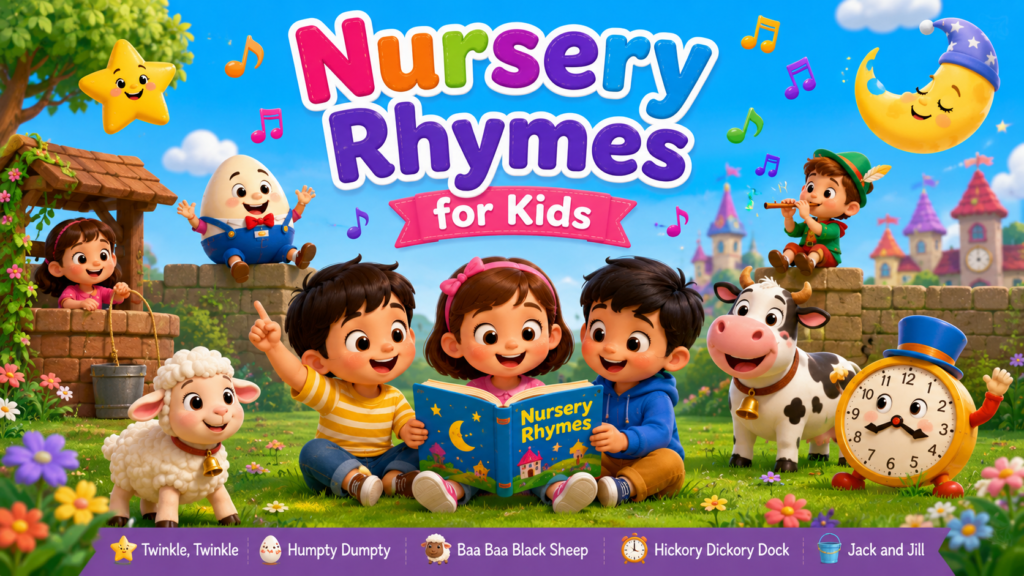
Nursery Rhymes for Kids: Fun Songs That Make Early Learning Easy
If you have a young child at home, chances are you’ve heard the same nursery rhyme many times. Maybe your child wants to sing it during breakfast, playtime, or even before going to bed. While it may feel like simple fun, nursery rhymes for kids can play an important role in early childhood learning.
Rhymes introduce children to sounds, words, rhythm, movement, and simple stories in a way that feels natural. Children can sing, clap, dance, repeat words, and act out characters while learning without feeling like they are studying.
From familiar favourites such as Twinkle Twinkle Little Star and Humpty Dumpty to action songs like The Wheels on the Bus and If You’re Happy and You Know It, nursery rhymes can turn an ordinary moment into a fun learning experience.
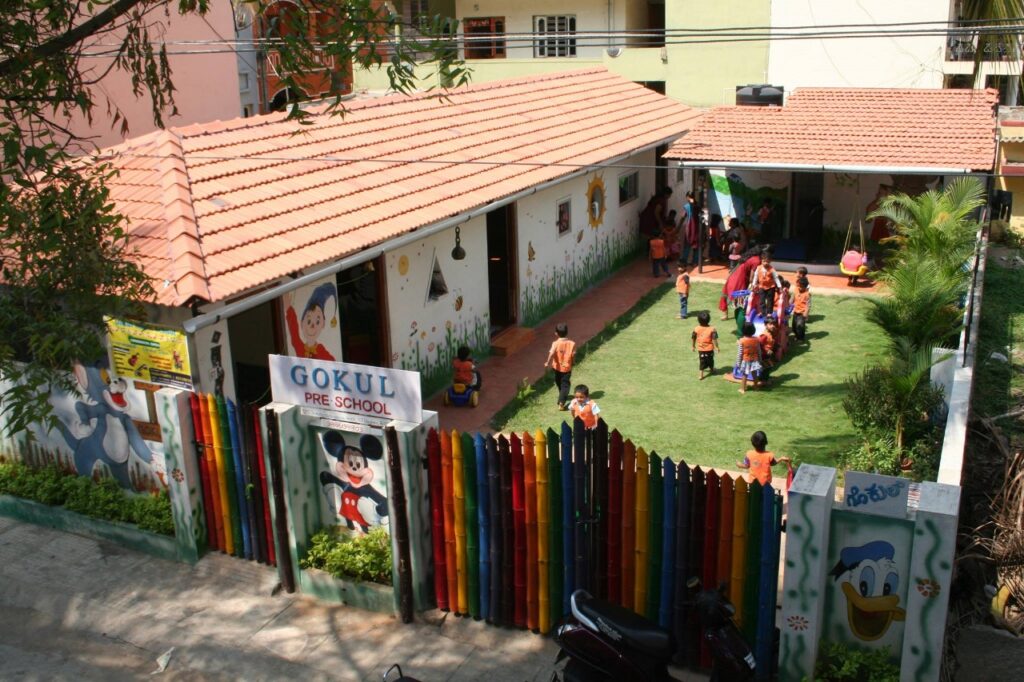
At Gokul Preschool in RT Nagar, we believe young children learn best when learning feels enjoyable. Songs, stories, movement, and play can all become meaningful parts of a child’s early learning journey.
Let’s look at why nursery rhymes are so useful, which types of rhymes children enjoy, and how parents and teachers can make rhyme time more engaging.
What Are Nursery Rhymes for Kids?
Nursery rhymes are short, rhythmic songs, poems, or verses that are easy for young children to hear, repeat, and remember.
They often include:
- Simple words
- Repeated phrases
- Fun characters
- Rhythmic sounds
- Actions and movements
- Short stories
- Counting or sequencing
Their simplicity is what makes them so useful for preschoolers.
A child may not understand every word at first, but repeated listening gradually helps them become familiar with sounds and vocabulary.
Why Do Children Love Nursery Rhymes?
Children naturally enjoy rhythm and repetition. A rhyme has a predictable pattern, which makes it easier for them to join in.
A child may begin by simply listening. After hearing the same rhyme several times, they may start:
- Finishing a familiar sentence
- Copying actions
- Singing certain words
- Clapping to the rhythm
- Remembering characters
- Asking to hear the rhyme again
That repeated participation makes rhyme time both entertaining and educational.
Benefits of Nursery Rhymes for Kids
Nursery rhymes are more than songs to keep children busy. When used in a playful way, they can support several areas of development.
1. Builds Language and Vocabulary
Nursery rhymes expose children to new words and sentence patterns.
For example, a rhyme about animals may introduce animal names and sounds. A rhyme about a journey may introduce words related to movement and places.
Because words are repeated, children get several chances to hear and remember them.
This can support:
- Vocabulary development
- Pronunciation
- Listening
- Sentence formation
- Early communication
2. Strengthens Listening Skills
Children need to listen carefully to follow a rhyme.
They learn to notice:
- Sounds
- Words
- Rhythm
- Changes in the song
- What comes next
These listening skills are useful later when children follow classroom instructions and participate in conversations.
3. Supports Memory
Have you ever noticed how quickly children remember their favourite songs?
Rhymes use repetition and predictable patterns, making them easier to remember.
As children repeat a rhyme, they practise recalling:
- Words
- Sequences
- Characters
- Actions
- Sounds
This turns memory practice into something enjoyable.
4. Encourages Creativity and Imagination
Many nursery rhymes include imaginative situations, funny characters, animals, or playful stories.
Children can take these ideas further through:
- Drawing
- Pretend play
- Storytelling
- Acting
- Creating their own versions
A simple rhyme can become the beginning of a much bigger imaginary world.
5. Develops Rhythm and Coordination
Action rhymes are especially useful for combining language with movement.
Children can:
- Clap
- Tap
- Jump
- March
- Turn around
- Move their hands
Following a rhythm while moving helps children practise coordination and body control.
6. Builds Social Skills
Group singing encourages children to participate with others.
They learn simple social behaviours such as:
- Taking turns
- Listening to others
- Singing together
- Following group actions
- Sharing attention
For children who are shy, group rhymes can also provide a gentle way to participate without having to speak alone.
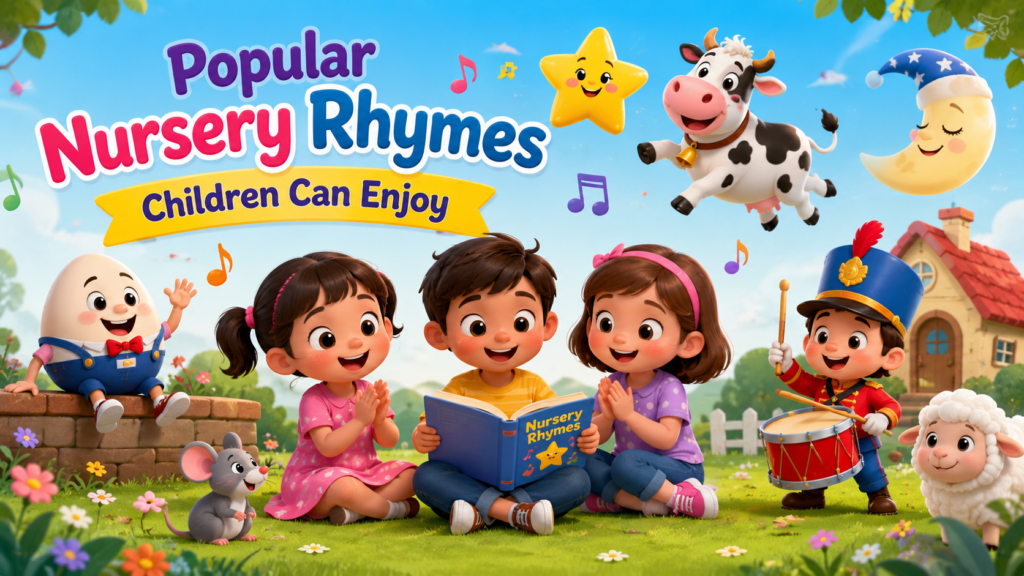
Popular Nursery Rhymes Children Can Enjoy
There are many traditional and modern rhymes that are suitable for young children. Parents and teachers can choose them based on the child’s age and interests.
Twinkle Twinkle Little Star
A gentle rhyme about a star that children often enjoy during quiet or bedtime moments.
It can also be used to introduce simple ideas about the sky, stars, and night.
The Wheels on the Bus
This action-based rhyme gives children plenty of opportunities to copy movements and sounds.
It can be used for group singing and movement activities.
Humpty Dumpty
This short storytelling rhyme can encourage children to talk about characters, actions, and what happens in a story.
Baa Baa Black Sheep
Its repetition makes it easy for young children to join in.
Parents can use it to introduce simple conversations about animals and colours.
Old MacDonald Had a Farm
Animal sounds make this rhyme particularly interactive.
Children can imitate different animals and practise remembering sequences.
Five Little Ducks
Counting rhymes can introduce early number concepts while children sing and act out the story.
If You’re Happy and You Know It
This is a fun movement rhyme that encourages children to connect feelings with actions.
Itsy Bitsy Spider
Hand movements can make this rhyme more interactive and help children connect words with physical actions.
One, Two, Buckle My Shoe
Counting rhymes can be used as a playful introduction to numbers and number sequences.
Mary Had a Little Lamb
This familiar rhyme uses repetition and a simple story that young children can easily follow.
Tip: Instead of trying to teach children too many rhymes at once, choose a few that they genuinely enjoy and repeat them regularly.
How Parents Can Teach Nursery Rhymes at Home
You don’t need special teaching materials to enjoy rhymes with your child.
Your voice, hands, and imagination are often enough.
Use Actions
Add simple movements to the words.
If the rhyme mentions jumping, jump together. If it talks about clapping, clap your hands.
Movement makes the experience more memorable.
Use Toys and Props
A toy animal, teddy bear, ball, or picture can make a rhyme more interesting.
For example, if you’re singing an animal rhyme, let your child choose the toy that matches the animal.
Let Your Child Lead
After hearing a rhyme several times, your child may want to take over.
Let them.
Allowing children to choose the rhyme, start the song, or perform the actions builds confidence.
Repeat Without Pressure
Children often love repetition.
If your child wants to hear the same rhyme again, there’s no need to worry that you’re repeating it too much. Repetition can help children become familiar with words and sequences.
Fun Nursery Rhyme Activities for Preschoolers
Rhyme time doesn’t have to mean sitting still and singing.
Try turning familiar songs into activities.
Rhyme and Movement
Choose an action rhyme and encourage children to move along with it.
This combines language with physical activity.
Draw the Rhyme
After singing a rhyme, ask your child:
“What did you imagine while listening?”
Give them paper and crayons and let them draw their answer.
There is no right or wrong drawing.
Act It Out
Choose a simple rhyme and let your child pretend to be one of its characters.
This supports imagination, communication, and confidence.
Rhyme and Counting
Use counting rhymes with small toys.
Children can count the toys while repeating the rhyme.
This creates a simple connection between songs and early numeracy.
Group Singing
If you have siblings, friends, or a small group of children, try singing together.
Children can take turns leading actions or choosing the next rhyme.
How Nursery Rhymes Support Preschool Learning
Nursery rhymes fit naturally into a play-based preschool environment.
A teacher can use a rhyme to introduce a larger activity.
For example:
Animal rhyme → animal pictures → animal sounds → drawing animals
Or:
Counting rhyme → counting objects → number game → simple worksheet or activity
This approach allows children to experience the same idea in different ways.
At Gokul Preschool in RT Nagar, songs, movement, stories, and hands-on activities can help make classroom learning engaging and age-appropriate.
How to Choose the Right Rhymes for Your Child
Not every rhyme will interest every child.
Choose rhymes based on:
Age
Younger children usually benefit from short, repetitive rhymes with simple actions.
Older preschoolers may enjoy longer stories, counting rhymes, and more complex vocabulary.
Interests
If your child loves animals, choose animal rhymes.
If they enjoy movement, try action songs.
If they like numbers, introduce counting rhymes.
Attention Span
Keep rhyme sessions short and enjoyable.
You don’t need to sing ten songs in one sitting.
Even a few minutes of happy participation can be meaningful.
Common Mistakes Parents Should Avoid
Forcing Children to Memorise
Rhyme time should feel like play, not an examination.
Don’t pressure your child to remember every word.
Correcting Every Mistake
If your child changes a word or creates their own version, enjoy it.
Creative participation is valuable too.
Using Screens for Every Rhyme
Videos can be useful occasionally, but children don’t need a screen to enjoy a song.
Singing together, using hand movements, and playing with props can create a richer experience.
Making Rhyme Time Too Long
Young children have limited attention spans.
Stop while your child is still enjoying the activity rather than continuing until they lose interest.
Nursery Rhymes at Gokul Preschool in RT Nagar
At Gokul Preschool in RT Nagar, we believe early learning should be active, joyful, and meaningful.
Nursery rhymes can be part of a wider learning experience that includes:
- Music and movement
- Storytelling
- Language activities
- Creative expression
- Group participation
- Pretend play
- Early literacy
- Early numeracy
Our teachers encourage children to participate rather than simply listen. A child may sing, clap, move, act, draw, or create something inspired by a rhyme.
This kind of playful learning helps children build confidence while developing important early skills.
For parents searching for a preschool in RT Nagar, choosing an environment where children can learn through songs, stories, play, and hands-on experiences can help make the early years enjoyable and meaningful.
FAQs
What are nursery rhymes for kids?
Nursery rhymes are short songs, poems, or verses with simple words, rhythm, repetition, and often fun actions or stories that are suitable for young children.
Why are nursery rhymes important for preschoolers?
Nursery rhymes can support language, listening, memory, rhythm, coordination, creativity, and social interaction in an enjoyable way.
What is the best nursery rhyme for a 3-year-old?
There isn’t one perfect rhyme for every child. Short, repetitive, action-based rhymes such as The Wheels on the Bus, Twinkle Twinkle Little Star, and If You’re Happy and You Know It can be good choices.
How can I teach nursery rhymes at home?
Sing together, add hand movements, use toys or simple props, repeat favourite rhymes, and encourage your child to participate rather than simply listen.
Can nursery rhymes help with language development?
Yes. Repeated exposure to words, sounds, and sentence patterns can support vocabulary, listening, pronunciation, and early communication.
Should children memorise nursery rhymes?
Memorisation should not be forced. Children naturally remember favourite rhymes through repetition, especially when they enjoy singing and acting them out.
Are nursery rhymes useful in preschool?
Yes. Teachers can use rhymes as part of language, movement, counting, storytelling, creative, and group activities.
Which preschool in RT Nagar uses play-based learning?
Gokul Preschool in RT Nagar provides a child-friendly learning environment where songs, stories, play, creative activities, and hands-on experiences can support children’s overall development.
Conclusion
Nursery rhymes may seem like simple children’s songs, but they can support many important areas of early development.
They can help children:
- Learn new words
- Improve listening
- Strengthen memory
- Develop rhythm
- Build coordination
- Express creativity
- Participate with others
- Gain confidence
The most important thing is to keep rhyme time fun.
You don’t need to turn every song into a lesson. Sing together, clap, laugh, dance, and let your child enjoy the moment.
At Gokul Preschool in RT Nagar, we believe these joyful experiences are an important part of childhood. When children enjoy learning, they are more likely to stay curious, confident, and excited to discover something new.