How Playschool Helps Social Development in Children
A child’s early years are very important for learning and development. During this stage, children begin understanding the world around them, learning how to communicate, express emotions, and interact with others.
One of the biggest benefits of playschool is that it helps children develop strong social skills from an early age.
Social development is not just about making friends. It includes learning how to:
- Share and cooperate
- Communicate with others
- Understand emotions
- Build confidence
- Work in groups
These skills are important throughout life and help children succeed both academically and emotionally.
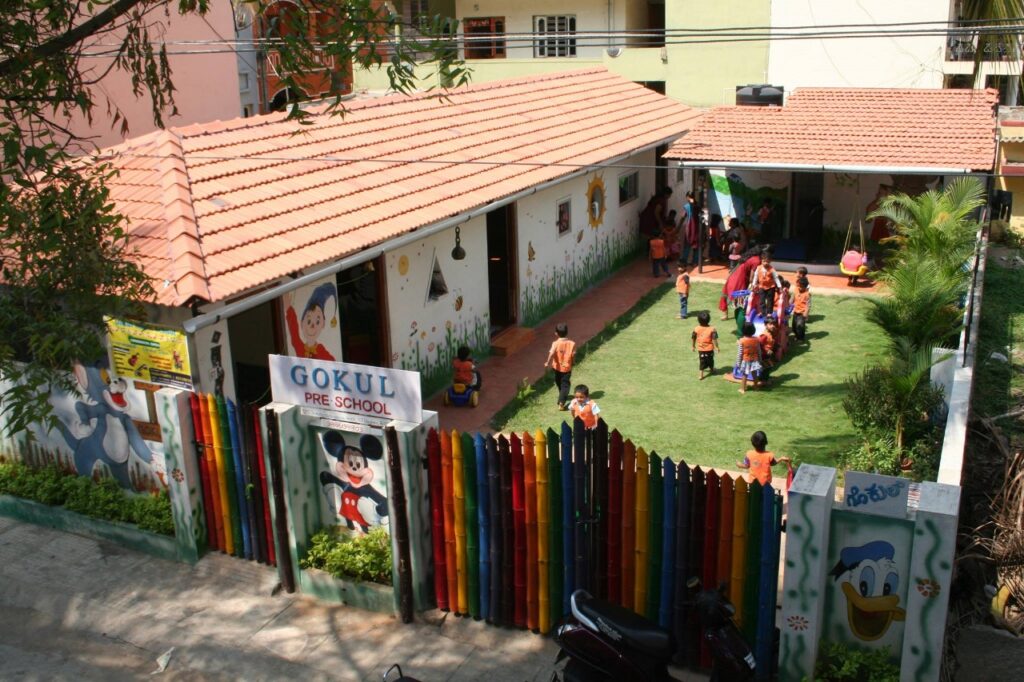
At Gokul Preschool in RT Nagar, we focus on creating a warm, playful, and engaging environment where children can develop important social skills naturally through interaction and play-based learning.
In this blog, we will explore how playschool supports social development and why early social learning is important for children.
How Playschool Helps Social Development in Children
- What Is Social Development in Early Childhood?
- Why Social Development Is Important for Children
- How Playschool Helps Social Development
- Helps Children Learn Sharing and Cooperation
- Encourages Communication Skills
- Builds Friendships and Social Confidence
- Helps Children Understand Emotions
- Encourages Teamwork Through Group Activities
- Reduces Shyness and Separation Anxiety
- Teaches Manners and Positive Behavior
- Learning Through Play Improves Social Skills
- The Role of Teachers in Social Development
- Signs of Healthy Social Development in Children
- How Parents Can Support Social Development at Home
- Social Development at Gokul Preschool in RT Nagar
- Common Mistakes Parents Should Avoid
- How Playschool Helps Social Development in Children FAQs
- Conclusion
What Is Social Development in Early Childhood?
Social development refers to the way children learn to interact with people around them.
It includes:
- Making friends
- Communicating feelings
- Understanding emotions
- Learning manners
- Working together with others
Young children develop social skills through everyday experiences such as talking, playing, observing, and participating in group activities.
The early years are the best time to develop these abilities because children learn quickly through interaction and observation.
Why Social Development Is Important for Children
Good social skills help children feel comfortable and confident in different environments.
Children with strong social development often:
- Make friends easily
- Communicate confidently
- Handle emotions better
- Participate in activities actively
- Adjust to school environments smoothly
Social development also helps children build emotional security and positive relationships with others.
These skills continue to support children as they grow older.
How Playschool Helps Social Development
Playschool provides children with their first opportunity to regularly interact with teachers and other children outside the home.
This environment helps children gradually learn important social behaviors.
Helps Children Learn Sharing and Cooperation
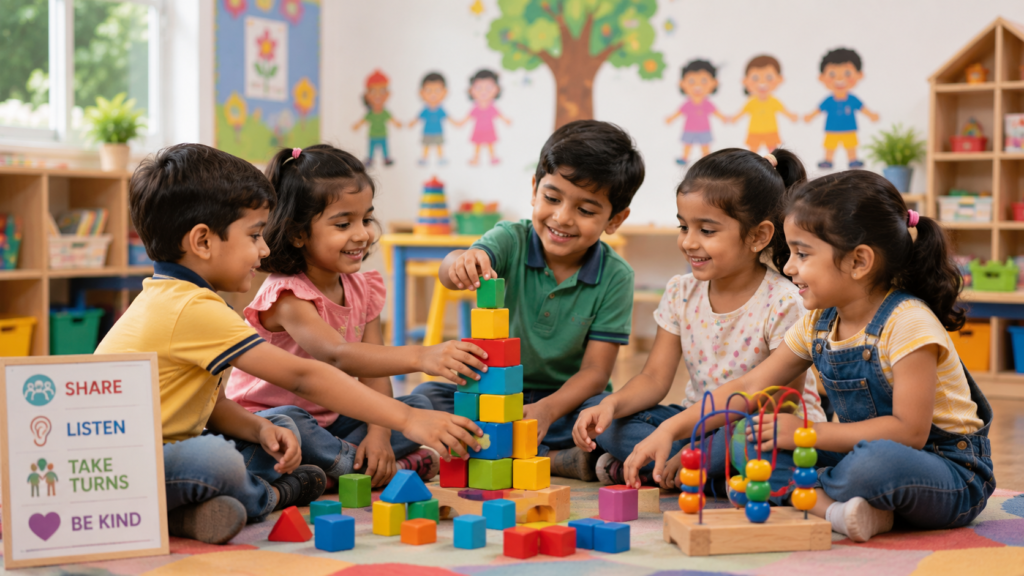
One of the first lessons children learn in playschool is sharing.
Children learn to:
- Share toys
- Take turns
- Participate in group games
- Work together during activities
These experiences teach patience, teamwork, and respect for others.
Sharing and cooperation are important life skills that children continue using throughout school and adulthood.
Encourages Communication Skills
In playschool, children are constantly encouraged to communicate.
They learn how to:
- Speak with teachers and classmates
- Ask for help
- Express feelings and ideas
- Listen to others carefully
Activities like storytelling, singing, and group discussions help improve communication skills naturally.
As children become better communicators, they also become more confident socially.
Builds Friendships and Social Confidence
Playschool introduces children to new friends and group environments.
Children begin learning:
- How to start conversations
- How to play together
- How to build friendships
Positive interactions with classmates help children feel accepted and emotionally secure.
Friendships also make children feel excited and happy about coming to school.
Helps Children Understand Emotions
Young children often experience emotions they do not fully understand.
Playschool helps children identify and express emotions like:
- Happiness
- Sadness
- Excitement
- Frustration
Teachers guide children on how to express feelings in healthy and respectful ways.
This emotional understanding helps children develop empathy and kindness toward others.
Encourages Teamwork Through Group Activities
Group activities are an important part of playschool learning.
Children participate in:
- Circle time
- Team games
- Art and craft projects
- Music and dance sessions
These activities help children understand how to work together and support one another.
Teamwork activities also improve cooperation and communication skills.
Reduces Shyness and Separation Anxiety
For many children, playschool is the first experience away from parents.
Initially, some children may feel shy or nervous.
But with regular interaction, fun activities, and caring teachers, children slowly become more comfortable and independent.
As children adjust to the environment, their social confidence improves naturally.
Teaches Manners and Positive Behavior
Playschool helps children learn important social habits such as:
- Saying “please” and “thank you”
- Greeting others politely
- Listening while others speak
- Respecting teachers and classmates
These habits form the foundation of positive social behavior.
Learning Through Play Improves Social Skills
Children learn best through play.
Play-based learning activities encourage children to:
- Interact freely
- Solve simple problems together
- Use imagination and creativity
- Build relationships naturally
Games and activities create opportunities for children to practice social interaction in a fun and stress-free way.
The Role of Teachers in Social Development
Teachers play an important role in helping children develop social skills.
Good playschool teachers:
- Encourage participation
- Support shy children
- Teach positive behavior gently
- Help children solve conflicts peacefully
Teachers also act as role models, and children learn social behavior by observing them.
A caring teacher can help children feel emotionally safe and confident.
Signs of Healthy Social Development in Children
Parents may notice positive social growth through behaviors such as:
- Making friends easily
- Participating in group activities
- Sharing toys willingly
- Expressing emotions clearly
- Communicating confidently
Every child develops differently, but regular interaction and encouragement help social skills improve steadily.
How Parents Can Support Social Development at Home
Parents can continue social learning at home with simple activities.
Encourage Group Play
Allow children to play with friends or cousins regularly.
Teach Good Manners
Use polite language and encourage children to do the same.
Talk About Feelings
Help children express emotions openly.
Read Stories About Friendship
Stories teach empathy, kindness, and understanding.
Encourage Independence
Allow children to complete simple tasks on their own.
This improves confidence and social readiness.
Social Development at Gokul Preschool in RT Nagar
At Gokul Preschool in RT Nagar, we believe social development is just as important as academic learning.
Our programs include:
- Play-based learning activities
- Group storytelling sessions
- Team games and collaborative activities
- Music, dance, and role play
- Interactive classroom participation
These activities help children:
- Build friendships
- Communicate confidently
- Develop teamwork skills
- Express emotions positively
Our caring teachers create a nurturing and supportive environment where children feel safe, happy, and encouraged to interact with others.
Parents looking for a trusted playschool in RT Nagar choose Gokul Preschool because we focus on holistic child development through joyful and meaningful learning experiences.
Common Mistakes Parents Should Avoid
While supporting social development, parents should avoid:
Comparing Children
Every child develops social skills at their own pace.
Forcing Interaction
Children should be gently encouraged, not pressured.
Overprotecting Children
Allow children to solve small social situations independently.
Ignoring Emotional Needs
Listening to children helps them feel understood and secure.
How Playschool Helps Social Development in Children FAQs
How does playschool help social development?
Playschool helps children learn sharing, communication, teamwork, friendship, and emotional understanding through group activities and play-based learning.
Why are social skills important for children?
Social skills help children build confidence, make friends, communicate better, and adjust to school environments successfully.
At what age do children start developing social skills?
Children begin developing social skills from infancy, but playschool helps strengthen these skills through regular interaction.
Can shy children improve social skills in playschool?
Yes. A supportive playschool environment helps shy children gradually become more comfortable and confident.
Which playschool in RT Nagar focuses on social development?
Gokul Preschool in RT Nagar focuses on play-based learning, group activities, and communication skills to support children’s social development.
Conclusion
Social development is one of the most important parts of early childhood learning.
Playschool helps children learn essential life skills such as:
- Communication
- Cooperation
- Friendship
- Emotional understanding
- Confidence
These skills help children adjust better to school and build strong relationships throughout life.
At Gokul Preschool in RT Nagar, we create a positive and engaging environment where children can grow socially, emotionally, and confidently through play-based learning and caring support.
Helping children develop strong social skills early creates a strong foundation for future success and happiness.