When Should You Change Your Child’s Preschool
Choosing a preschool is one of the most important decisions parents make during their child’s early years. Most parents carefully research schools, visit classrooms, and select a preschool that seems like the perfect fit.
However, sometimes situations change, and parents begin to wonder:
“Should I change my child’s preschool?”
This can be a difficult decision because changing schools affects a child’s routine, friendships, and learning environment. While every preschool transition should be considered carefully, there are situations where moving to a different preschool may be the best choice for your child’s growth and well-being.
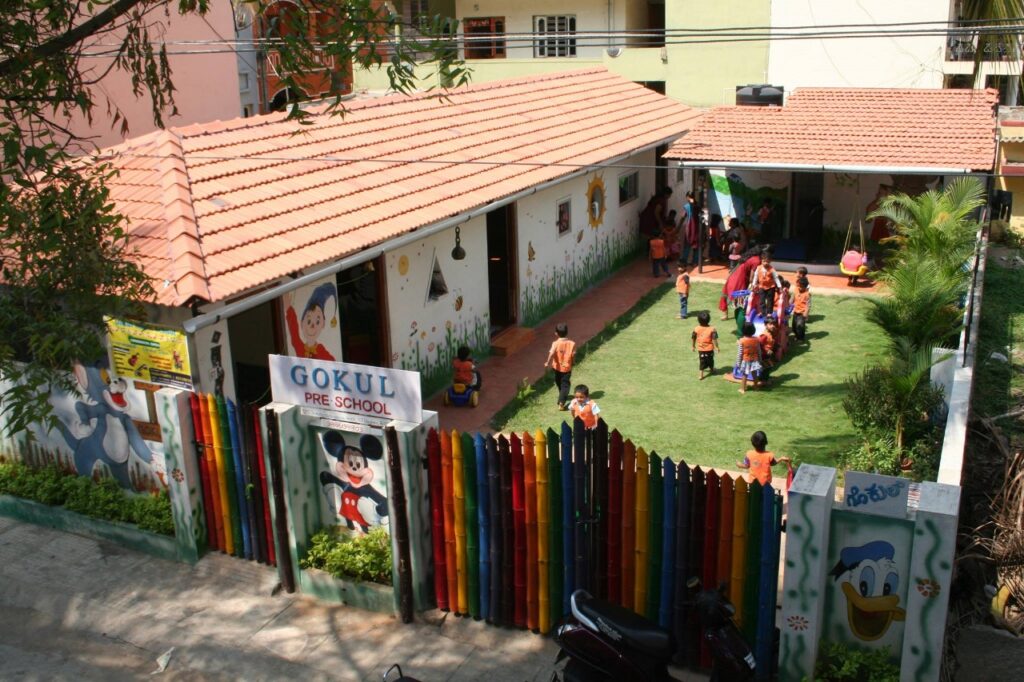
At Gokul Preschool in RT Nagar, we believe that every child deserves a safe, supportive, and engaging learning environment. Understanding the signs that a preschool may no longer be the right fit can help parents make informed decisions.
In this blog, we’ll discuss when parents should consider changing their child’s preschool and how to make the transition as smooth as possible.
- Is It Normal to Think About Changing Preschools?
- Signs It May Be Time to Change Your Child's Preschool
- Major Changes in Family Circumstances
- When You Should NOT Change Preschools Immediately
- Questions to Ask Before Changing Preschools
- How to Make the Preschool Transition Easier
- What to Look for in a New Preschool
- Why Parents Choose Gokul Preschool in RT Nagar
- When Should You Change Your Child's Preschool FAQs
- Conclusion of When Should You Change Your Child's Preschool
Is It Normal to Think About Changing Preschools?
Yes, it is completely normal.
Many families consider changing preschools due to:
- Relocation
- Changes in family schedules
- Concerns about learning quality
- Safety issues
- A child’s emotional needs
However, it is important to distinguish between temporary adjustment challenges and genuine reasons for changing schools.
Young children often need time to adapt to new environments, so parents should carefully evaluate the situation before making a decision.
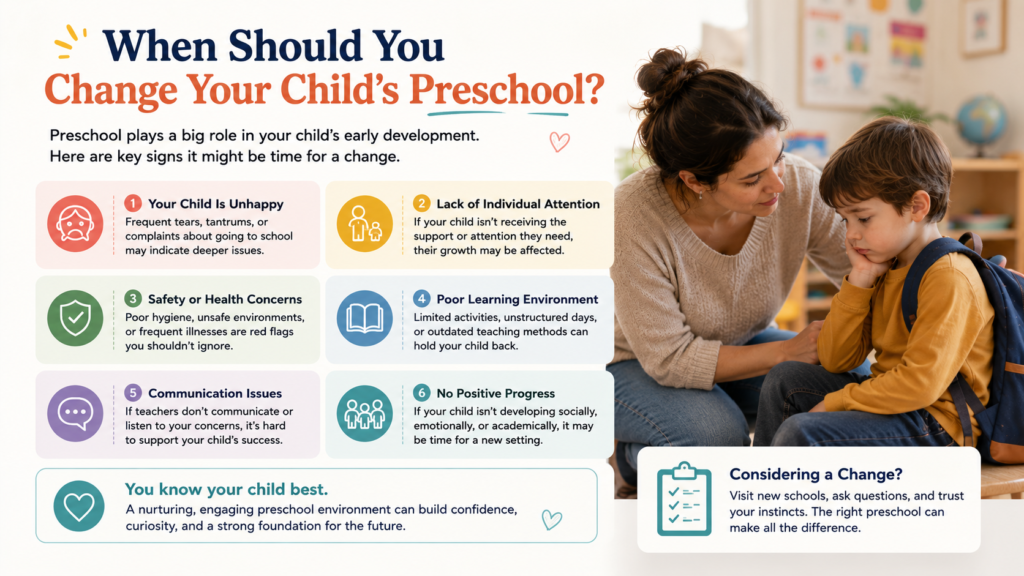
Signs It May Be Time to Change Your Child’s Preschool
While every child experiences occasional ups and downs, certain signs may indicate that a preschool is not meeting your child’s needs.
Your Child Is Consistently Unhappy
Every child has difficult days occasionally.
However, if your child regularly:
- Cries excessively before school
- Expresses fear or anxiety
- Refuses to attend preschool
- Appears unhappy for an extended period
it may be worth investigating further.
A preschool should help children feel safe, supported, and comfortable.
Poor Communication from the Preschool
Strong communication between parents and teachers is essential.
Parents should be informed about:
- Learning progress
- Classroom activities
- Behavioral concerns
- Developmental milestones
If communication is consistently unclear or difficult, it may affect your ability to support your child’s growth effectively.
Safety Concerns
Safety should never be compromised.
Parents should take concerns seriously if they notice:
- Poor supervision
- Unsafe facilities
- Lack of security measures
- Inadequate emergency procedures
A preschool should always provide a secure and child-friendly environment.
Frequent Staff Turnover
Children build trust and emotional security through consistent relationships.
If teachers and caregivers frequently leave the preschool, children may struggle to:
- Form strong connections
- Feel emotionally secure
- Maintain learning continuity
High staff turnover can sometimes indicate larger organizational challenges.
Your Child’s Development Is Not Being Supported
Every child learns differently.
A quality preschool should provide opportunities for growth in:
- Social skills
- Communication
- Creativity
- Emotional development
- Cognitive learning
If your child appears disengaged or is not receiving appropriate support, it may be time to explore other options.
The Preschool’s Teaching Philosophy Doesn’t Match Your Expectations
Sometimes parents discover that a preschool’s approach does not align with their values or expectations.
For example:
- Too much academic pressure
- Limited play-based learning
- Lack of creativity
- Insufficient focus on emotional development
Children benefit most when the school’s philosophy matches their developmental needs.
Ongoing Hygiene Issues
Cleanliness plays an important role in children’s health and safety.
Repeated concerns about:
- Dirty classrooms
- Poor sanitation
- Unclean washrooms
- Unsanitized toys
should not be ignored.
A healthy environment supports both physical and emotional well-being.
Your Child Is Not Building Positive Relationships
Preschool should provide opportunities for social growth.
If your child consistently struggles with:
- Making friends
- Interacting with teachers
- Participating in activities
despite receiving support, it may be worth reviewing whether the environment is the right fit.
Major Changes in Family Circumstances
Sometimes changing preschools is not related to the school itself.
Families may need a new preschool due to:
Relocation
Moving to a different area may make daily travel impractical.
Schedule Changes
Parents may require different preschool hours or daycare support.
Transportation Challenges
Long travel times can be tiring for young children.
In these situations, a preschool closer to home may be a better option.
When You Should NOT Change Preschools Immediately
Not every challenge means a preschool change is necessary.
Parents should avoid making quick decisions if:
Your Child Is Experiencing Normal Adjustment Anxiety
Many children need several weeks to adjust to preschool.
Initial crying or reluctance does not automatically indicate a problem.
Minor Issues Can Be Resolved Through Communication
Often, concerns can be addressed through discussions with teachers or school management.
Open communication may solve the issue without requiring a school change.
The Problem Is Temporary
Short-term challenges such as a classroom transition or routine change may improve with time.
Give your child an opportunity to adapt before making major decisions.
Questions to Ask Before Changing Preschools
Before making a final decision, ask yourself:
Is My Child Safe and Supported?
Safety should always be the highest priority.
Have I Spoken with the Teachers?
Many concerns can be resolved through communication.
Is My Child Learning and Growing?
Consider both academic and social development.
Is the Problem Temporary or Ongoing?
Look for patterns rather than isolated incidents.
Will a New Preschool Better Meet My Child’s Needs?
Changing schools should provide a meaningful improvement in your child’s experience.
How to Make the Preschool Transition Easier
If you decide to change preschools, there are ways to make the transition smoother.
Talk Positively About the New School
Focus on exciting opportunities such as:
- New friends
- Fun activities
- New learning experiences
Visit the Preschool Before Admission
Allow your child to explore the new environment and meet teachers.
Maintain Familiar Routines
Consistent routines provide comfort during periods of change.
Be Patient
Children adapt at different speeds.
Provide reassurance and encouragement throughout the transition.
What to Look for in a New Preschool
When choosing a new preschool, prioritize:
- Safe and secure facilities
- Qualified and caring teachers
- Play-based learning
- Positive parent communication
- Clean and hygienic classrooms
- Supportive social environment
A preschool should support every aspect of your child’s development.
Why Parents Choose Gokul Preschool in RT Nagar
At Gokul Preschool in RT Nagar, we focus on creating a nurturing and engaging learning environment where children feel happy, safe, and valued.
Our preschool offers:
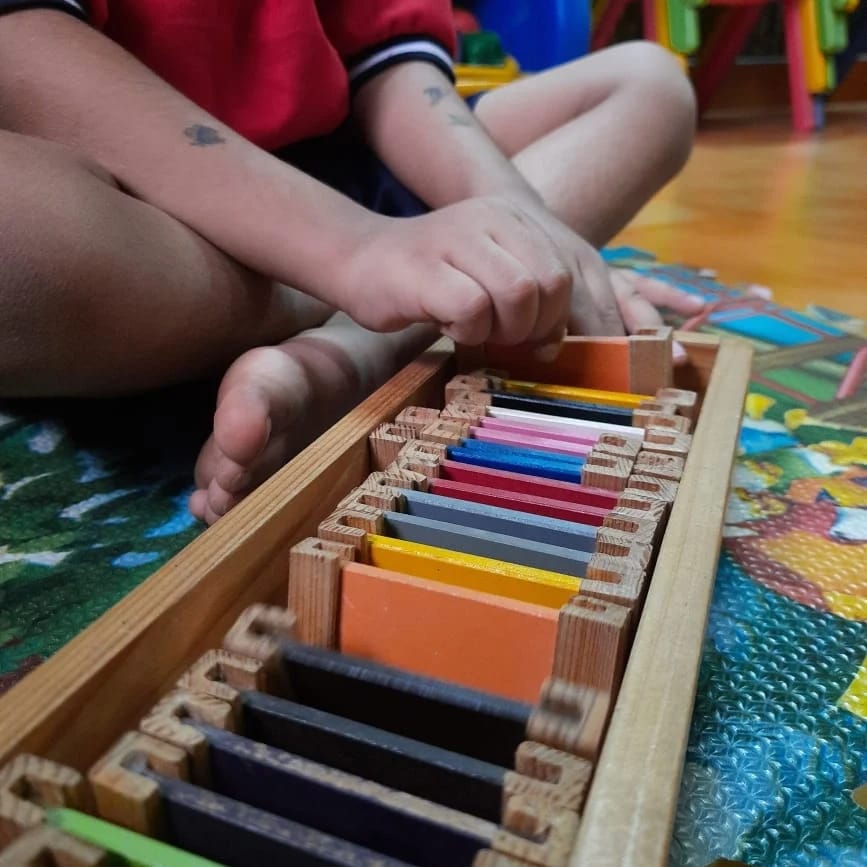
- Play-based learning programs
- Experienced and caring educators
- Safe and hygienic classrooms
- Strong parent communication
- Social and emotional development support
- Age-appropriate learning experiences
We believe every child deserves a preschool environment that encourages confidence, curiosity, and a love for learning.
Parents looking for a trusted preschool in RT Nagar choose Gokul Preschool because we prioritize children’s happiness, safety, and overall development.
When Should You Change Your Child’s Preschool FAQs
How do I know if my child’s preschool is not the right fit?
Signs may include ongoing unhappiness, safety concerns, poor communication, lack of developmental support, or difficulty adjusting over a long period.
Is it normal for children to cry when starting preschool?
Yes. Many children experience temporary separation anxiety during the adjustment period.
Should I change preschools if my child is not making friends?
Not immediately. Speak with teachers first and explore ways to support social development before considering a change.
How can I help my child adjust to a new preschool?
Visit the new school, maintain routines, talk positively about the transition, and provide reassurance.
Which preschool in RT Nagar provides a supportive learning environment?
Gokul Preschool in RT Nagar offers a safe, nurturing, and play-based learning environment focused on children’s overall growth and development.
Conclusion of When Should You Change Your Child’s Preschool
Changing a preschool is a significant decision that should be made thoughtfully and carefully.
While temporary adjustment challenges are normal, ongoing concerns related to safety, communication, emotional well-being, or educational quality may indicate that a different preschool would better support your child.
The most important goal is ensuring your child feels:
- Safe
- Happy
- Supported
- Engaged
- Excited to learn
At Gokul Preschool in RT Nagar, we are committed to helping children thrive in a caring environment where they can build confidence, friendships, and a strong foundation for future learning.